Trump declares Iran deal 'imminent,' Tehran says no decision made — and Cairo weighs in
A presidential proclamation from Washington and a denial from the Iranian foreign ministry have produced the most concrete sign of a US-Iran deal in months — with Cairo publicly pushing both sides to seize what it calls a rare opening.
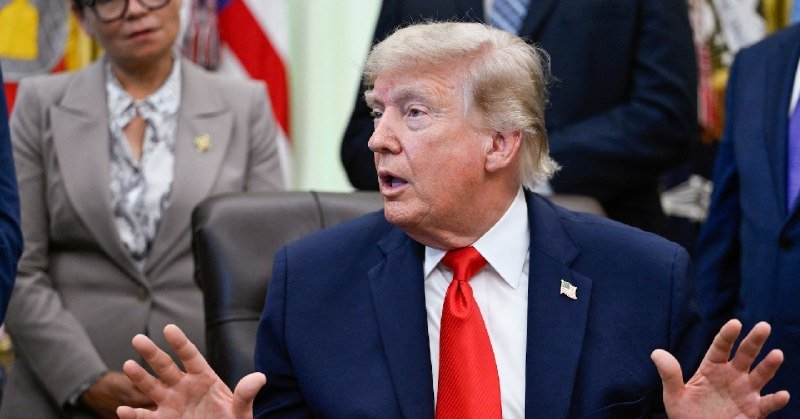
On the morning of 12 June 2026, two governments, two scripts. In Washington, US President Donald Trump told reporters that a settlement with Iran could be "imminent," framing what he described as a "great settlement" to end the war. In Tehran, the foreign ministry said no final decision had been made on any agreement with Washington. By mid-morning UTC, a third capital — Cairo — had entered the picture, with Egypt publicly urging both sides to take what it called an "available opportunity" to reach an accord and reduce regional tensions.
The dissonance is the story. A sitting US president is rarely out ahead of a counterpart on a deal of this gravity unless something has moved at the working level — or unless the president is running a negotiating clock on his own terms. Tehran's flat denial is the equally familiar counter-move: deny, hedge, buy time, force Washington to keep public pressure on while the principals work the channel. Egypt's intervention is the more interesting variable, because it suggests the diplomatic surround is being actively managed by a regional state with both a Suez-route interest and a longstanding relationship with both governments.
What was actually said
According to reporting published at 09:57 UTC on 12 June, Trump said a deal with Iran was close and that an agreement could be finalised quickly. The same account noted that the substance of any draft had not been disclosed publicly, and that Iranian state-linked media had not, at the time of the report, confirmed the existence of a final text. Reporting published at 09:22 UTC noted a parallel framing: Trump touting an imminent "great settlement," with Tehran publicly stating it had not made a final decision. The two reports are not in factual conflict — they are reading the same moment from opposite ends of the announcement cycle.
Egypt's intervention, carried in identical form on Telegram channels associated with The Cradle Media at 09:25 UTC, called on Washington and Tehran to seize what Cairo described as an "available opportunity" to reach an agreement and bring down regional tensions. The phrasing is deliberately non-specific. It does not name a draft, does not bless a particular framework, and does not commit Cairo to a mediation role. It does, however, signal that at least one regional government believes the window is open enough to publicly associate itself with the moment.
The counter-narrative from Tehran
Tehran's posture is consistent with how the Islamic Republic has historically managed moments of apparent US-Iran progress: deny that anything is final, keep working-level talks opaque, and use public ambiguity to retain leverage. The foreign ministry's line — that no decision has been made — leaves Tehran free to walk back, renegotiate, or impose new conditions at any point in the next 72 hours, while still allowing the working channel to continue.
This is the standard pattern. Optimism from Washington; structured silence or soft denial from Tehran; regional actors urged to keep the diplomatic environment permissive. The risk for any reader is to confuse presidential rhetoric with statecraft. Trump has, in his first term and again since returning to office, repeatedly declared deals "imminent" or "very close" on a range of files, including Russia-Ukraine, that did not close on the announced timeline. The reporting on 12 June gives no indication that the Iranian side has accepted any specific framework — only that the Iranian side has not closed the door.
Why Cairo, and why now
Egypt's role in this picture is structural rather than incidental. Cairo sits on the maritime chokepoint through which a large share of Gulf hydrocarbon exports transit. It maintains diplomatic relations with Tehran that were restored in 2023 after a years-long freeze. It is a recipient of substantial US military assistance and a coordinator with Gulf partners on regional security files. When Cairo publicly tells Washington and Tehran to seize an opportunity, it is performing three functions at once: signalling to Washington that the regional environment is permissive of a deal; signalling to Tehran that the Arab diplomatic mainstream will not oppose a settlement; and signalling to Gulf partners, particularly Riyadh and Abu Dhabi, that the diplomatic process has a regional underwriting.
The phrase "available opportunity" is the operative one. It implies a window, not a guarantee. It is the language a state uses when it wants to claim credit for enabling a deal that may still fail, without being held responsible for the failure.
What remains contested — and unverified
The reporting on 12 June is unusually thin on substance. Neither the US side nor the Iranian side has published a draft, a framework, or a list of agreed items. The figures who would normally brief on a US-Iran understanding — the US special envoy, the Iranian deputy foreign minister in charge of political affairs, the IAEA director-general on the nuclear file — are not named in the available accounts. The reporting does not specify whether the talks in question are bilateral, mediated, or held under a third-party framework such as Oman or Qatar. It does not specify whether the nuclear file, the regional-proxy file, or the sanctions-relief file is the leading edge of the negotiation.
The reasonable reading is that a channel is open, that something has moved at the working level sufficient for Trump to declare progress, and that the Iranian side has chosen for its own reasons not to confirm. The less reasonable reading — that a settlement is genuinely "imminent" — requires evidence that the available reporting does not contain. The pattern of presidential announcement, foreign ministry denial, and regional endorsement is consistent with a process in early stages, not at the threshold of signature.
The structural frame is plain: a US administration that has invested heavily in personal-diplomacy-as-leverage, an Iranian system that has learned to manage announcement cycles, and a regional architecture that wants the file off the front page while it manages its own pressures. The next 72 hours will tell which of those dynamics is operative. If Tehran confirms a working text, the "imminent" framing holds. If Tehran stays silent or walks back, the pattern repeats and Cairo's intervention is the day's only durable artefact.
This publication framed the day against the live reporting from Deutsche Welle, France 24, and The Cradle Media's Telegram channel, and flagged the gap between presidential announcement and Iranian confirmation as the operative fact for readers, rather than the deal itself.
Wire provenance
This editorial synthesis draws on the following public wire/social posts:
- https://t.me/thecradlemedia
- https://t.me/TheCradleMedia