'All wrapped up,' or just postponed? Reading the Trump–Iran deal in real time
A 14-clause MoU signed in Geneva calls for permanent ceasefire and a reopened Strait of Hormuz, but Netanyahu refuses to be bound, and Iran and America are selling the same text as two different victories.
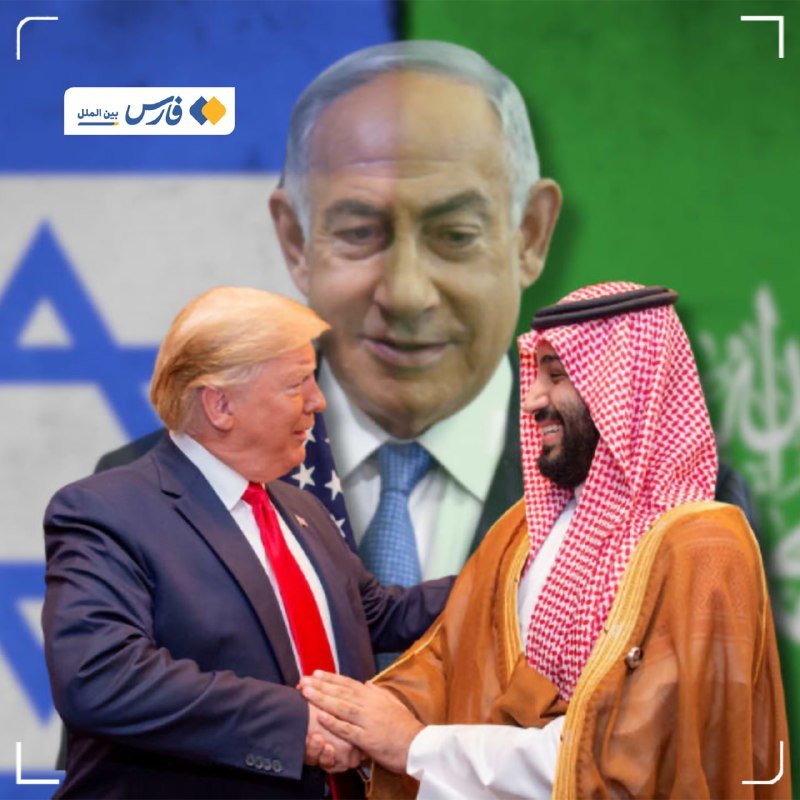
Pakistan's prime minister announced the news from Islamabad at 23:13 UTC on 14 June 2026, declaring that the United States and Iran had "REACHED" a "Peace Deal" after intensive talks, with both sides declaring an immediate end to military operations. Within the hour, the architecture of the agreement became legible. According to Iran's Mehr News Agency and summaries circulating through regional channels, the document is a 14-clause Memorandum of Understanding, not a signed treaty. It opens the Strait of Hormuz to traffic, commits Iran to a verifiable end to its nuclear weapons programme, freezes a broad set of proxy confrontations, and binds Washington and Tehran to phased implementation that runs through multiple political calendars. The signing is to take place in Geneva, with Iranian Parliament Speaker Mohammed Bagher (the lead negotiator), Foreign Minister Abbas Araghchi, and US Vice President JD Vance in the room. President Donald Trump, told the New York Times he will "restart military attacks" if a final deal fails to materialise.
The lede deserves unpacking, because almost every sentence inside it is being contested, contradicted, or quietly re-engineered by people who were standing in the same room twelve hours earlier.
A memorandum, not a treaty
The single most consequential fact about the deal is what it isn't. As one analyst with DD Geopolitics put it bluntly on X shortly after the text dropped: "This is a Memorandum of Understanding, not an actual signed peace deal or treaty." Netanyahu, the Israeli prime minister, had already said Israel would not be bound by it and would not stop its war in Lebanon. That caveat does not appear in the 14-clause summary carried by Mehr, but it sits inside every foreign-policy desk recalculating the next 72 hours. A memorandum is reversible. So is a blockade that is "dissolved," an enrichment facility that is "paused," and a missile stockpile that is "frozen" pending verification.
Whose birthday is it anyway?
The New York Times reported a logistical oddity that reads like a tell: Iran waited until after midnight local time to finalise the agreement, the 7.5-hour time difference allowing both Tehran and Washington to claim the deal was completed on their preferred date, and notably not on Trump's birthday. That detail did not survive long before it was weaponised in Tehran. Mehr's lede crowed that "Iran forced America to accept its demands," that Iran's "civilization was not destroyed," and that "unconditional surrender was not realised." In Washington, the same document was packaged as a Trump victory lap. JD Vance called it "a big moment for the United States of America," promising a reopened Strait of Hormuz and an Iran that "will never have a nuclear weapon" while thanking Americans "for their patience amid high gas prices." Trump told Truth Social the strait will reopen on Friday once the agreement is signed. CGTN confirmed Iran's Supreme National Security Council announced that the text of the MoU has been finalised.
The Netanyahu problem
The most volatile variable sits in Jerusalem, not Geneva. According to the New York Times via The Spectator Index, Trump said the deal was reached "despite objections by Israeli PM Netanyahu." France 24's lead confirmed the war in Lebanon is part of what the deal claims to end. Trump's comments to the NYT were unusually pointed: Netanyahu is "a very difficult guy," and "if Iran had a nuclear weapon, Israel wouldn't be around for two hours." Translated from the Iranian side via Tasnim, the framing was almost perfectly inverted: "The head of the American terrorist government" should be grateful to Trump, not the reverse. Israeli sources did not dispute the substance of the deal as it applies to Iran's nuclear file; they disputed the implicit concession on enrichment latitude (Tasnim noted Trump's late pivot away from "zero enrichment"), and they refused to cede the Lebanon front. The Jerusalem Post's late-night wire confirmed that Israel "continues striking Lebanon" even as the US-Iran track closes.
What the 14 clauses actually say
The text circulating via Middle East Spectator and Mehr walks a tight wire between the Iranian demand for dignity and the US demand for verifiability. Phase 1, effective immediately, declares an "immediate, complete and permanent" end to military operations, opens the strait, and freezes Iranian enrichment at current levels under intrusive inspection. Later phases route through verification windows and a structured sanctions unwind that neither side has fully costed in public. Fox News, via wfwitness, added a striking intelligence note: Washington claimed it had "a lot of evidence" Iran was preparing a major missile strike on Israel in response to Israeli attacks on Beirut, and that Tehran "ultimately pledged not to respond." If that reading is accurate, the memorandum is not just a deal, it's a deterrent outcome that stopped an exchange the public never saw arrive.
The posturing pipeline
Every party in this story is now selling the same document in three different directions. Trump is selling closure, gas-price relief, and a Nobel-friendly selfie. Tehran is selling endurance: no surrender, no disintegration, no destruction of civilisation. Israel is selling continuity of operations in Lebanon and the right to keep striking. Pakistan is selling its mediator credentials. CGTN's timeline, drawing on official Iranian state organs, is useful precisely because it tracks each of those narratives as they harden in parallel. The unifying claim, that the strait reopens on Friday, is the one everyone repeats, and it is the one that will be tested first. A tanker that fails to transit, or a single Iranian announcement of "phased verification," and the whole architecture learns what an MoU is worth.
The next 72 hours matter more than the 14 clauses. Geneva produces a signed MoU, or it doesn't. The strait opens on Friday, or it doesn't. Netanyahu either accepts the framework or escalates in Lebanon by other means. Iran either holds enrichment at frozen levels or signals it intends to climb. Trump's threat to "restart military attacks" remains on the table, dated today, pending a final deal. Iran and America have agreed to postpone the next war. Whether they have wrapped it up depends entirely on which clock you trust.
Follow the event.
These dated source records provide context. They do not retrospectively verify this archive article.
Separate what the nuclear watchdog reported from what it could not determine after the June 2025 strikes.