SpaceX steps onto the public market, and the rest of the space economy is being asked to keep up
Within two sessions of listing, SpaceX cleared a $2.5 trillion valuation. The story is not the pop; it is that the public market has been handed a benchmark the entire private space sector will now be priced against.
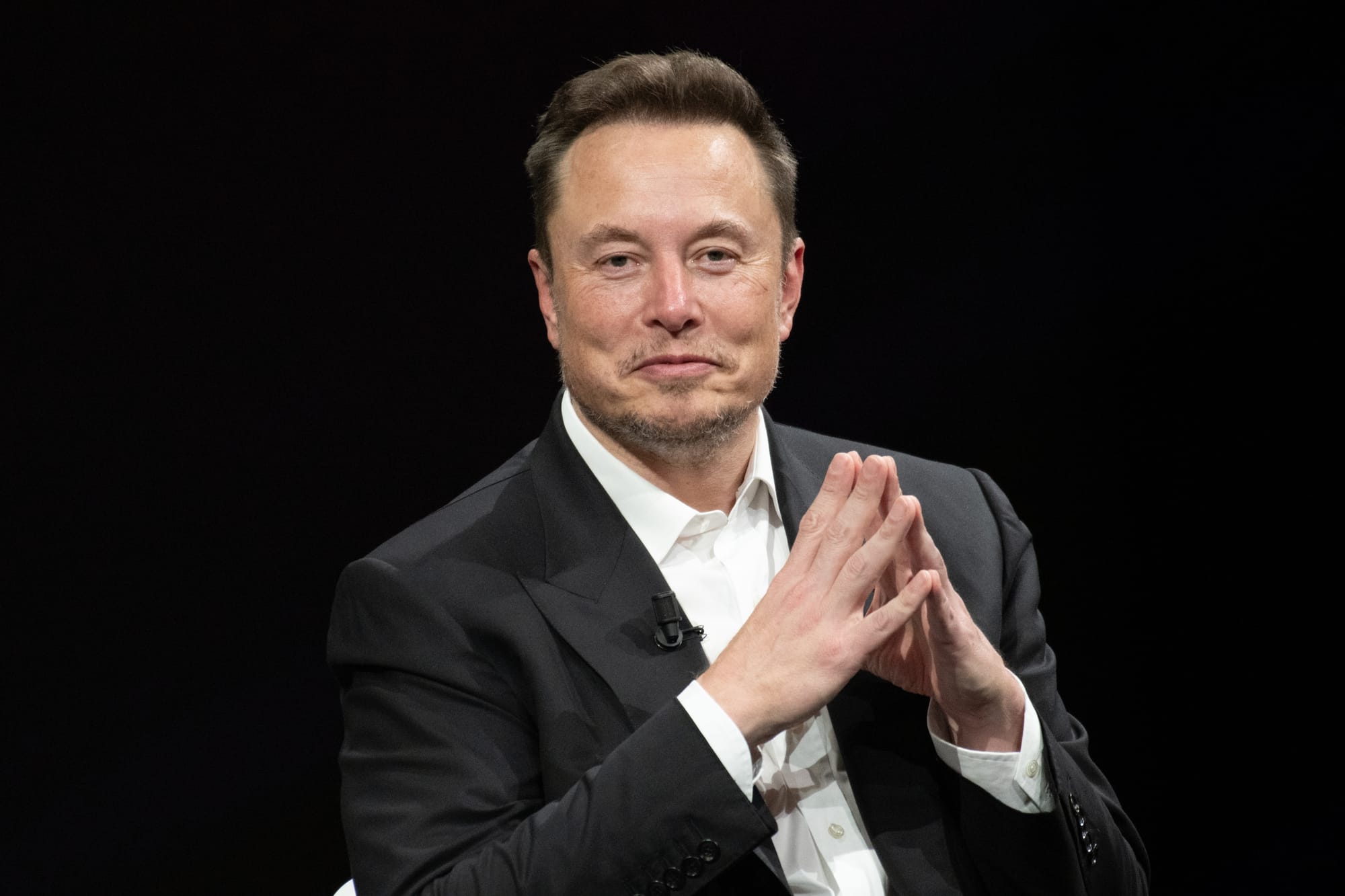
SpaceX began life on the public tape as something rarer than a tech IPO. It began as the price-setter for everything that comes after it. Within two trading sessions of listing on 13 June 2026, the company's market value cleared $2.5 trillion, according to Telegram's Cointelegraph feed, lifting the stock past TSMC into sixth place on the global rankings. Shares jumped 20% in a single session, adding $412 billion of equity value in hours (Unusual Whales, X). By the time the second-day tape closed, the stock was up more than 40% from its debut reference price, with Polymarket's institutional-and-retail demand tracker continuing to widen the bid.
That is not a pop. A pop fades by Wednesday. What is happening here is the public market being handed a benchmark, in real time, that every subsequent private round in launch, satellite broadband, in-space logistics, and downstream data services will be priced against. SpaceX did not merely tap the equity markets. It converted the cost of capital for the entire private space sector into a public-market observable.
The number that resets the room
The headline figure now doing the work is $2.5 trillion. That valuation puts SpaceX behind only the five largest companies in the world on a market-cap basis, a peer group dominated by the trillion-dollar AI platforms (Cointelegraph, Telegram, 15 June 2026, 20:51 UTC). What is unusual is the speed of the move. The IPO itself raised roughly $87.5 billion, the BBC reported on 15 June, some $10 billion above earlier estimates, an unusually wide gap between the marketed range and the cleared books. Demand so outran the offering that retail allocations were starved, leaving many small buyers with only token positions and a sharp hold-or-sell decision (Finance press, 15 June, 16:35 UTC). For the bulk of investors, the trade has been to watch.
Within hours of the second trading session, Australia's Gina Rinehart had reportedly taken a $1 billion stake, the country's richest individual backing the listing at the cleared price (Polymarket, X, 21:58 UTC). The wealth effects on the principal were harder to miss. Polymarket's running estimate put Elon Musk's net-worth increase at approximately $165 billion in a single day, a figure that exceeds Bill Gates' entire fortune. (Polymarket, X, 21:31 UTC.) That is the scale of the repricing. It is not a bid for cash flow. It is a vote that the cost-and-capability curve of orbital industry has just shifted, and the public is being asked to clear the price.
The operating company behind the tape
Strip away the valuation chatter and SpaceX is, today, two businesses welded together. The first is a launch provider with a working reusable booster; the second, and increasingly the larger, is a satellite broadband and downstream data-services platform. Hours before the listing, a Falcon 9 successfully deployed 24 satellites, the company's first launch as a listed entity (Polymarket, X, 17:13 UTC). That is the kind of operating detail the public market will now price quarterly. No more private-market whispers about cadence. No more opaque funding rounds smoothing over delays. The earnings calendar is in charge.
The market is also being asked to value a third thing that does not yet exist. Kalshi traders give SpaceX only an 18% probability of getting humans to Mars before 2030, and the company itself, per Decrypt's morning note (15 June, 13:04 UTC), has declined to commit to a Mars timeline. The Street is, in effect, being invited to underwrite a launch-services-and-satellite-business today, while leaving a separate line on the scoreboard for an optional deep-space programme that the same traders regard as unlikely to print this decade. Read that way, $2.5 trillion is not a science-fiction number. It is the public market clearing a heavy discount rate on a near-term monopoly in orbit, with an embedded option on everything further out.
What the private sector now has to do
For the rest of the space economy, the listing is not news. It is a referendum. Every late-stage rocket builder, satellite operator, ground-station-as-a-service startup, and synthetic-aperture-radar analytics shop has a single question to answer in the next fundraising cycle: where do we sit on SpaceX's curve, and what premium, if any, do we deserve? Founders who previously pitched on revenue multiples of comparable private rounds will now be asked to defend a discount to $SPCX. Limited partners, who used to take the prior private round's valuation on faith, will now have a public benchmark taped to the Bloomberg terminal, refreshed every second. The repricing works in both directions. Companies that supply SpaceX under contract inherit the buyer's discipline. Companies that compete with it inherit the seller's problem.
The downstream is even more compressed. Standard Chartered told clients this week that the three crypto overhangs of the past year, namely the Iran war, the SpaceX IPO and ETF outflows, are simultaneously lifting, a reminder that orbital infrastructure and digital-asset liquidity have been trading on overlapping capital pools (Decrypt, 15 June, 13:04 UTC). Sakana AI, meanwhile, launched a commercial product on the same day the IPO tape was setting records, an autonomous 'virtual CSO' research agent pitched at B2B strategy teams, and Satya Nadella published a sweeping essay on Sunday warning that AI could hollow out entire industries in much the same way globalisation hollowed out manufacturing (VentureBeat, 15 June). These are not the same story. But they share a single underlying condition: capital is repricing platform businesses at a speed the operating businesses cannot match.
The retail problem that won't go away
One of the quieter consequences of the listing is on the demand side. Finance coverage on the day (15 June, 16:35 UTC) noted that most retail accounts received token allocations, sometimes only a handful of shares, and that the secondary question was whether to hold a long-tail position or crystallise gains immediately. The structure of modern IPOs, where strategic and institutional accounts absorb the bulk of the float, deliberately leaves retail under-allocated and forces a fast resale decision into a rising tape. Holders of even a small position can become, in effect, forced sellers of a winner. That dynamic is not new, but it sits awkwardly next to the social narrative of a 'people's IPO'. In this case, the people got the story. They did not, mostly, get the shares.
What to watch into the secondaries
The structural event to look for next is the first wave of post-IPO insider lock-up expirations and the first equity-funded tender offers by the company itself. Either will tell the market whether management views the cleared price as a high-water mark or a floor. The Polymarket contract pricing SpaceX as the world's largest company by year-end sat at 3% on the evening of 15 June (Polymarket, X, 19:57 UTC). Read that not as a forecast but as the implied probability the public market is currently placing on continued compression of the gap between SpaceX and the top five. Three per cent is not zero. It is, however, a sober read of how much of the easy money has already been made.
The deeper question, and the one that will define the next twelve months, is whether the rest of the space economy can grow into the benchmark the listing has now set. If they cannot, expect a wave of consolidation, with private operators either rolled into SpaceX's supplier base or sold for parts. If they can, expect a wave of new listings priced off $SPCX rather than off the last private mark. Either outcome is structurally important. What is no longer available is the prior equilibrium, in which the space economy was an asset class priced off its own internal rounds, invisible to the public tape. That era closed at the open on 13 June 2026.