Trump claims US–Iran deal will be signed Sunday; Tehran says nothing is final
The US president says a memorandum will be inked within 48 hours. Iranian officials tell Fars the text is not agreed, and a Russian-aligned read warns the announcement is being driven by the US domestic clock, not the substance.
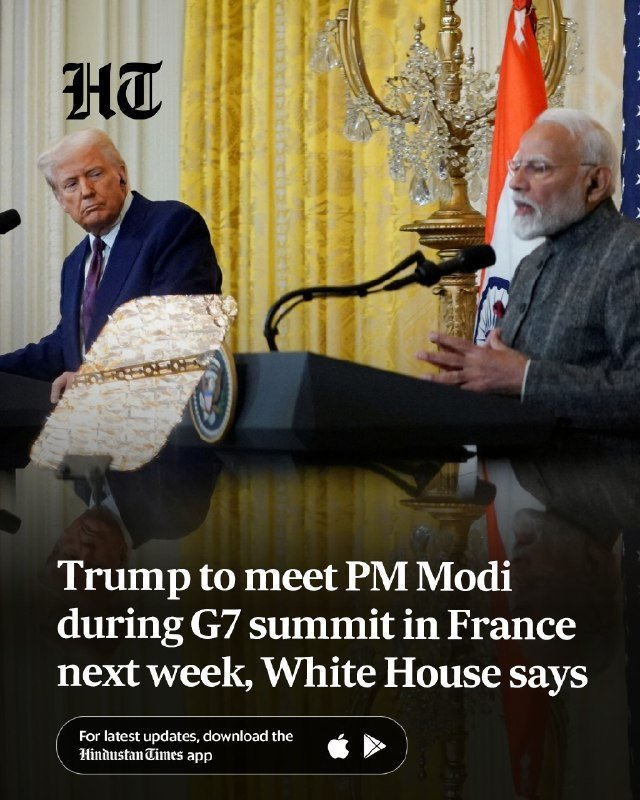
Donald Trump said on 2026-06-13 that a US–Iran memorandum of understanding is scheduled to be signed on Sunday, framing the announcement as a near-concluded diplomatic episode rather than an ongoing negotiation. Speaking to reporters earlier in the day, the US president paired the claim with a fresh threat: if a deal is not reached "quickly," Iran will face what he described as the "ultimate alternative" — a phrase the White House has used in past standoffs over the Iranian nuclear file to denote the credible threat of force. The comments landed on the same day Iran's state-linked outlets and an Israeli security source gave sharply different accounts of how close the two governments actually are.
The headline of the day is the timing, not the substance. Trump's schedule-first framing, with a Sunday signature and an implicit deadline, sets a political clock that has little to do with the technical questions — enrichment levels, snap-inspections access, sanctions sequencing — that a durable arrangement would have to resolve. Tehran's read, in the hours before Trump's remarks, was that no such document is in agreed text. According to Iran's Fars news agency, US pressure for a Sunday signature is outrunning the negotiations themselves, with Iranian officials saying the deal is "not finalised and no signing is expected." Press TV, the Iranian state English channel, carried Trump's claim in real time but underscored it with the "ultimate alternative" warning, a reminder that the negotiating floor in Washington still includes the language of escalation.
The American announcement, read closely
The Reuters wire of 2026-06-13T17:05Z reported Trump's claim that the deal would be signed on Sunday, a one-line headline that compressed several days of shuttle diplomacy into a single news beat. BBC News, by 18:03 UTC, framed the same event with the qualifier the White House did not: "Before the US president's comments, Iran expressed caution about the exact timing." The contrast matters. Trump is asserting an outcome; Iranian counterparts are pushing back on the calendar, not on the principle of an arrangement. That distinction is the part of the story most likely to be lost in a 24-hour news cycle that treats "deal to be signed Sunday" as a confirmed fact rather than a US negotiating posture.
The BBC's sourcing puts Tehran's caution in plain language, with no editorialising. Press TV's parallel post on the same hour noted the threat language explicitly, so a reader of either feed on its own would get a partial picture: a deal is imminent (Trump) and a deal is imminent under threat (Press TV). The two reads are not contradictory, but they are not the same. Treating them as a single fact flattens the actual state of play.
The Iranian counter-narrative
Fars, the agency closest to Iran's Islamic Revolutionary Guard Corps, used the word "pushing" in its framing — Trump is pushing for a Sunday signature, while Iranian officials insist the text is not finalised. The phrasing is not accidental. In Iranian state-aligned coverage, the dominant line of the past week has been that any agreement must be on terms Tehran can defend domestically as a win: sanctions relief that is concrete, sequenced, and reversible, paired with a nuclear constraint regime that does not foreclose an indigenous enrichment capability. A memorandum that signs on Sunday but leaves the hard questions for a later "technical track" is, from Tehran's view, a politically usable announcement in Washington and a politically dangerous one in Tehran.
Press TV's emphasis on the "ultimate alternative" threat is itself a piece of counter-narrative signalling. By foregrounding the threat, the channel's English-language feed is doing two things at once: warning external audiences that the US is not negotiating in good faith under pressure, and preparing a domestic audience for the possibility that talks collapse and a familiar escalatory cycle resumes. Both are coherent Iranian strategic interests. Neither requires rejecting the deal in principle; both require that the announcement of the deal not be allowed to function as a substitute for the deal itself.
What larger pattern this sits inside
This is the familiar pattern of a presidential second term in a US election year, when the incumbent has an interest in producing a foreign-policy headline that can be carried into a closing message to voters, and a counterpart state has an interest in being seen to engage without conceding the framework. The structural asymmetry is durable: Washington can move the calendar because it controls the timing of the announcement, but Tehran controls whether the announced text survives contact with its own political system. A Sunday signature is a US-side deliverable. A Sunday signature that the Iranian parliament and the office of the Supreme Leader can defend is a different deliverable, and one that has not, on the public evidence, been produced.
A second structural point: the loudest escalatory language in this episode — the "ultimate alternative" formulation — is being carried on Iranian state English-language media, not on the Reuters or BBC wires. Mainstream Western wire reporting on the US-Iran file tends to under-weight the threat framing, in part because Western editors treat Iranian state media as primarily a domestic-propaganda channel rather than as a diplomatic signal intended for foreign audiences. The result is that an American reader sees "deal Sunday" while an Iranian reader sees "deal under threat of war, terms undecided." Both audiences are reading the same news day.
What is contested, and what comes next
The sources do not specify the draft text, the sanctions steps that would accompany a signing, or whether any Sunday event would be a memorandum of understanding (politically flexible, non-binding) or a more formal instrument. They also do not specify whether the US negotiating position is being driven by the State Department, by the White House, or by an envoy operating with a narrow mandate. The Reuters and BBC reports are clear that Trump asserted the timing; the Fars line is clear that Iranian officials dispute the timing. What remains genuinely uncertain is whether a Sunday event is plausible at all, or whether the announcement is itself the product — a headline that can be cited, withdrawn, or softened as the talks continue.
If the signature does land on Sunday, the next fight will be over what the text actually commits either side to. If it does not, the next fight will be over who carries the political cost of the failed calendar. Either way, the substantive nuclear file — enrichment, inspections, the path of sanctions — will not have been resolved by an announcement, and the gap between a memorandum's title and its operational content is the gap that the next several weeks of reporting will be measured against.
This publication has framed the announcement as a US-side calendar claim, not a confirmed diplomatic outcome, reflecting the gap between Trump's public timing and Iranian officials' stated position as carried by Fars and Press TV on 2026-06-13.
Wire provenance
This editorial synthesis draws on the following public wire/social posts:
- https://t.me/presstv/109482
- https://t.me/ClashReport/183746
- http://reut.rs/43zua3m
Follow the event.
These dated source records provide context. They do not retrospectively verify this archive article.
Separate what the nuclear watchdog reported from what it could not determine after the June 2025 strikes.