Iran's security council frames a regional response as inevitable — and ties Lebanon to its red lines
On 14 June 2026 Iran's Supreme National Security Council secretary said a retaliatory strike is "ahead" and that Lebanon crosses no red line — a posture calibrated for multiple audiences at once.
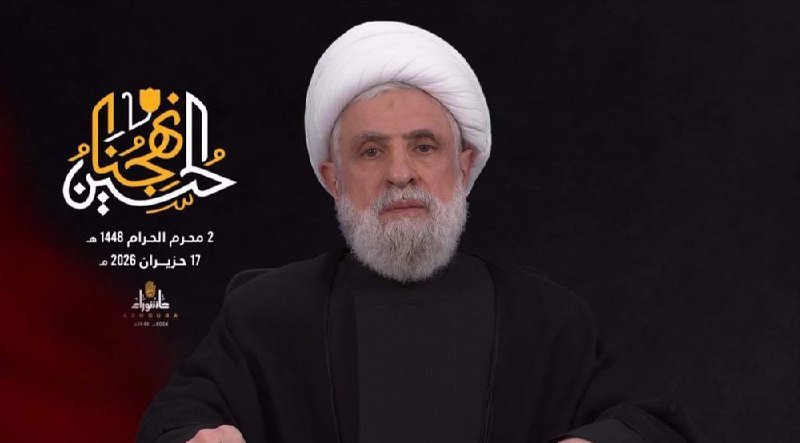
At 17:50 UTC on 14 June 2026, Press TV's English service carried a short but pointed statement from Mohammad Bagher Zolghadr, the secretary of Iran's Supreme National Security Council. A retaliatory strike by what he called "the fighters of Islam," he said, is "ahead." The unity of regional fronts, he added, has created a "security chain in defence of the region," and any crossing of the Islamic Republic's red lines on Lebanon "will not be tolerated." Iranian state outlets ran the remarks within minutes; Telegram channels monitoring the conflict — including Tasnim, Open Source Intel, Intelslava, and Warfield Witness — picked them up in parallel, the last wave of dispatches landing shortly after 18:17 UTC.
The posturing is a familiar genre of Iranian signalling, but the timing matters. The statements follow a run of public messaging in which Tehran has described any further pressure on Hezbollah as a direct challenge to its own security perimeter, and they sit alongside a broader pattern in which the SNSC has become the principal Iranian forum for calibrated threats. Read together, they amount to a posture rather than a plan — words designed to land on several audiences at once.
What Zolghadr actually said, in context
Zolghadr's three core claims, as carried by Press TV and re-circulated on Telegram by the channels Intelslava and Warfield Witness, are narrow. First, that a response is coming, without a date, a target, or a method. Second, that the "unity of the fields" — the Iranian term of art for the cross-border network of aligned forces — has produced a "security chain" in the region's defence. Third, that "Lebanon is our life," a phrase that recurs across Iranian official rhetoric and that was repeated almost verbatim in a second statement attributed to the SNSC secretary by Open Source Intel later the same afternoon.
None of the dispatches attributes a specific trigger event to the statement. The framing is forward-looking: a warning, not a claim of action already taken. That is consistent with how the SNSC has spoken in earlier phases of the current cycle, when Tehran has preferred to keep a deliberate ambiguity between rhetoric and operational preparation.
Who the statement is for
Iranian security messaging of this kind is not aimed at a single audience. Three can be distinguished.
Domestic. The repeated invocation of "the fighters of Islam" and the call for unity across the fronts is the language of internal mobilisation, designed for an Iranian audience already primed by months of state media coverage of the regional conflict. Tasnim's English feed, which is aimed at an external audience, foregrounded the threat dimension; Persian-language outlets carried a more domestic register.
Regional. The phrase "Lebanon is our life" is a direct signal to Hezbollah's leadership and to Lebanese political actors. It tells them that Iran regards any existential pressure on the Shia armed movement as a casus belli for itself, not merely an act of solidarity. The same formulation has been used by senior Iranian officials since at least the previous escalation cycle and is now being redeployed.
Western. The references to red lines and to a forthcoming response are calibrated for an audience in Washington, Jerusalem, and European capitals. They are designed to set the threshold for escalation visibly and to invite a diplomatic response — whether de-escalatory or further hardening — without committing Iran to a specific timetable.
The Telegram ecosystem in which the statements circulated — Intelslava, Warfield Witness, Open Source Intel, Visioner — is itself a clue about how the messaging travels. These are monitoring and translation channels that repackage Iranian and Russian state-aligned material for an English-language audience, often faster than the wire services. Their amplification of the same line, with minor variations, suggests a coordinated release rather than a leaked remark.
The structural frame: rhetoric as arsenal
What is being deployed here is not a military capability but a verbal one. In a regional contest where Iran has, by most open-source assessments, finite and visible missile and proxy assets, the political value of threats that are credible enough to deter but vague enough to retain optionality is unusually high. A claim that a strike is "ahead" moves markets, complicates air-traffic planning, and forces adversaries to price in a wider range of scenarios, all without the issuer having spent a single munition.
This is also a posture in which the SNSC, rather than the foreign ministry or the regular military, has become the lead communicator. The council's institutional position — nominally advisory, in practice a clearing-house for the security establishment — gives its secretary the authority to speak on behalf of the system as a whole without committing any single service to the statement. Zolghadr is, in effect, voicing a consensus line.
For Israel and for Western diplomats, the practical question is how to read the gap between the language of inevitability and the absence of a declared target. The history of the current cycle suggests two non-exclusive readings. One is that the rhetoric is preparatory: that Iran intends to retaliate at a time and in a manner of its choosing, and is using the interval to shape the political environment. The other is that the rhetoric is itself the product — that the statement's value lies in having been made, in the message it sends to allies and rivals, and that no kinetic action necessarily follows.
What remains uncertain
The sources available for this article do not specify which event, if any, triggered the renewed warning. The original Arabic and Farsi transcripts, as carried by Tasnim and Press TV, do not name a particular incident; the Telegram channels that re-broadcast the remarks add no further attribution. Whether the statement is a response to a specific strike, a pre-emptive warning against anticipated action, or part of a longer-running rhetorical cycle cannot be settled on the public record as of 14 June 2026.
Nor is there, in the materials reviewed, any indication of disagreement inside the Iranian system. The uniformity of the messaging — across Tasnim, Press TV, and the SNSC secretary's own wording — is itself a data point, but a single channel speaking in one voice is consistent both with genuine consensus and with a coordinated release. Western and Israeli intelligence assessments, which would normally help to distinguish the two, are not yet in the public record on this specific set of statements.
Finally, the question of what "unity of the fronts" now operationally means is open. The phrase has been used by Iranian officials for years to describe the relationship between the Islamic Republic, Hezbollah, the Iraqi Shia militias, and the Houthis. The current cycle has tested all four of those links, and the state of each is contested in open sources.
Stakes
If the rhetoric is preparatory, the next move is likely to be visible and bounded: a strike sized to demonstrate capability and political will, accompanied by an exit ramp. If the rhetoric is the product, the principal effect will be on negotiations, sanctions debates, and the calculations of regional actors, with the kinetic record unchanged. The third possibility — that the signalling reflects a system that has, for internal reasons, lost some control of its own thresholds — cannot be ruled out on the present evidence but is not the most economical reading.
For Lebanon in particular, the framing of Hezbollah's security as a red line of the Islamic Republic narrows the diplomatic space in which Beirut operates. A Lebanese state that wishes to be insulated from an Iran-Israel exchange is, in this framing, an impossibility: the Iranian position is that any move against Hezbollah is a move against Iran. That posture is now being broadcast more loudly, and more publicly, than at any point in the present cycle.
Desk note: Monexus has treated the Iranian SNSC statement as a posture to be read on its own terms, not as a forecast of action. The Telegram ecosystem in which the remarks circulated is logged in the source list for transparency; the analysis rests on the Iranian outlets' own wording, not on the monitoring channels' framing.
Wire provenance
This editorial synthesis draws on the following public wire/social posts:
- https://t.me/presstv/191297
- https://t.me/tasnimnews_en/
- https://t.me/intelslava/
- https://t.me/wfwitness/
- https://t.me/wfwitness/
- https://t.me/osintlive/
- https://t.me/osintlive/
Follow the event.
These dated source records provide context. They do not retrospectively verify this archive article.
Separate what the nuclear watchdog reported from what it could not determine after the June 2025 strikes.