Scotland's delayed start to the World Cup masks a logistical problem the tournament cannot solve overnight
After a nervy win over Haiti in Boston, Scotland turn to Morocco and Brazil, while none of the tournament's first eight matches have begun on time.
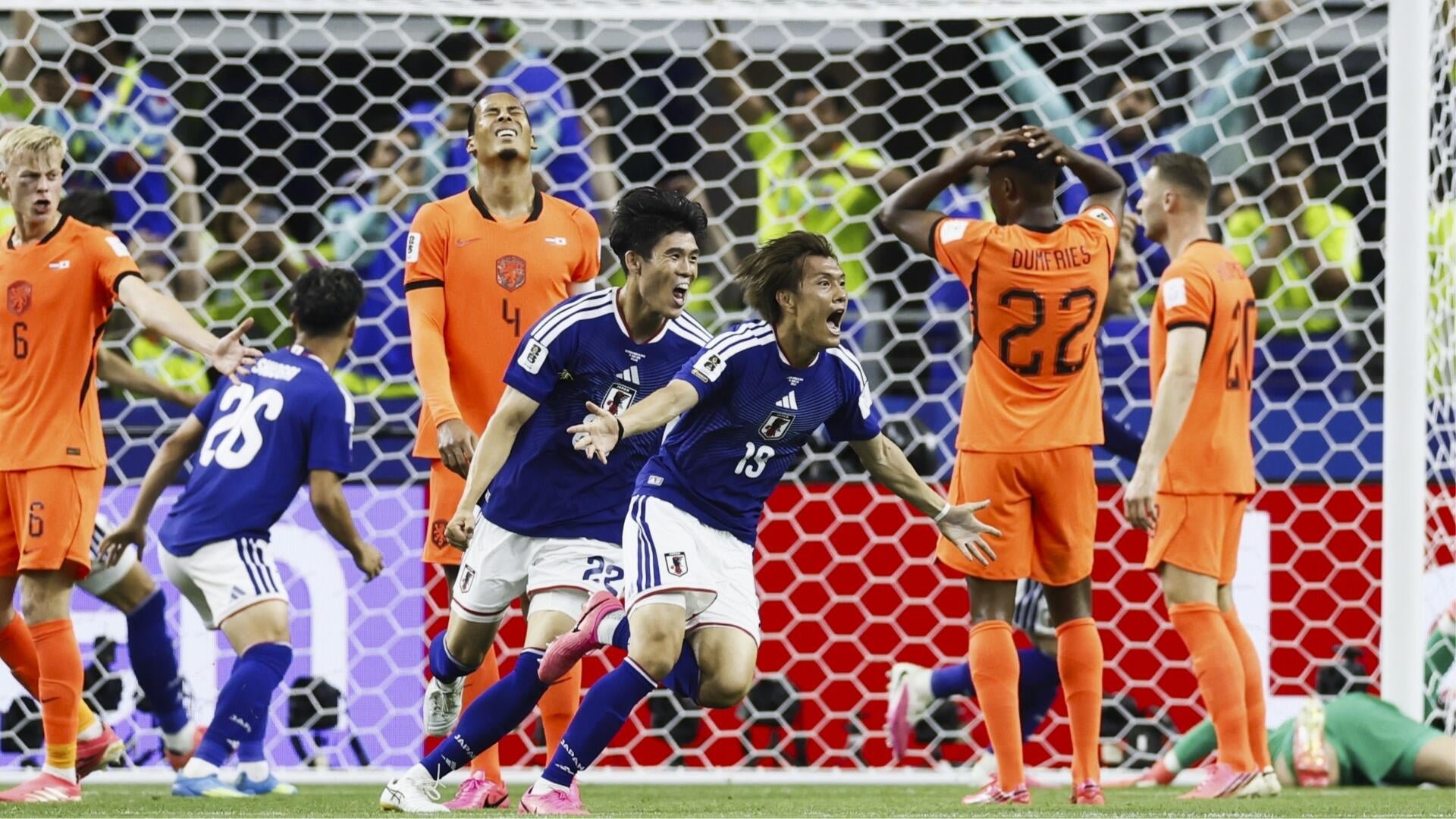
Scotland walked off the field in Foxborough on Saturday with three Group C points and the kind of nervous energy a 1-0 win over tournament debutants tends to produce. The victory was theirs. The clock, however, was not. The match began behind schedule, the latest in a run of late kick-offs that, by 14 June 2026, had touched every one of the 2026 World Cup's first eight fixtures. None of them had started on time. None of them had started within a window that broadcasters could credibly bill as scheduled.
The headline question, going into Scotland's next two group games against Morocco on 18 June 2026 and Brazil later in the group, is how Steve Clarke's side manage their legs and their caution. But the structural question — the one FIFA, the host federations and the rights-holders are quietly asking — is whether a 48-team, three-nation tournament can run on a schedule built for 32 teams in one or two countries. The early returns suggest it cannot, at least not yet.
What the delay actually looked like
The Haiti match was not an outlier so much as a confirmation of a pattern. Across the first eight fixtures of the tournament, kick-offs have drifted, with stadium operations, pre-match ceremonies, and broadcast-presentation windows cited among the contributing factors. The BBC's 14 June 2026 report on the topic was blunt: not a single one of those opening matches had begun on time. For a tournament that bills itself as the most-watched sporting event on earth, that is an unusual admission. Kick-off is the one number on a fixture sheet that should be treated as load-bearing.
The specific Scottish case was a Group C tie at Gillette Stadium in Massachusetts, part of the north-east host cluster. Delays at that venue carry an outsized consequence: the Boston-area logistics chain — transit, security cordons, broadcast truck positioning — is calibrated to the minute, and any slippage in the run-up is visible on camera and on social media within seconds. The Scottish federation, like every other participating federation, absorbed a delay it could not control.
How Clarke is likely to set up against Morocco
Scotland's tactical posture against Morocco will be shaped by what the Haiti win did and did not deliver. A narrow victory against a side making its first World Cup appearance is a foothold, not a platform. The likeliest read, based on Clarke's tournament caution and the short recovery window, is a starting XI tilted towards experience, with the back four kept intact and the midfield asked to compress the spaces between the lines that Morocco's technical players like to occupy.
Morocco arrive as the highest-ranked African side in the field and as a team that has spent the last cycle proving it can press high and hold possession against European opposition. Scotland's path through this group has always run through the Morocco game. A draw keeps them above water. A win, particularly with Brazil still to come, would let Clarke rotate without panic. The risk is the inverse: another tight, attritional match with legs spent on transitions rather than control.
The structural problem behind the late kick-offs
Late kick-offs are a symptom, not the disease. The 2026 tournament is the first to be spread across three host nations — the United States, Canada and Mexico — and the first to feature 48 teams, up from 32. That is a 50% expansion in the number of matches the organising bodies must stage, security-clear, and broadcast-link, with stadium infrastructure that, in several host cities, was built for a different scale of event.
The cumulative effect is a schedule that is technically deliverable and operationally fragile. Each pre-match element — anthems, flyovers, sponsor activations, broadcast tosses, in-stadium presentations, on-pitch sponsor obligations — now sits in a queue that is, in aggregate, longer than the one match-day operations teams were running four years ago. The trade-off is not subtle. FIFA wanted more games, more teams, more host cities, more revenue. What it got, on the evidence of the first eight fixtures, is a tournament that cannot reliably start on time.
The counter-argument deserves air. Tournament kick-offs have slipped in past World Cups, including in single-host editions. Ceremonial and broadcast elements have always pushed first whistles backwards. Some of the delay is cultural, not logistical — local host-federation presentation teams working to their own rhythm, not the one the global feed requires. But the volume of slippage this time is plainly larger, and the most plausible explanation is structural rather than behavioural.
Stakes beyond the group stage
For the players, the immediate stakes are physical: recovery windows compress, warm-up routines are disrupted, and the muscle-memory of pre-match preparation gets rebuilt on the fly. For the federations, the stakes are reputational. A federation that cannot get its team onto the pitch on time looks disorganised, even when the delay is not of its making. For the host broadcast operation, the stakes are commercial: every minute of slippage eats into the advertising inventory that pays for the tournament's broadcast rights.
For FIFA, the stakes are larger still. The 2026 edition is the proof-of-concept for a format the organisation intends to keep. If the early signal — zero of eight on time — becomes the story of the group stage, the conversation by the knockout rounds will be about logistics, not football. That is a conversation the governing body does not want to be having, and one the participating teams, including Scotland, cannot afford to be dragged into.
How Monexus framed this: the wire coverage on 14 June 2026 focused separately on Scotland's tactical challenge and on the broader late-kick-off trend. Monexus is reading them as a single story — a group-stage underdog managing its resources inside a tournament whose operational clock is itself under strain.