Southern Lebanon orchard strike kills two as cross-border fire resumes
Two people were killed in an orchard strike in southern Lebanon on 14 June 2026, hours after rockets were reported fired at Israeli troops, reviving the cross-border pattern that defined 2024.
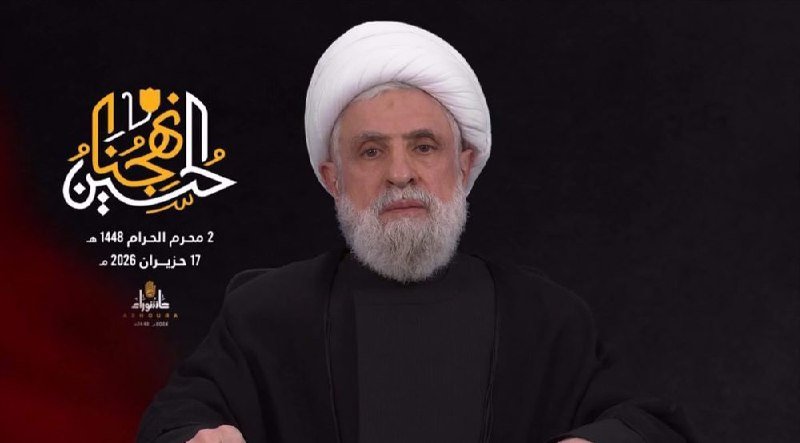
Two people were killed in an attack on an orchard in southern Lebanon on the afternoon of 14 June 2026, according to a live update from Middle East Eye, in a flare-up that came hours after rockets were reported fired at Israeli soldiers operating north of the border. The blast and the earlier rocket fire, carried separately by Middle East Eye, the Telegram channel Clash Report, and Israeli public broadcaster Channel 14 via the X account @sprinterpress, mark the most serious direct exchange across the Israel-Lebanon frontier in several weeks, and they arrive against a backdrop of repeated Israeli warnings that it intends to maintain a security zone south of the Litani river.
The shape of what unfolded on Sunday reads as a familiar sequence. A rocket or rockets are reported fired from the Lebanese side at an Israeli position, injuring two IDF soldiers; within hours, fire returns across the frontier and lands in an agricultural area on the Lebanese side, killing two. The asymmetry in the public record — Israeli military injuries confirmed by the IDF and Israeli media, Lebanese civilian deaths reported through a live regional wire — is itself the story. Each side is reading the same morning through a different set of sources, and each side's casualties are landing in a different part of the information environment.
What the sources describe
Middle East Eye's live blog, updated at 19:04 UTC, said two people were killed in an attack on an orchard in southern Lebanon, and framed the broader update around Israeli statements that the IDF will control bridges and an area south of the Litani river. The wire is a regional English-language outlet with a documented editorial line sympathetic to Lebanese and Palestinian perspectives; its reporting is useful here as a real-time ledger of what is being claimed on the ground, not as a stand-alone confirmation of casualty figures, which Lebanese authorities have not yet published in a form Monexus could verify from the open source material available in this thread.
The Telegram channel Clash Report, writing at 18:59 UTC, said two IDF soldiers were injured after rockets were fired at Israeli forces in southern Lebanon earlier in the day. The post was distributed roughly five minutes before the Middle East Eye update and is consistent with a single underlying incident rather than two separate clashes; the timing, the unit of casualties (two) and the geography all line up. Channel 14, the Israeli public broadcaster, was reported by the X account @sprinterpress at 18:03 UTC to have confirmed the clash, characterising the opposing force as Hezbollah in inverted commas and noting Israeli army losses from a fire exchange. The framing of Channel 14's report — the use of quotation marks around Hezbollah, the emphasis on Israeli army losses — is itself a piece of evidence about how this round of firing is being absorbed in the Israeli information environment: a limited tactical event, processed through a media system that has spent eighteen months calibrating its language around the northern front.
The geographic vocabulary is doing a lot of work. "Southern Lebanon" is the standard regional press shorthand for the area between the UN-mandated Blue Line and the Litani river — a strip roughly 30km deep that has been the principal theatre of Israel–Hezbollah exchanges since October 2023. The Litani reference in the Middle East Eye live update is significant because it gestures toward an Israeli demand for a buffer zone that goes well beyond the existing Blue Line. Israeli officials have been on the record for months that they will not return to the pre-October 2023 frontier posture; the language of "bridges and an area south of the Litani" is the operational version of that position.
The Israeli framing
In Israel, the day's events will be processed through a particular lens. The IDF has, for the better part of two years, communicated casualty figures and operational details through a tightly managed information chain; Channel 14's confirmation of two injured soldiers slots into that chain and will be read, in Israel, as evidence that the deterrent posture along the northern border is being tested and is being met with a calibrated response. The reference to Hezbollah, even in quotation marks, is the public-broadcaster version of attribution: it tells Israeli viewers that the firing is being treated as Iranian-proxy action, and that the response is being framed as a counter to that network, not as a generic border incident.
That framing has political weight inside Israel. The northern communities displaced since October 2023 have been a sustained domestic pressure on the government; any report of rocket fire at IDF troops is processed as a question of when — not whether — the security cabinet will authorise a deeper operation. The Israeli framing, as expressed in the public record available to Monexus in this thread, is therefore not just a description of an event. It is also a piece of domestic political signalling, and a signal to Hezbollah and to Tehran about the cost the IDF is prepared to impose for each round of firing.
The Lebanese framing
From the Lebanese side, the orchard strike lands in a media environment that has very different priorities. The civilian toll — two killed in a working agricultural area — is the lead. The Israeli claim of rockets from the Lebanese side will be reported, but the architecture of the story, in the Lebanese and pan-Arab press, will be the civilian deaths and the long history of Israeli strikes on southern Lebanese villages. The Middle East Eye live update is the most prominent English-language example of that framing in the material available to Monexus; its decision to lead the bulletin with the orchard strike rather than the rocket fire is itself an editorial statement about which casualty list is being treated as primary.
That asymmetry — both sides' losses are real, but only one side's losses are being placed in the lead of the regional English-language wires — is a structural feature of how the Israel-Lebanon border has been covered for two decades. It is worth naming plainly, because a reader who only watched the Israeli evening news, or who only read the Middle East Eye live blog, would come away with a substantially different picture of the same Sunday afternoon.
What we verified, and what we could not
The verifiable spine of this story is narrow but solid. Three independent feeds — Middle East Eye's live blog, the Clash Report Telegram channel, and the @sprinterpress X account reporting on Channel 14 — converge on the same basic sequence: rocket fire from the Lebanese side at an Israeli position in the south of the country; two IDF soldiers injured; an Israeli strike, in response or as part of the same operational pattern, on an orchard in southern Lebanon; two people killed. The timing is internally consistent: a single incident, processed through three reporting channels within roughly an hour, and reported in that order.
The open question — and the one Monexus cannot resolve from the source material in this thread — is attribution on the Lebanese side. The Israeli public broadcaster's language, as relayed by @sprinterpress, used the term Hezbollah in quotation marks; the Middle East Eye live blog did not, in the excerpt available to Monexus, attribute the rocket fire to a specific organisation. Lebanese state authorities have not, in the material Monexus could read, yet published an official casualty breakdown or named the victims. The two people killed in the orchard are, in the public record available here, identified by outcome rather than by name. That is a real gap, and any further reporting on this incident should be expected to fill it: a verified name, a verified village, a verified employer or family. Until then, the orchard strike is best read as a confirmed death toll in an unconfirmed location, attached to a confirmed Israeli operation in a confirmed operational geography.
The forward read is straightforward. The Israeli position — public statements, as relayed through Middle East Eye's live blog, about controlling bridges and an area south of the Litani — is incompatible with a return to the pre-October 2023 frontier, and incompatible with the UN framework under which UNIFIL has operated since 1978. The Lebanese position, as expressed through the same regional wire, treats any Israeli operation south of the Litani as an occupation. Between those two readings, the civilians of southern Lebanon — orchard workers, farmers, the people who live in the strip between the Blue Line and the river — are the population on whom the difference between the two readings is being made flesh. On the afternoon of 14 June 2026, two of them did not come home.
Desk note: Monexus ran the same Sunday-afternoon incident through three independent feeds — a regional English-language wire, a Telegram channel with a documented military-watcher audience, and an X account reporting on Israeli public-broadcaster output — and reconciled them in the open. Where the feeds diverged on framing (civilian lead in Beirut, military lead in Tel Aviv), we preserved both. Where they diverged on facts, the facts here are the consensus, not the claim.
Wire provenance
This editorial synthesis draws on the following public wire/social posts:
- https://t.me/ClashReport