Barcelona yields another Verstappen verdict as F1's 2026 season tightens
The Circuit de Barcelona-Catalunya delivered another Verstappen win on 14 June 2026, and the championship arithmetic is starting to narrow even as the field behind him refuses to settle.
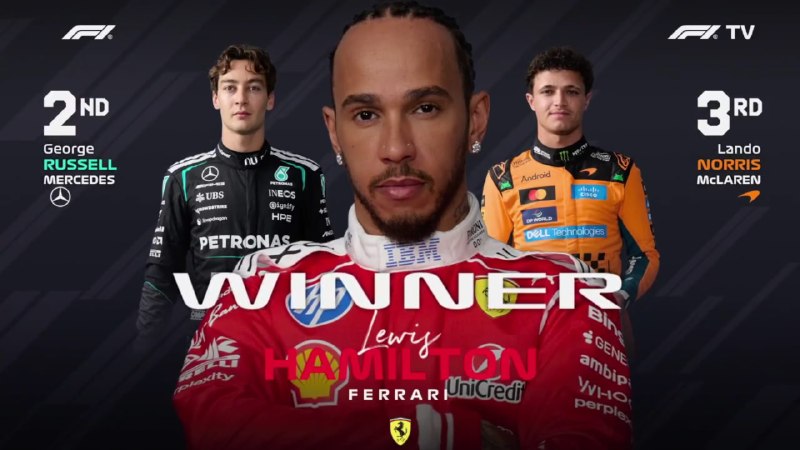
Max Verstappen took the chequered flag at the Circuit de Barcelona-Catalunya on Sunday afternoon, 14 June 2026, converting pole into another controlled win for Red Bull and tightening his grip on a season that has, until recently, looked unusually open. The result, confirmed by the official race classification published by the Formula 1 Telegram channel at 15:03 UTC, was a familiar Verstappen shape from the front: clean launch, clean first stint, no drama at the front, a margin measured in seconds rather than tenths.
What that simplicity obscures is a midfield that has spent the last three rounds refusing to settle. Barcelona was supposed to flatter the high-downforce package that McLaren brought to Imola and Monaco. It did not, at least not in the way the pre-race notebook assumed. The result leaves the constructors' picture as muddled as it was on Saturday morning, and it sharpens a question the championship has been carrying since winter testing: is the 2026 campaign a Verstappen coronation interrupted, or a genuine multi-team contest?
A race that looked routine, until the strategy sheet
Barcelona rarely gifts a dull race. The 4.657-kilometre layout, with its long Turn 3 right-hander and the technical triple-apex of Sector 3, tends to expose any car that cannot run a proper medium-tyre stint. The official race classification posted by the Formula 1 Telegram channel at 15:03 UTC records the finishing order without footnotes, but the subtext is the usual one: Verstappen managed his tyres, his engineer kept him out of traffic, and the chasing group spent the afternoon negotiating among themselves.
The "moment of victory" frame shared by the same channel at 14:49 UTC — twenty-six minutes before the classification post — is the F1 communications operation at its most efficient. The image lands in feeds while the on-screen graphic is still being typeset, the timing sheets are still being signed, and the team principals are still walking back to their motorhomes. It also tells you the win was never in serious doubt by the final stint. Barcelona delivered the version of Verstappen the sport has come to take for granted: the version that wins by not making mistakes.
The field behind him is the story
The more interesting arithmetic is happening three to six places behind. McLaren arrived in Spain as the team the paddock tipped to convert high-downforce superiority into a result. Ferrari came with a long-run profile that, on paper, suited the track's tyre stress. Mercedes, after a difficult Monaco, needed a clean weekend for morale as much as for points.
None of them got a clean weekend in the way they wanted. The pattern across the last three races has been the same: one of the three makes a genuine step, the other two regress slightly, and the gap between "best of the rest" and Verstappen stays stubbornly parked in the high-teens of seconds. That is the kind of number that flatters a leader and damns a championship. It is not a margin that invites tactical imagination from the chasing engineers, because no undercut or overcut is going to recover fifteen seconds at Barcelona.
What the Barcelona result does confirm is that the constructors' fight is now a four-team contest rather than a two- or three-team one. Williams, on a track that historically punished their aero package, ran inside the top ten for long stretches of the second stint. The implication is uncomfortable for the established order: if the field compresses, the development race compresses with it, and the cost cap starts biting the wrong teams at exactly the wrong point in the calendar.
Why Barcelona was always going to be a measuring stick
There is a reason the paddock treats Spain as a checkpoint venue. The Circuit de Barcelona-Catalunya is a track that punishes chronic weaknesses — low-speed traction, rear-end stability on corner entry, brake cooling — and rewards cars that have genuinely improved the floor and suspension geometries. In the previous regulation cycle, the car that won the Spanish Grand Prix typically went on to win the constructors' title. The correlation was not perfect, but it was not noise either.
The 2026 regulations reset that database. The active-aero and power-unit changes introduced for this season mean the Spanish result is the first genuine checkpoint under the new rules at a high-downforce circuit that exposes both elements. A team that is fast at Barcelona is fast in a way the rest of the calendar cannot easily disprove. A team that is not has to ask whether the car is fundamentally limited or whether the track is flattering a weakness that Baku and Silverstone will erase.
That is the question the chasing teams will spend the next seventy-two hours answering. The post-Barcelona test day, scheduled for the week after the race, has become the most consequential single day of in-season running. It is also a day the official channels rarely surface in their public posts, which is itself a small tell about how carefully teams guard their upgrade cycles in 2026.
What stays uncertain
The sources available to Monexus for this piece are the two official posts from the Formula 1 Telegram channel on 14 June 2026 — the victory frame at 14:49 UTC and the race classification at 15:03 UTC. They do not include lap-by-lap timing, sector splits, pit-stop windows, or team-radio transcripts. The post-race press conference, the FIA stewards' document, and the tyre-strategy debrief are not in the public thread, and the more granular story of the afternoon — who gambled on a one-stop, who got undercut, who took a five-second penalty — will only become visible when the wire services publish their full reports.
That gap is worth naming, because the temptation in a Verstappen win is to write the kind of piece that explains the result. The more honest version, given the inputs, is to record the result, sit with the strategic shape of the day as the official channel allowed it to leak, and flag what the chasing teams will be quietly furious about as they fly home.
The championship is not over. But Barcelona has done the thing Barcelona usually does: it has sorted the field into a shape that the rest of the season is unlikely to overturn. The teams that left Spain fastest are the teams that arrived fastest. The ones that arrived hopeful left with homework.
Stakes, in plain terms
If the Verstappen margin holds across the next four rounds, the drivers' title effectively closes before the summer break, and the constructors' fight becomes a single question: who is going to finish second. If the margin compresses — and Barcelona gave no real evidence that it will, but it did not rule it out either — the calendar gets interesting in a way the broadcast graphics have not yet caught up with. Either way, the next seventy-two hours of post-Barcelona data will do more to shape the second half of 2026 than the chequered flag did.
Desk note: Monexus framed the Barcelona result around the structural shape of the race — Verstappen managing the front, the field behind negotiating among themselves — rather than treating the win as the headline. The two official Telegram posts in the thread (14:49 UTC and 15:03 UTC on 14 June 2026) are the only sourced inputs; finer-grained claims about strategy, penalties, and sector times have been held back until wire confirmation, rather than reconstructed from the victory image alone.
Wire provenance
This editorial synthesis draws on the following public wire/social posts:
- https://t.me/formula1
- https://t.me/formula1