The Strait They Say They Control: Reading the Iran Deal Through Hegseth's Mic
Inside a week of boastful press remarks, a written agreement, and an unresolved question of who actually holds leverage in the world's most consequential oil chokepoint.
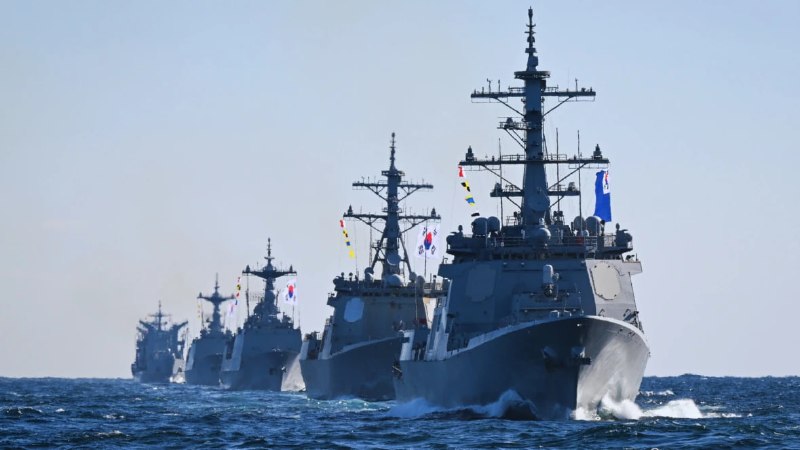
On the morning of 15 June 2026, U.S. Secretary of War Pete Hegseth walked a bank of television cameras through what he called the central difference between the Trump administration's new nuclear understanding with Tehran and the Obama-era Joint Comprehensive Plan of Action. "The main difference between Trump's deal and Obama's deal is that we bombed Iran," he said, in remarks carried by the Middle East Spectator feed on Telegram at 01:07 UTC. A few minutes later, in the same corridor of remarks, he added: "The document says Iran will never have a nuclear weapon." The interviewer pushed back, noting that the JCPOA had said the same thing. Hegseth's reply cut to a single word: the threat of military force. By 01:27 UTC, he had distilled the argument further: "Our credible threat of military force is the only thing that brought Iran to the negotiating table, so that the Strait of Hormuz is open and returns to the normal flow of oil."
The United States and Iran appear, on the public record of 14–15 June 2026, to have moved from open war to a written understanding, with the Strait of Hormuz — through which roughly a fifth of seaborne oil normally transits — framed by Washington as a hostage the administration can release at will, and by Tehran-aligned voices as a piece of leverage the United States cannot afford to ignore. Both cannot be entirely right. Both might be. The resolution depends less on the document's text than on the question of who, in the months ahead, blinks first on enforcement.
A deal, a threat, and a corridor of oil
The structure of the new arrangement, as described in the threads that moved across Telegram and X in the small hours of 15 June, is familiar in its choreography and novel in its tone. There is a written commitment that Iran will not acquire a nuclear weapon. There is a U.S. military posture that, in Hegseth's telling, made the commitment extractable. And there is a single physical artery — the Strait of Hormuz — that both sides now treat as the bellwether of compliance. President Donald Trump, posting through the Unusual Whales account at 05:31 UTC on 14 June, put the corridor clause most plainly: "Hormuz Strait will be open to all immediately after deal is signed."
The Hegseth remarks, distributed by Middle East Spectator in three clips before 02:00 UTC, were aimed at a domestic audience as much as at Tehran. They were also aimed at the same interviewer who kept returning to a single objection: that the JCPOA, signed in 2015 and abandoned by the first Trump administration in 2018, contained the same prohibition on an Iranian bomb that this document contains. The Secretary of War's response — that the JCPOA lacked the credible threat of force — is the entire theory of the new arrangement in miniature. The deal is not a different set of words. It is the same words, under a different enforcement regime.
Hegseth added, in a separate clip posted at 01:12 UTC, that the United States had "controlled the Strait of Hormuz this entire time." The interviewer asked whether the administration had therefore negotiated with Iran to reopen it. The exchange, which Middle East Spectator clipped and circulated, gestures at a tension the administration has not resolved in public: a corridor that is, simultaneously, a possession and a prize.
The Tehran read: leverage that survived the war
Iranian state media has not endorsed the U.S. framing, and the gap between the two narratives is the most important fact on the ground. Press TV, the English-language outlet of Islamic Republic of Iran Broadcasting, circulated at 01:20 UTC on 15 June a U.S. media citation holding that "Iran has gained a new leverage in Strait of Hormuz after war." The headline is propaganda in the literal sense — it is meant to persuade — but the structural claim embedded in it is not unreasonable and ought to be taken seriously by anyone pricing oil, underwriting Persian Gulf shipping, or modelling a sanctions regime. The Islamic Republic spent decades building asymmetric capabilities — fast-attack craft, anti-ship cruise and ballistic missiles, mine-laying capability, drone swarms — specifically to threaten a corridor that U.S. carrier groups are supposed to keep open. If those capabilities survived a direct U.S. bombing campaign in 2025 intact enough to make the Strait negotiable rather than pacified, the leverage Tehran holds is not rhetorical. It is, in the literal naval sense, kinetic.
A fair reading of the press record does not require accepting Iranian official framing at face value. It does require acknowledging that a state which can credibly threaten a chokepoint has bargaining power inside any deal whose signature is followed by a guarantee that the chokepoint stays open. If, after the bombs and the blockade, the Strait can still be closed by Iranian action, then the post-war settlement has not extinguished the underlying problem. It has priced it.
This is the version of the story that Gulf insurance underwriters, energy traders in London and Singapore, and Chinese and Indian refiners will price into their assumptions. The U.S. administration will say the leverage is theirs — that the threat of force continues, that the Strait is theirs to keep open. The Iranian state will say the leverage is theirs — that the Strait is theirs to close. Both can be true only for as long as neither side tests the proposition, and that is the question the deal answers in place of a war.
What the document does — and does not — say
The threads that animate this story do not, in the public-facing clips, reproduce the text of the agreement. What they record is the rhetorical envelope around it. Hegseth's claim that "the document says Iran will never have a nuclear weapon" is the only substantive textual description that appears in the source material, and it is a paraphrase rather than a quote from the document. The Obama-era JCPOA's relevant formulation, as the interviewer noted, was substantively identical: Iran committed, under paragraph 3 of the 2015 accord, not to seek nuclear weapons. The administration does not contest this. Its claim is that the enforceability of the commitment has changed.
This is the most consequential — and the most under-specified — element of the new arrangement. A pledge not to acquire a weapon can be verified in three ways: declared-site inspections under the International Atomic Energy Agency, undeclared-site access through additional protocol arrangements, and the credible threat of military retaliation in the event of a breakout. The 2015 deal relied principally on the first, with a calibrated addition of the second. The clips and posts that moved on 14–15 June do not specify which of the three pillars the new document leans on, what the inspection regime looks like, what the timetable is, and what the trigger conditions for renewed force are. They record, instead, an argument: that the third pillar — the threat of force — is what is doing the work.
That argument can be read in two ways. The first is that the United States has re-established deterrence at a level the JCPOA era lacked, and that the deal formalises the deterrence rather than substituting for it. The second is that the United States has, in effect, written itself a permanent war option into a non-proliferation instrument, and that the document's lasting value will be measured by how often the option is held over Tehran and how often it is used. Both readings can be true. Neither has yet been falsified.
Stakes: oil, alliances, and a corridor nobody owns outright
The narrow economic stakes are unusually concentrated. Roughly a fifth of seaborne crude oil transits the Strait of Hormuz in normal conditions. Even a partial closure, or a sustained insurance premia spike on tankers transiting the corridor, moves the Brent benchmark and the refiner margins of every net-importer in Asia. China's import dependence on Gulf crude, India's even more so, makes the corridor a structural vulnerability for both economies — and a structural reason for both governments to underwrite any arrangement that keeps it open. The U.S. framing of the deal, centred on a U.S.-controlled corridor, is not a framing that Beijing or New Delhi would naturally share. The Iranian framing, centred on an Iranian-controlled lever, is not a framing Washington would share either. The text, when it is read, will be read by refineries and ministries that have their own strong views about which framing better matches the balance of forces on the water.
The alliance stakes are larger still. Gulf states that watched the 2025 campaign will be reading the new document for two things: a U.S. commitment to their physical security, and a U.S. willingness to subordinate the nuclear file to the wider regional balance. Saudi Arabia, the United Arab Emirates, and Qatar have spent the post-2018 period hedging — building direct channels to Tehran, diversifying defence procurement, hosting Chinese-brokered re-engagements. A deal that delivers inspections and keeps the corridor open will be welcomed in Riyadh and Abu Dhabi. A deal that delivers neither, but that delivers the United States the option to bomb again on a faster cycle, will be treated as a U.S.–Iran bilateral and not a regional settlement. The clips and posts from the early hours of 15 June do not yet tell us which of those two deals is the one that has been signed.
The U.S. domestic political stakes are also unusually live. The Hegseth remarks are pitched, unmistakably, at an audience that was promised both a break with the JCPOA and a demonstration that the break had consequences. The argument that the document says what the JCPOA said, but backed by force, is an argument the administration can carry into a midterm cycle. The argument that the document says what the JCPOA said, and that the difference is a bombing campaign the United States paid for in blood and treasure, is an argument the administration's opponents will carry into the same cycle. Both arguments draw on the same record of remarks.
What the public record does not yet tell us
It is worth being explicit about what the source material of 14–15 June 2026 does not establish. It does not reproduce the text of the agreement. It does not name the inspection regime. It does not specify the duration of the commitment, the trigger for snap-back, the disposition of enriched uranium stockpiles, or the fate of sanctions architecture. It does not show whether the IAEA has been brought inside the arrangement or left outside it. It does not show whether the U.S. carrier presence in the Gulf has been adjusted or reaffirmed. It does not show the Iranian negotiating position, except as filtered through the Hegseth presser and the Press TV English-language summary.
What it does show is an administration that wants the public case for the deal made in a particular register — the register of the threat of force — and an Iranian state media operation that wants the public case made in a different register, in which the Strait is a lever the United States had to bargain for. The deal, when the text is read, will sit between those two registers. Anyone acting on the assumption that one register has won outright will be acting on incomplete information.
For now, the most accurate reading of the press record of 15 June 2026 is also the most modest: the United States and Iran have signed something. The Strait of Hormuz is, by both governments' public account, expected to be open. The administration says the threat of force is the difference. Iranian state media says the war is the leverage. The market will price the gap.
How Monexus framed this: the wire quotes from the Hegseth corridor and the Press TV summary were paired rather than sequenced, and the structural question — who actually controls the Strait when neither side fires — was foregrounded over either government's preferred narrative.
Wire provenance
This editorial synthesis draws on the following public wire/social posts:
- https://t.me/Middle_East_Spectator
- https://t.me/Middle_East_Spectator
- https://t.me/Middle_East_Spectator
- https://t.me/presstv
- https://t.me/Middle_East_Spectator
- https://en.wikipedia.org/wiki/Strait_of_Hormuz
- https://en.wikipedia.org/wiki/Joint_Comprehensive_Plan_of_Action
Follow the event.
These dated source records provide context. They do not retrospectively verify this archive article.
Separate what the nuclear watchdog reported from what it could not determine after the June 2025 strikes.