Hezbollah hails Iran-US understanding as 'monumental achievement' as Lebanon ceasefire holds
Tehran frames the Trump-Pezeshkian text as the end of an imposed war; Trump calls it an uranium-for-economics trade; Islamabad claims it as a diplomatic triumph. The deal holds or breaks on Baghaei's Lebanon clause.
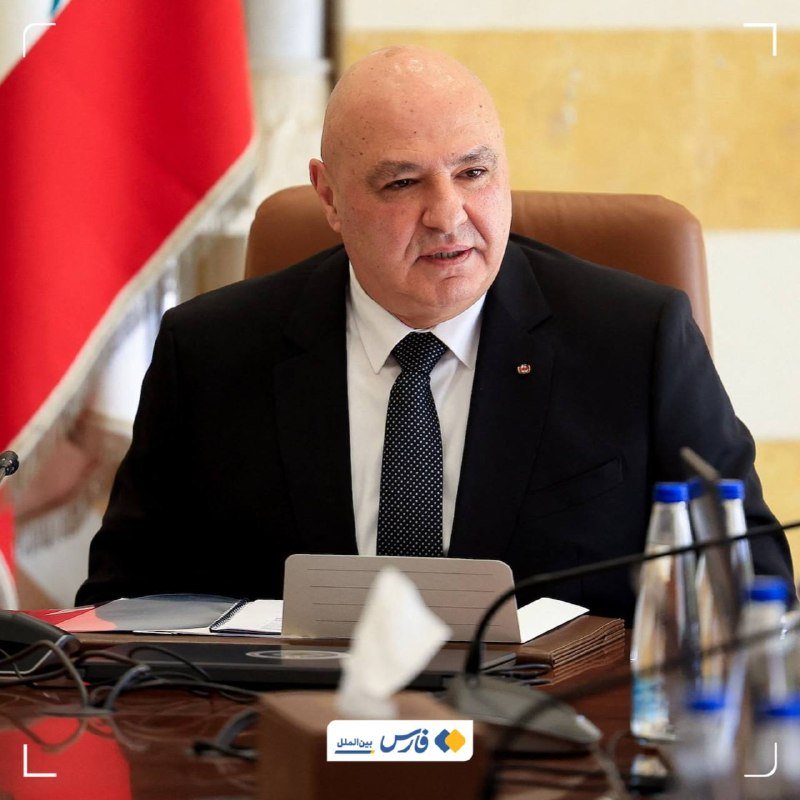
On the evening of 17 June 2026, Iran's Foreign Ministry spokesperson Esmail Baghaei stepped in front of his cameras and drew a line. If Israeli strikes on Lebanon continued, he said, it would amount to a violation of the United States' obligations under the memorandum signed hours earlier by Presidents Masoud Pezeshkian and Donald Trump. The threat was not improvised: it was a test of the architecture that Tehran and Washington agreed upon at the Palace of Versailles, brokered under Pakistani auspices in Islamabad, and now held up as the deliverable of a war the region had spent months trying to end.
What this document actually contains, and what Hezbollah chooses to claim about it, will decide whether the quiet in southern Lebanon holds past its opening week.
The signing everyone is reading differently
The headline fact is small and procedural. Pakistan's Prime Minister Shehbaz Sharif announced on Tuesday evening that the "Islamabad Memorandum of Understanding" between Iran and the United States had been concluded. France 24 reported that Trump and Pezeshkian signed on Wednesday, with Trump confirming the deal publicly as he left a dinner at the Palace of Versailles with his French counterpart. The signing was done digitally, with Trump personally countersigning a copy during the Versailles dinner, according to two American officials who spoke to Axios. Iran's Tasnim news agency framed it as the end of "the war imposed by the US-Zionist regime against the Islamic Republic of Iran."
Each side is translating the same ceremony into its own political grammar. Sharif cast it as Pakistani diplomacy's crowning achievement. Trump spoke of an economic relief package tied to Iran's dilution of its enriched uranium. Iranian state outlets cast it as a deliverance from an imposed war, the formal end of a fight Tehran had already framed in maximalist terms. Deutsche Welle, reporting on Wednesday, framed it more soberly as "an initial agreement to extend the ceasefire with Iran for another 60 days and reopen the Strait of Hormuz," a description that locates the deal inside a still-rolling process rather than a final settlement.
The text matters less than the choreography around it. The deal was signed in Versailles, announced from Islamabad, and is being interpreted from Beirut and Tehran simultaneously.
Baghaei's line in the sand
The most operational section of the deal, judged by who is using it as a cudgel, is the Hezbollah clause. Within hours of the signing, Baghaei began reading the Lebanon file out loud. Telegram channels that aggregated his press conference, including OsintLive, ClashReport, and Tasnim's English service, carried the same formulation: Iranian and US commitments under the memorandum run as a single package. Continued Israeli attacks on Lebanon would constitute a breach by Washington, not by Jerusalem. "We do not distinguish between the two," Baghaei said, in variants reported across at least four channels.
The framing is consequential. By placing Israeli action in Lebanon inside the US obligation envelope, Tehran is publicly converting a Hezbollah-Israel cessation of fire into a bilateral US obligation, with Tehran as enforcer. The clause gives Iran's foreign ministry a procedural hook to escalate on its own timeline, citing the memorandum rather than fresh provocations.
Hezbollah, for its part, has been the loudest Iraqi-style claimant of victory on the dossier. Its official channels and allied outlets have framed the Trump-Pezeshkian text as a regional realignment in which the resistance axis has dictated terms. The Cradle, the Beirut-based outlet sympathetic to the axis, has run a steady drip of commentary since the signing presenting the memorandum as a Hezbollah diplomatic dividend.
The southern Lebanon test
Whether the architecture holds will be settled not in foreign ministry briefings but on the Litani river line. Hebrew-language media, cited by Al-Alam and Fars News International, reported that two separate Hezbollah operations in southern Lebanon on Wednesday left one Israeli dead and ten injured, some in "very serious condition." Neither operation has been independently confirmed by the IDF at the time of writing, and the Israeli military correspondent briefings have not yet produced a public casualty tally matching those numbers.
The unverified casualty reports matter because they sit on a fault line. Baghaei's reading of the memo treats any continuation of Israeli "aggression" in Lebanon as a US violation. Hezbollah is testing that reading the morning after the signing. If Israel retaliates and Baghaei calls it a Washington breach, the 60-day extension DW reports will start with a dispute inside the deal's first week.
The narrow gap between Baghaei's "no distinction" framing and Tel Aviv's reserve of operational freedom is where the next fortnight's escalations will live.
The Strait and the uranium
Underneath the Lebanon clause, two economic levers keep the architecture on its rails. The first is the Strait of Hormuz. The ceasefire extension runs alongside a reopening arrangement, according to Deutsche Welle's reporting on the deal. Iran closed portions of the chokepoint in earlier escalations; the memorandum, read against that record, ties traffic back to a verifiable condition.
The second lever is the enriched uranium stock. France 24 reported that Tehran has agreed to dilute its enriched uranium in exchange for large-scale economic relief, the same basic trade the 2015 framework once attempted. The Pakistan-brokered deal does not run as long, and the dilution timeline has not been published. What Iranian outlets do emphasise, repeatedly, is that the economic relief component is now underwritten.
Both levers are reversible. Both sides retain the technical capacity to walk back.
What the credit-claiming actually masks
Set side by side, the wire trail is consistent on facts and loud on framing. A document was signed in Versailles. A 60-day ceasefire extension was reported by DW. Iranian state outlets call it the end of an imposed war. Trump is calling it a uranium-for-economics trade. Hezbollah claims it as a regional vindication. Sharif is treating it as a Pakistani foreign policy monument.
That six-pack of claims describes one deal. The next checkpoint is whether Baghaei has to invoke his Lebanon clause before 24 June, when the next round of diplomatic traffic around Hormuz reopening will surface, or whether the memorandum absorbs its first week of southern Lebanon friction the way a ceasefire is supposed to.
Watch the IDF briefings from Thursday. If they produce casualty totals matching Hezbollah's claims, the conversation moves from press conference to enforcement room.
Sources
- https://t.me/wfwitness
- https://t.me/JahanTasnim
- https://t.me/FarsNewsInt
- https://t.me/thecradlemedia
- https://www.france24.com/en/middle-east/ (Middle East live: Trump, Iran's president sign deal to end Mideast war, 17 June 2026)
- https://www.dw.com/ (US President Donald Trump signs initial agreement on Iran war, 17 June 2026)
- https://t.me/osintlive (Baghaei on Israeli attacks in Lebanon, 17 June 2026)
- https://t.me/ClashReport (Iran FM spokesperson statement, 17 June 2026)
- https://t.me/alalamfa (Hebrew media reporting on Hezbollah operations in southern Lebanon, 17 June 2026)
- https://t.me/farsna (Trump signing confirmation, 17 June 2026)
Desk note: Monexus treated the Versailles signing and Baghaei's Lebanon clause as two distinct but interlocking events, framing the deal as a 60-day extension (per DW) rather than a final settlement. Tasnim, Fars and Al-Alam were used as legitimate primary sources for Iranian, Hezbollah and southern Lebanon reporting, with the same caveats applied to their analytical framing that wire aggregators carry.
Follow the event.
These dated source records provide context. They do not retrospectively verify this archive article.
Separate what the nuclear watchdog reported from what it could not determine after the June 2025 strikes.