Tehran frames Hormuz deal with Oman as sanctions-killer, leaves Strait security bilaterally managed
Iran's foreign ministry says a new memorandum with Muscat obliges Washington to lift sanctions outright and reserves Hormuz security to a Tehran–Muscat axis. The diplomatic text has not been published.
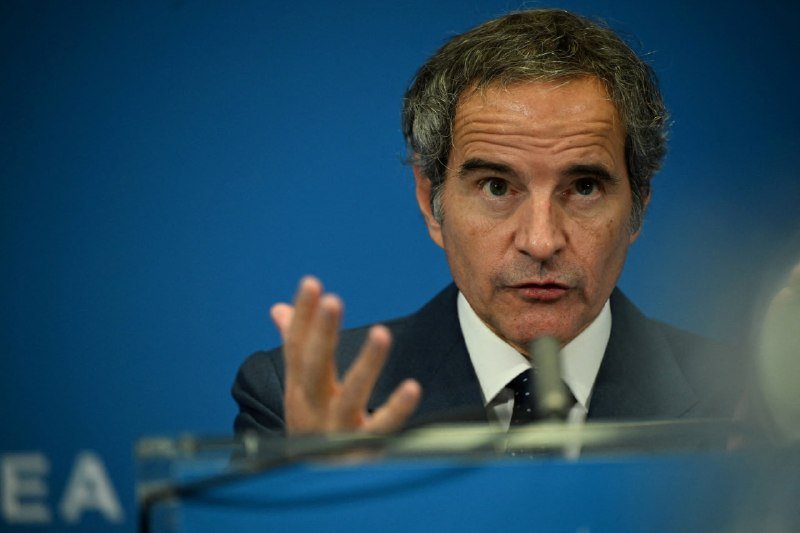
At 12:18 UTC on 15 June 2026, Esmail Baqaei, the spokesperson of Iran's Ministry of Foreign Affairs, told reporters in Tehran that the diplomatic annexes of a new agreement with Oman would be published "soon," and that the "manner and mechanism of signing the memorandum of understanding" would be settled in the next 48 hours. The same briefing, carried by Iranian state-aligned outlets including Tasnim and al-Alam, contained three claims that go well beyond ceremony: that the United States is obliged under the deal to "completely" lift sanctions on Iran; that the release of frozen Iranian assets is a "legal and economic right" that must be honoured; and that security of shipping traffic in the Strait of Hormuz will be guaranteed bilaterally by Iran and Oman, with the cost of navigation services and ship insurance set and collected by the two governments.
The framing matters. Tehran is selling the package not as a technical cooperation accord between two Gulf neighbours, but as the outer edge of a wider arrangement with Washington — one in which sanctions relief, asset release, and the security of the world's most important oil chokepoint are bundled into a single bargain. Whether the US side recognises that bundling is the question that will define the next month.
What Baqaei actually said
Three substantive claims sit inside the briefing, carried in near-identical form by Tasnim, the Farsi-language Tasnim channel JahanTasnim, and the Arabic-language al-Alam between 12:12 and 12:18 UTC on 15 June 2026. First, that Iran and Oman together "ensure the security of traffic in the Strait of Hormuz," with the costs of navigation services and ship insurance "designed and received" by the two states. Second, that "the recent agreement requires the United States to completely lift the sanctions" and that releasing frozen Iranian property is Iran's "legal and economic right." Third, that the Islamic Republic "does not focus on marginal issues" — diplomatic shorthand for the Iranian position that only the strategic core of the deal will be negotiated, with secondary clauses left to be settled by the working groups in the days ahead.
Read together, the briefing sketches a choreography. The MoU with Oman is being positioned as the visible bilateral instrument; the US sanctions track is being held up as the substantive prize; and the Hormuz security architecture is being recast as a Tehran–Muscat condominium, with foreign-flagged tankers and their insurers paying the two governments directly for safe passage.
The counter-read from outside the briefing room
The dominant Western wire framing of the past 18 months has been that any Iran arrangement in 2026 is a sequencing exercise: sanctions first, verification second, with the US Treasury keeping the principal leverage and any Gulf-state role confined to logistics. Tehran's framing inverts that sequence. By placing the Hormuz security and insurance-revenue provisions inside a publicly named bilateral with Oman — a Gulf state that has historically mediated between Washington and the Islamic Republic — Baqaei's ministry is making it harder for any future US administration to roll back the deal without simultaneously antagonising Muscat and disrupting roughly a fifth of seaborne oil flows.
The structural move is recognisable. Smaller Gulf monarchies have repeatedly used their position astride transit corridors to convert geography into diplomatic veto power. Oman's role as the 2013–15 back-channel for the original nuclear framework is the most cited precedent. What is new is the explicit bundling of insurance and navigation-service fees with a sovereign claim over chokepoint security — a step that, if implemented, would route a new revenue stream around the existing US-led Maritime Security architecture in the Gulf.
There is a plausible alternative read of the same facts: that Baqaei is overstating Tehran's leverage, that the MoU is a face-saving device for an Iranian negotiating position under domestic pressure, and that no sanctions regime will be dismantled without a parallel Iranian concession on enrichment and proxy activity. The fact that the diplomatic text has not been published, and that the "manner and mechanism of signing" remains unsettled, cuts both ways — it gives Tehran room to claim whatever is politically useful in the moment, and gives Washington room to deny that the most expansive Iranian interpretation was ever on the table.
The structural frame: corridor politics and dollar leverage
What is being tested in real time is whether a regional middle power can convert control over a physical corridor into a partial substitute for the financial leverage the US Treasury has historically exercised through dollar-clearing and sanctions designation. Iran's economy remains largely cut off from the formal dollar system. If a Tehran–Muscat security arrangement can be sold to international insurers as a credible risk-pricing framework, it begins to function as a parallel settlement layer for a meaningful slice of Gulf shipping. The premium structure — who prices the war-risk surcharge, which reinsurer writes the policy, which court hears the dispute — will matter as much as the diplomatic text.
The Iranian press framing of the deal also speaks to a deeper pattern in how non-Western capitals now narrate negotiations: the assertion that sanctions themselves are the violation, and that lifting them is the price of compliance rather than a concession. That rhetorical inversion, more than any single clause in the MoU, is the line Tehran is trying to fix in the public record before the text itself is released.
Stakes and the week ahead
If the published version of the MoU matches Baqaei's briefing, three things follow within weeks: international insurers and tanker operators will be asked to price a Tehran–Muscat security backstop into their Gulf policies; the US Treasury will face a decision on whether to treat the arrangement as a sanctions workaround or as a legitimate regional security instrument; and the Omani foreign ministry, which has not yet issued a corroborating readout in the form reviewed here, will be pulled into the role of formal co-guarantor of Hormuz transit.
The narrower, immediate risk is that the diplomatic text, once published, reads more modestly than Baqaei presented it — and that the gap between the Iranian claim and the actual document becomes a fresh irritant in the wider negotiation. The wider risk is the opposite: that the text does what Baqaei said, and the world's principal oil chokepoint acquires a security and pricing architecture designed in Tehran and Muscat rather than Washington and London.
This publication frames the Hormuz announcement as a Tehran narrative first, a verified diplomatic text second. Until the MoU is published and read against an on-the-record Omani readout, every clause in the briefing should be read as an Iranian claim, not a settled fact.
Wire provenance
This editorial synthesis draws on the following public wire/social posts:
- https://t.me/alalamfa/
- https://t.me/JahanTasnim/
- https://t.me/JahanTasnim/
- https://t.me/tasnimnews_en/
- https://t.me/JahanTasnim/