Netanyahu signals he will fight the next Israeli election from a wartime perch — and keep the occupied zones
At a press conference in Jerusalem on Sunday evening, the prime minister declared his intention to seek re-election, framed any deal on the table as unfinished, and said Israel will hold captured security territory 'for as long as necessary.'
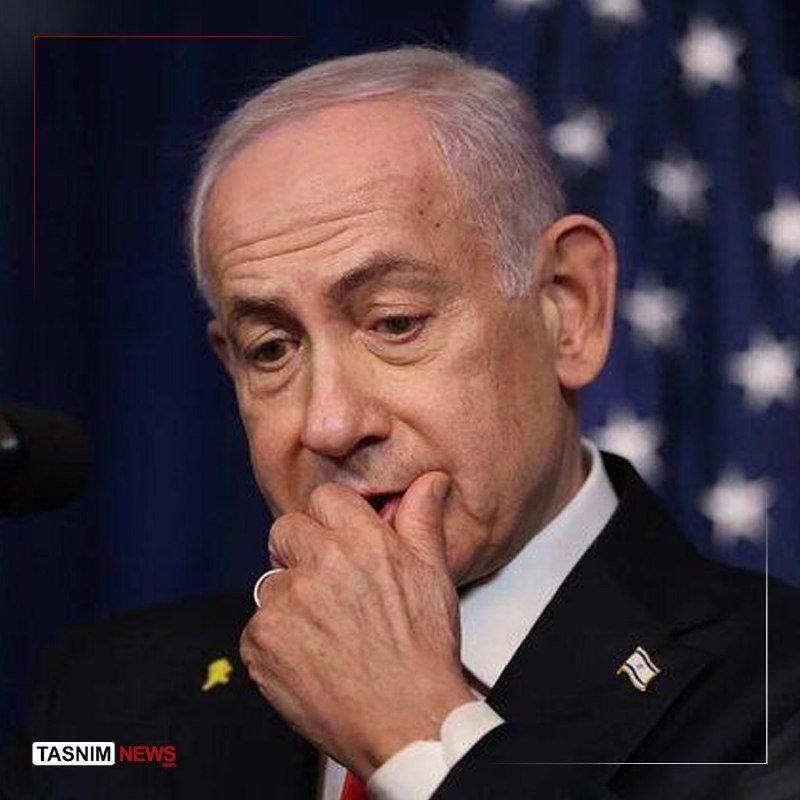
Benjamin Netanyahu used a Sunday-evening press conference in Jerusalem to do three things at once: confirm he intends to lead his party into the next Israeli general election and win it, signal that the United States-brokered arrangement with Iran remains an open file rather than a closed one, and tell Israelis that the army will keep its current forward positions indefinitely. The performance, captured in real time by Israeli correspondents in the room, doubled as an opening act of an election campaign Netanyahu plainly wants to fight on his own terms.
The prime minister's message was blunt on every front. "We still don't know what the agreement will be," he said, according to journalist Amit Segal's running transcript, underscoring that the framework deal reported in recent days has not yet taken final shape. He accused unnamed actors of trying to "sabotage the achievements we've made," a line that Israeli analysts read as a strike at political opponents at home as much as adversaries abroad. And, on the geography of the war, he was categorical: Israel "will remain in the various 'security zones' we have captured for as long as necessary in order to protect the state." On the diplomatic horizon, he promised "new alliances with countries in the region and beyond" and reiterated the long-standing goal of Israeli defence self-sufficiency.
A campaign, declared
Netanyahu's declaration that he "intends to run in the upcoming elections and win" is the most consequential line of the press conference. Israeli politics has spent the better part of two years inside a procedural fog: the Knesset dissolved, a war cabinet, a return to procedural politics, fresh coalition arithmetic, a budget fight. The prime minister's choice to make his re-election bid explicit from the podium, rather than let it percolate through back-channel reporting, is a deliberate signal to his own Likud bench that no succession debate is in train. It also sets the tempo for the opposition: any challenger now has to define themselves against a sitting prime minister who has chosen to make the race about himself.
The framing matters. By tying the election to "achievements" that unnamed others want to "sabotage," Netanyahu is inviting Israeli voters to read any future concession — on a hostage file, on a buffer zone, on Iran's nuclear programme — as a reversal of those achievements. The rhetorical architecture is built to make restraint electorally expensive.
A deal that is not yet a deal
The line on the US-brokered arrangement is the second thread worth pulling. "We still don't know what the agreement will be" is unusually hedged for a prime minister who, on past form, prefers to announce rather than anticipate. The plain reading is that Jerusalem has not been read into the final text — or, more pointedly, that the final text is still being written. Either way, it is a reminder that what the wire services have been carrying as a near-final package is, from the Israeli side, still in motion. Coverage of any "agreement" in this window should be treated as preliminary.
The accompanying barb — that "there are some that want to sabotage the achievements we've made" — fits a familiar pattern. The target list is wide enough to plausibly include domestic political rivals, the Israeli security-commentariat chorus that has questioned the government's war management, and external actors opposed to the current trajectory. That breadth is the point: it gives the prime minister maximum room to define the saboteurs later, in keeping with the electoral calendar.
The geography of "as long as necessary"
On territory, the language is firm. Israel will hold the captured security zones "for as long as necessary." No timeline, no conditional clause tied to a deal, no graduation path. For Israeli voters, this is a clear statement of intent: the army's forward positions in the areas Israel has taken since 7 October 2023 are not, in the government's telling, a bargaining chip to be spent in any negotiation. They are, for now, a permanent feature of the map until the security situation, as defined by the cabinet, is resolved.
That framing carries a price. It raises the cost of any future Israeli withdrawal, narrows the political space for a deal that trades land-for-security, and locks in a multi-year military posture in areas that will continue to require troops, money and political capital to hold. It also sits uneasily with the more optimistic regional framing — new alliances, defence self-sufficiency, a deal taking shape — that the same press conference tried to project.
What the wires are not yet telling us
The press conference leaves a number of questions open. The most important is the identity and substance of the agreement Netanyahu says he does not yet know. The thread of reporting from the past week, carried by Israeli outlets and wire services, has pointed to a US-brokered framework with Iran, but the press conference suggests the text is not settled from Jerusalem's vantage point. A second open question is the status of the security zones: their precise extent, the legal architecture the government intends to use to govern them, and the time horizon, if any, on which "as long as necessary" could be revised. A third is the electoral calendar itself: the prime minister said he will run, but the date of the next Israeli general election is a matter for the Knesset and the president, and Sunday's press conference did not move that procedural needle. The sources reviewed here do not specify any of these points; the framing in this article accordingly treats them as open, not as decided.
A plausible alternative read of the press conference is that Netanyahu is buying time — keeping his options open on a deal, on the ground, and on the date of the election, in order to maximise leverage on all three. The dominant framing, that this is the launch of a personal re-election campaign from a wartime podium, is the more parsimonious one: every line of the press conference travels in that direction. But the two readings are not mutually exclusive, and a sharp-eyed reader should hold both in mind for the next news cycle.
The structural picture is familiar: a leader seeking re-election during an active war, framing concessions as defeats and territorial gains as assets, with an external deal still taking shape and an internal coalition still intact. Whether that picture produces a stable government, a cleaner deal, or a longer military occupation of the captured zones will depend on variables the press conference did not address.
How Monexus framed this vs the wire: the wire coverage carried Netanyahu's lines as discrete quotes in real time; this article reads them as a single campaign-style performance and flags that the so-called agreement remains, on the prime minister's own account, an open file.
Wire provenance
This editorial synthesis draws on the following public wire/social posts:
- https://t.me/s/Middle_East_Spectator
- https://t.me/s/amitsegal
- https://t.me/s/amitsegal
- https://t.me/s/abualiexpress
- https://t.me/s/ClashReport
- https://t.me/s/ClashReport
- https://t.me/s/Middle_East_Spectator
Follow the event.
These dated source records provide context. They do not retrospectively verify this archive article.
Separate what the nuclear watchdog reported from what it could not determine after the June 2025 strikes.