Britain's under-16 social media ban is a parenting dodge dressed up as a policy
The British government has unveiled the strictest under-16 social media ban in the democratic world. The harder question is whether it will do any of the things it claims to do.
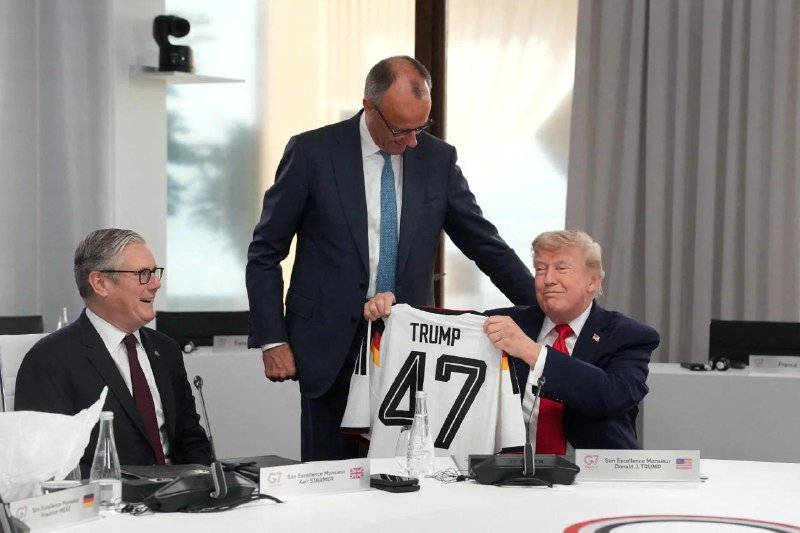
Keir Starmer stood up on 15 June 2026 and announced a ban that, on paper at least, is the most ambitious piece of child-safety legislation any major Western democracy has attempted. From a date his government has not yet fixed, anyone under 16 will be cut off from Snapchat, TikTok, YouTube, Instagram, Facebook and X. The list reads less like a calibrated policy response and more like the home screen of every British teenager. The Guardian's technology team, reporting the announcement at 14:36 UTC on 15 June 2026, called it a "sweeping" prohibition. The Guardian's accompanying podcast, published the same morning, used the more candid word "tougher than expected". Both descriptions are accurate, and both should make a sceptical reader pause before applauding.
This is a government outsourcing the most uncomfortable parts of child-rearing to an act of Parliament, and doing so with the self-congratulation of a country that has decided it has finally done something.
The proposal, in plain terms
The mechanism, as the Guardian podcast sets out, is straightforward in its ambition and hazy in its engineering. Platforms will be required to block under-16s from holding accounts, with enforcement falling on the companies themselves. The same package comes wrapped in the wider Online Safety drive: tighter age-assurance, more duties on messaging services, and a louder regulator in Ofcom. Londoners interviewed by the Guardian on Monday were broadly supportive. That, too, should make a sceptical reader pause. The British public has supported every piece of online-harm legislation of the last decade; it has also watched each one struggle at the implementation stage.
The temptation is to treat the announcement as a finished product. It is not. It is a statement of intent, with the actual enforcement regime, the timetable, and the appeals architecture still to be drafted. Until those are on the page, the policy is closer to mood music than law.
The parental-fiction problem
Strip away the political theatre and the policy rests on a single claim: that adults cannot be trusted to parent in a digital environment, so the state must step in. That is a more contentious premise than the polls suggest, and one that deserves an honest argument rather than a slogan.
The first version of this argument was the age-verification push of the late 2010s, which collapsed when the cost and the false-positive rate became visible. The second version was the age-appropriate design code, which nudged design choices but did not exclude children. What Starmer has now proposed is the third and bluntest version: an outright bar. The bluntness is being sold as courage. It is, at least as plausibly, a confession that the previous two attempts did not work. Governments do not normally reach for the most restrictive tool in the box because the lighter tools have succeeded.
There is a counter-argument worth taking seriously, and it is not the one coming from the platforms. Parents across the country will tell you, honestly, that a thirteen-year-old with a smartphone and a VPN has not been meaningfully contained by a parental-controls industry that runs on subscription fees and goodwill. If the state is not going to fund the school counselling, the youth services and the family-support infrastructure that would make parental mediation feasible, the ban is at least a way of forcing the issue back onto the platforms' balance sheets. The government can be accused of many things here. Being unaware of how hard enforcement will be is not one of them.
The harm framework, restated
What is striking is the reasoning on display. The government's case for the ban is built almost entirely on the language of harm: anxiety, body image, attention, exposure to predators. The most cited studies, including the longitudinal work that has driven much of the public conversation, are about correlation and self-reporting; the platforms have spent a decade picking at the methodology, and a serious policy would have to acknowledge that fight rather than pretend it has been won.
The result is a strange asymmetry. The state is prepared to act as if the harms are settled science, while the same state is happy to leave the surrounding environment — phone use in schools, screen time at home, the role of gaming, the parallel crisis in boys' literacy and girls' mental-health referrals — to the goodwill of individual schools and parents. The ban is a single, dramatic lever pulled in a system with many moving parts. A serious child-safety policy would have sequenced the levers rather than reaching for the most visible one.
What this is really about
The political economy of the announcement matters more than the policy detail. Starmer's government is under sustained pressure on the cost of living, on small-boat arrivals, and on a sluggish NHS. A ban on TikTok for fifteen-year-olds is a low-cost way to be seen acting on something that parents, newspapers and a great many MPs already agree on. It is also a way of pre-empting the next tabloid front page about a teenager harmed by an algorithm. The fact that the policy is popular is the most suspicious thing about it.
This is not a left-right argument. The Conservative governments in Australia pioneered the under-16 framework that Starmer is now borrowing, and several US states have moved in the same direction. The pattern is the same in each case: a centre-left or centre-right government that wants to demonstrate that it is doing something on a problem it cannot solve, and that finds banning more politically legible than funding the institutions that would mitigate the problem at source. The platforms are a useful villain. They are also, in many cases, the only entities with the engineering capacity to make any of this work.
The serious paragraph
If the ban is implemented as described, the cohort of children affected is roughly nine million. The cost of getting enforcement wrong — wrong exclusions, false assurances, a thriving VPN underground — is paid by them. The cost of getting the underlying model wrong — that removing social media is the highest-leverage intervention available to a child-safety policy in 2026 — is paid by them too, and the bill will arrive years later, in GP waiting rooms and in A&E and in the kind of quiet teenage catastrophe that never makes a press conference. This publication is sceptical that ministers have weighed that second cost at all, and sceptical that the consultation will force them to. The democratic pressure is in the opposite direction.
The kicker
The right test of a child-safety policy is not whether adults feel relieved when it is announced. It is whether, in five years, the children it covered are measurably better off — and whether the children it failed to reach, because the VPN worked or the household found a workaround, were not simply abandoned. On the available evidence, Britain is about to find out the hard way which of those it has built.
Desk note: Monexus is publishing this as a Staff Writer opinion because the wire coverage of the 15 June 2026 announcement was uniformly descriptive. The harder question — whether a ban is the right instrument — has gone largely unasked in the UK press, and we wanted to ask it.