Live Wire
22:27ZSBSNEWSAUS2026 World Cup: Fans, families and former coaches soak up Socceroos’ winhttps://www.sbs.com.au/news/video/202…22:26ZSBSNEWSAUSMigrants say experience not enough to find work in Australia22:26ZTASNIMNEWSIsraeli attack kills 7 in al-Tuffah neighborhood of Gaza, including 2 children22:24ZOSINTLIVEU.S. Air Force B-52 Stratofortress crashes, eight crew members aboard22:24ZOSINTLIVEEight people killed in B-52 crash at Edwards Air Force Base in California22:24ZOSINTLIVETrump administration considers $300 billion fund for Iran pending final settlement22:21ZTHECANARYUBritish MP Tapp asks Polanski about appearance of terrorists in parliamentary exchange22:17ZOANNTVUK to ban social media for under-16s from 2027, Starmer says
Markets
S&P 500753.39 0.17%Nasdaq26,684 3.07%Nasdaq 10030,544 3.06%Dow518.38 0.01%Nikkei94.07 0.00%China 5035.19 0.26%Europe89.94 0.07%DAX41.84 0.01%BTC$66,151 1.49%ETH$1,794 4.27%BNB$616.91 0.76%XRP$1.25 6.55%SOL$74.06 5.65%TRX$0.3199 0.12%HYPE$67.78 7.66%DOGE$0.0885 0.30%LEO$9.75 0.59%ZEC$520.36 13.22%QQQ$741.51 0.34%VOO$692.69 0.18%VTI$372.25 0.06%IWM$294.19 0.16%ARKK$79.75 0.19%HYG$80 0.07%Gold$395.21 0.34%Silver$63.22 0.39%WTI Crude$121.01 0.19%Brent$46.16 0.22%Nat Gas$11.4 0.26%Copper$39.57 0.20%EUR/USD1.1607 0.00%GBP/USD1.3421 0.00%USD/JPY160.19 0.00%USD/CNY6.7570 0.00%
CLOSEDNYSEopens in 15h 1m
The Monexus
Vol. I · No. 166
Monday, 15 June 2026
Saturday Ed.
Updated 22:28 UTC
  • UTC22:28
  • EDT18:28
  • GMT23:28
  • CET00:28
  • JST07:28
  • HKT06:28
← The MonexusGeopolitics

Oil slides and Wall Street rallies as US-Iran 'preliminary deal' rewrites the Hormuz premium

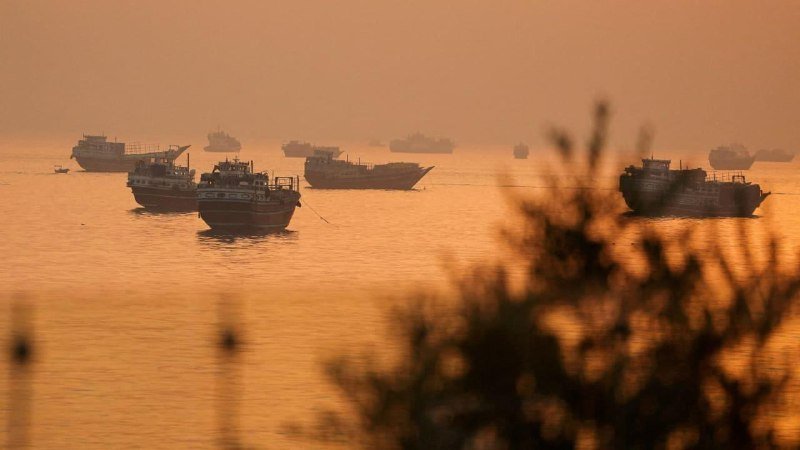
A reported preliminary US-Iran deal to end the war and reopen the Strait of Hormuz knocked crude sharply lower and pushed the Dow to a record close, even as Tehran fired warning shots at a vessel in the same waterway hours earlier.

@thecradlemedia · Telegram

The arithmetic of the Iran war was redrawn inside twelve hours on 15 June 2026. By 19:32 UTC, OANN's newsroom was carrying word that oil prices had tumbled after the United States and Iran announced a peace deal. By 20:07 UTC, Reuters reported that Wall Street's three main indexes had closed higher, with the Dow finishing at a record high, on the news that Washington and Tehran had struck a preliminary agreement to end the war and reopen the Strait of Hormuz. By 20:40 UTC, the Telegram channel Middle East Spectator was flashing a more complicated signal: Iran had fired warning shots at a vessel in the strait itself.

Three data points, one day, and an unresolved question: whether the agreement announced in capitals will hold in the waters it claims to govern. The price action in New York suggests traders are betting it will. The warning shots suggest the bet is not unanimous.

The deal in plain terms

According to the Reuters wire, the Dow Jones Industrial Average closed at a record high on 15 June 2026 after the US and Iran announced a preliminary agreement that would end the war and reopen the Strait of Hormuz to commercial traffic. The OANN bulletin, posted roughly half an hour earlier, framed the move as a "peace deal" and linked the drop in oil prices directly to the announcement. Neither outlet published the text of the agreement in the items Monexus reviewed; both treated it as a framework whose details would be worked out in subsequent negotiations.

That framing matters. The markets moved on a headline, not on a signed document. The Dow's record close and the slide in crude are best read as a bet that a Hormuz reopened is a Hormuz that ships roughly one fifth of seaborne oil without the war-risk premium that has accumulated since fighting began. The bet can be reversed quickly if the follow-through fails.

Counter-narrative: the strait is still contested

The Middle East Spectator flash, posted at 20:40 UTC — after both the OANN and Reuters items — undercuts the clean version of the story. Warning shots at a vessel in the Strait of Hormuz, fired by Iran, are not the behaviour of a party that has internalised a settlement. They are the behaviour of a state that wants the deal's commercial benefits without ceding the leverage the war gave it.

The most plausible read of the sequence is that Washington and Tehran have agreed on a formula for de-escalation — reopen the waterway, end active hostilities, accept some form of inspection or monitoring — while leaving the more contentious files, including the nuclear question, the IRGC's regional posture, and the sanctions architecture, to a later round. The Iranian warning shots are consistent with a state that wants the oil revenue back on terms that leave its deterrent capability intact. The Reuters-led market rally is consistent with traders pricing the easier half of that bargain and discounting the harder half.

The Western wire consensus is that a deal is a deal and the strait will be effectively open. The Iranian-aligned and regional Telegram traffic tells a more textured story in which the strait remains a theatre of signalling even after a diplomatic track is announced. Both can be true at once. Markets price the central scenario; navies and coastguards inhabit the tails.

Structural frame: who pays for the premium, and who collects it on the way down

When oil falls on a war-ending headline, the beneficiaries are not only equity holders. They are the importing economies of Asia and Europe, which have spent the duration of the conflict subsidising Iranian, Russian and Gulf state revenue through elevated import bills. They are the refining margins of Indian and Korean buyers, which had been compressed. They are the shipping insurers and tanker operators, whose war-risk surcharges for transiting Hormuz have been the most visible friction cost of the war.

The corresponding losers, in the short run, are the producers. Iran's own budget, already strained by sanctions and the cost of confrontation, takes a direct hit from a lower benchmark. So do the Gulf monarchies that have hedged at higher assumed prices. The OANN headline, taken literally, is therefore not a clean win for any single bloc; it is a redistribution from exporters to importers, with a thin slice collected by traders who positioned for the announcement.

This is the larger pattern. Wars around the Strait of Hormuz do not only redistribute territory or prestige; they redistribute a tax on global commerce. The end of a war, when it comes, is therefore an event in the global balance of payments, not only in the regional balance of power. The Reuters record close is, in that sense, a receipt for the unwind of a tax that American consumers and Asian importers had been paying in real time.

Stakes: what a Hormuz deal does and does not settle

If the preliminary agreement holds and the strait returns to something like pre-war traffic patterns, three things follow. First, the inflation impulse that the war had reintroduced into goods prices, from diesel to fertiliser, begins to fade over a quarter or two as inventory effects work through. Second, the diplomatic bandwidth of the United States and its Gulf partners is freed for the harder files that the war paused — sanctions enforcement, non-proliferation inspections, and the question of what the IRGC retains as a calibrated deterrent. Third, the credit and equity rally that began on the Reuters headline has a chance to extend; if it does, the political pressure on the White House to declare a clean win grows, and the negotiating leverage of the Iranian side in subsequent rounds correspondingly shrinks.

If the deal frays — and the 20:40 UTC warning shots are the first live test of that scenario — the market will reprice fast. A single confirmed strike on a commercial vessel in the strait is enough to put the war-risk premium back on the tape, reopen the contango in crude, and turn the same Dow that closed at a record into a seller. The honest summary is that traders are pricing a central case that requires the Iranian side to keep its warning shots as warnings, and to convert them, over weeks rather than hours, into compliance with a reopened waterway.

What remains genuinely uncertain, on the evidence available, is the text of the agreement itself. Neither the OANN item nor the Reuters item Monexus reviewed reproduces a clause, names an inspection regime, or sets a timeline for the first unhindered tanker transit. The Telegram traffic from the region treats the strait as a live operational area even after the headline. Until the agreement is published, the markets are pricing an outcome, not a document — and outcomes, in the Strait of Hormuz, have a long history of slipping their diplomatic leashes.


Desk note: Monexus framed the day's events as a price action plus a warning shot, rather than as a single linear announcement. Wire outlets led with the deal; the regional Telegram feed led with the shots. Both are in the lede, on the principle that a story about the Strait of Hormuz is incomplete if it is told only from the trading floor.

Wire provenance

This editorial synthesis draws on the following public wire/social posts:

  • https://t.me/Middle_East_Spectator
  • https://t.me/OANNTV
© 2026 Monexus Media · reported from the wire