Iran's foreign minister lays down the terms: a Friday signing, then talks on war, blockade, and Hormuz
Foreign Minister Abbas Araghchi says a memorandum with Washington will be formally implemented on Friday, opening a negotiating track that puts an end to hostilities on the Lebanese front, the naval blockade, and the Strait of Hormuz on the same table.
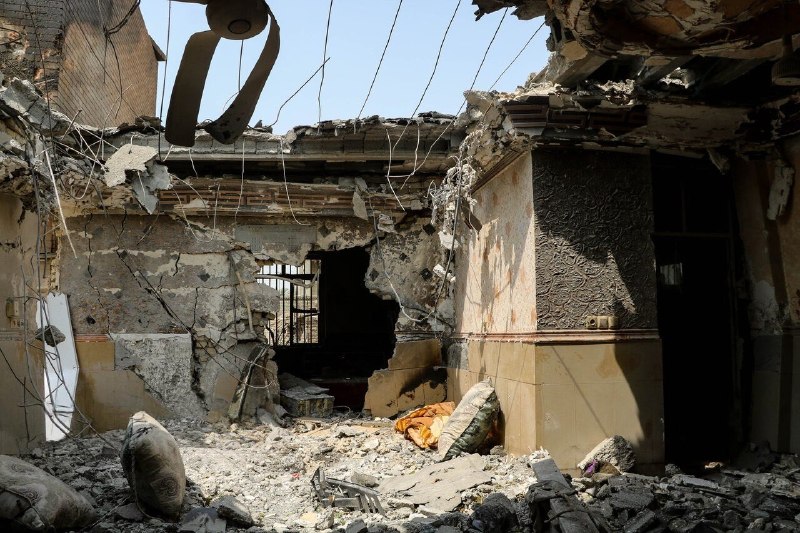
Iranian Foreign Minister Abbas Araghchi emerged on the morning of 16 June 2026 with a sequence of declarations that, taken together, amount to the most detailed public preview Tehran has yet offered of its negotiating track with Washington. The official implementation of a memorandum of understanding will begin on Friday, he said, and on the day of signing a new round of talks opens in Switzerland aimed at producing a final agreement. The end of the war on the Lebanese front, Araghchi added in remarks carried by Iranian state outlets, is one of the basic requirements of the Iran deal, and any Israeli attack on Lebanon or occupation of Lebanese territory will be treated as a violation of the arrangement concluded with the United States.
The framing matters as much as the content. For the first time in this cycle, Tehran has put four files — Lebanon, the naval blockade, the Strait of Hormuz, and the broader war — on a single negotiating table, and it has named the guarantor (the United States) and the price of non-compliance (the agreement collapses if Tel Aviv acts unilaterally). What looked, a week ago, like a narrow nuclear track has been widened into a regional security track, with the Islamic Republic insisting that the package be sold as one.
A Friday signature, then a Swiss track
The choreography, as Araghchi described it, has three beats. First, signing: the memorandum of understanding is to be formally implemented on Friday. Second, the immediate agenda: in the first stage of the negotiations, the parties have already reached an understanding on the end of the war, the naval blockade, and the Strait of Hormuz — the three files Araghchi named in a video statement distributed by Fars News. Third, the wider track: a new round of negotiations between Iran and the United States will begin in Switzerland on Friday, with the goal of converting the memorandum into a final agreement. The Swiss venue, the diplomatic ritual of signing-then-talks, and the explicit sequencing of implementation before substance all point to a process designed to lock in political momentum before the harder technical questions are picked apart.
The Lebanese file, Araghchi said, is a basic requirement, not a negotiating chip. That is a deliberate elevation. The same line — Lebanese stability as a precondition — has appeared in Iranian and Hezbollah-aligned commentary for months; placing it inside a bilateral instrument with Washington gives it contractual weight. The Israeli dimension is the tripwire. Any Israeli attack on Lebanon, or any occupation of Lebanese territory, Araghchi warned, will be considered a violation of the agreement with the United States — language that binds Washington to a posture, not merely Tehran to a stance.
Reading the blockade file
The naval blockade and the Strait of Hormuz are not the same instrument, and Araghchi's choice to bundle them is itself the story. The naval blockade, as commonly discussed in the Gulf context, refers to the interdiction of shipping directed at a specific shore — the instrument most often associated with pressure on Iran and, in earlier cycles, on Iraq. The Strait of Hormuz is a chokepoint through which a significant share of seaborne oil moves; any disruption moves global crude prices within hours. By listing them as a pair, Tehran signals that it considers the closure-or-threatened-closure of the Strait a counter-weight to whatever maritime pressure it is itself under. The implied bargain: a guaranteed flow of Iranian oil in exchange for guaranteed flow through the Strait.
Western reporting on the naval blockade has historically framed it as an instrument used against Iran; Iranian state media frames it as an instrument used by extra-regional powers to throttle the country's exports. The structural read is that both are partly right, and that the file is bilateral by design. A deal that resolves the blockade without resolving the Strait would be unstable; a deal that resolves the Strait without resolving the blockade would be one-sided. Araghchi's bundling closes that loophole, in writing, before the Swiss talks open.
The Israeli variable
The clearest signal in Tuesday's statements is the warning to Israel. By declaring that any attack on Lebanon, or any occupation of Lebanese territory, will constitute a violation of the Iran–US agreement, Araghchi is doing three things at once. He is giving the Lebanese front the status of a covered item under a bilateral instrument. He is signalling to Washington that the cost of Israeli unilateralism will be measured against the deal, not against Iran. And he is offering Hezbollah-aligned constituencies in Lebanon a written ceiling on the next phase of the conflict — a ceiling that holds only if Tel Aviv respects it.
The risk in the framing is asymmetry. Iran's commitments under the memorandum are state-to-state and verifiable. Israel's are not party to the document. The deterrent logic — that Washington will police its ally's behaviour because Tehran has made non-compliance costly — depends on a chain of decisions in the White House, the State Department, and the Israeli cabinet that no Iranian official can control. The history of this kind of arrangement, including the multilateral instruments that fell apart around Lebanon in past decades, suggests that the gap between a written guarantee and an enforced one is precisely where these deals tend to fail.
What the sources agree on, and what they do not
The five public statements circulated on 16 June — carried by Tasnim News English, Fars News Agency (domestic and international feeds), and the Iran-focused LiveUAWire aggregator — are consistent on the core sequence: Friday implementation, Swiss talks, Lebanese front as a basic requirement, blockade and Hormuz as a paired first-stage item. They differ on emphasis. Tasnim's English feed foregrounds the Friday implementation and the Lebanese precondition; Fars's domestic feed leads with the negotiating agenda, naming the end of the war, the naval blockade, and the Strait of Hormuz as the first-stage items; Fars International leads with the Swiss venue. The variations are editorial, not substantive, and they reinforce a single picture: a coordinated rollout, not a series of off-the-cuff remarks.
Where the picture thins is everything not said in these wires. The text of the memorandum has not been published. The naval blockade referred to — Iranian, American, or third-party — is not specified. The Swiss venue is named; the format (bilateral, mediated, with or without third-party witnesses) is not. The status of the Iranian nuclear file within the wider package is implicit, not declared. The Israeli dimension is named as a tripwire; the consequences of an Israeli strike are not spelled out. Each of these gaps is the kind of detail that, in mature diplomatic processes, is filled in the days between signing and implementation. In this cycle, given the regional temperature, they are also the details most likely to be tested in the gap.
Stakes and time horizon
If the Friday signing and the Swiss track hold, the regional balance shifts in measurable ways. Lebanon gains a written ceiling on Israeli action, conditional on Iranian and Hezbollah compliance. Iran gains a documented path to the lifting of the naval pressure on its exports, paired with a Strait of Hormuz guarantee that the global oil market will read as stabilising. Washington gains an instrument that, on paper, reduces the probability of a multi-front war in the eastern Mediterranean and the Gulf in an election year. Each of those gains is conditional; none is automatic.
The downside path is shorter. An Israeli strike on Lebanon, even a limited one, would be read by Tehran as a violation of the agreement with the United States and would unwind the Friday signature by the following Monday. A Hormuz incident, even an accidental one, would test the Strait guarantee before it is operational. A failure to convert the memorandum into a final agreement in the Swiss round would leave the region with an instrument of intent rather than an instrument of obligation — a document that describes a peace it cannot enforce. Araghchi has, with these statements, bought the process a Friday. What he has not yet bought it is the trust that Friday's signature will still be holding the following week.
Desk note: Monexus frames the story as a sequenced diplomatic process — signing, Swiss track, Lebanese precondition, paired blockade-and-Hormuz file — rather than as a single dramatic announcement. Iranian state outlets are cited as primary sources for the Iranian position, with attention to the editorial differences between Tasnim and Fars feeds. The Israeli and Western responses are named as variables the Iranian statements do not specify.
Wire provenance
This editorial synthesis draws on the following public wire/social posts:
- https://t.me/farsna
- https://t.me/tasnimnews_en
- https://t.me/tasnimnews_en
- https://t.me/FarsNewsInt
- https://en.wikipedia.org/wiki/Joint_Comprehensive_Plan_of_Action
- https://en.wikipedia.org/wiki/Strait_of_Hormuz
- https://en.wikipedia.org/wiki/Lebanese%E2%80%93Israeli_conflict
Follow the event.
These dated source records provide context. They do not retrospectively verify this archive article.
Separate what the nuclear watchdog reported from what it could not determine after the June 2025 strikes.