Iran says new US talks open Friday in Switzerland as two-track diplomacy takes shape
Foreign Minister Araghchi says the next round of Iran–US talks opens in Switzerland on Friday, with a memorandum of understanding set for official implementation the same day and a Lebanese front ceasefire framed as a precondition.
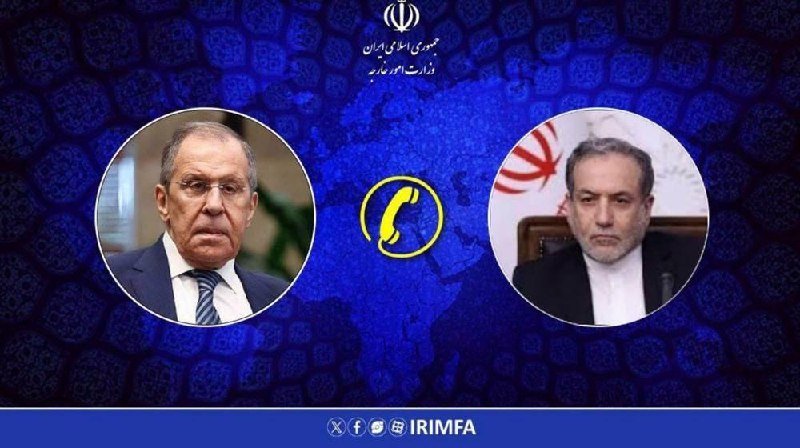
Iranian Foreign Minister Seyed Abbas Araghchi said on 16 June 2026 that the next round of negotiations between Iran and the United States will open on Friday in Switzerland, with a memorandum of understanding due to enter official implementation the same day, according to multiple Iranian state-linked outlets reporting the foreign minister's comments.
The disclosure, carried by Tasnim and Fars in the space of minutes, signals a renewed diplomatic tempo between two adversaries whose relationship has been effectively managed through intermediaries since the collapse of formal talks in 2025. The arrangement is unusually structured: a two-stage negotiating process that Tehran says reflects the sheer scale of issues separating the two governments.
The immediate question is what, precisely, gets implemented on Friday — and what the Lebanese front has to do with it.
A two-track frame, by Iranian design
Araghchi framed the talks as a deliberate construction. According to a summary of his remarks published by Tasnim, the negotiations were divided into two phases because of the dimensions of the war — a phrase that, in the Iranian diplomatic lexicon, refers less to active fighting than to the geopolitical sweep of issues Tehran insists must be settled together. The first phase, he said, ran for roughly three months and was directed at producing the memorandum of understanding that is now ready for implementation.
The structure matters. A two-stage process lets Tehran claim that Friday's text is the fruit of completed work, not a fresh concession — useful political cover at home, where hardliners inside the Islamic Republic's security establishment have historically torpedoed envoys seen as over-committing. It also gives Washington a deliverable it can show its own constituencies, without the second-stage items — enrichment limits, missile ranges, regional proxy behaviour — being declared in advance. Neither side has published the text.
The Lebanese precondition
The same set of Tasnim reports quoted Araghchi explicitly linking the Iran deal to an end of "the war on the Lebanese front," describing that as one of the basic requirements of the agreement. The phrasing is notable. It treats a separate theatre — the long-running confrontation between Israel and Hezbollah — as a precondition for the bilateral file, not as a parallel track.
That is not how Western capitals have typically sequenced the issues. US and European diplomats have generally preferred to insulate the nuclear file from the regional one, on the theory that bracketing produces a cleaner deal and avoids hostage-taking between dossiers. The Iranian position inverts that order. If Tehran is now publicly conditioning implementation on the Lebanese file, it is signalling that any future deal will be judged in the region first and at the International Atomic Energy Agency second.
A separate Tasnim dispatch, posted at 07:28 UTC, said the official implementation of the memorandum of understanding will begin on Friday, with the Lebanese ceasefire treated as a structural component of the package rather than a downstream benefit.
What the Western wire has not yet confirmed
The first reporting of the Friday-Switzerland venue and the Friday-MoU timeline came from Iranian state-aligned channels. As of publication, no Western wire had independently confirmed the calendar, the venue, or the contents of the memorandum. That asymmetry is the central reporting problem of this story: the announcement is being made in Tehran, on Tehran's preferred platforms, in a form that flatters the Iranian position.
The plausible alternative read is that Araghchi is managing expectations on his own side rather than unveiling a settled arrangement. A foreign minister under domestic pressure can announce dates that slip. Iranian negotiators have a documented history of putting forward confident timetables in the run-up to talks that later fray over verification, sanctions sequencing, or the fate of detained Iranians held abroad. None of that appears in the source material, but the precedent sits just below the surface of any Tehran announcement of an imminent deal.
The other reading — that the calendar is genuine and the two-stage structure is a real concession by Washington — is harder to dismiss. The US side, by every available account, wants a deliverable before the next political cycle compresses its negotiating room. A memorandum of understanding, even a partial one, lets both governments claim a win without forcing the hardest questions into a single document.
The structural frame
What the announcement actually reveals is less about Switzerland than about the architecture of US–Iran diplomacy in 2026. After decades of trying to compress the relationship into a single comprehensive document, both governments are settling into a modular format: small, named deliverables tied to specific dates, with the larger questions routed through a separate stage.
That is, in effect, an admission that the comprehensive model has failed. It is also a format that suits an Iran operating under sanctions it has learned to route around, and a United States that prefers reversible arrangements to grand bargains it cannot enforce. The structural pattern — incremental, reversible, region-conditioned — is closer to arms-control diplomacy of the 1970s than to the all-or-nothing framing that dominated coverage of the 2015 nuclear deal and its 2018 collapse.
The Middle Eastern condition Araghchi attached — a Lebanese front ceasefire as a basic requirement — points to where the next friction will sit. Even if the Friday text is signed, its political durability will depend on a separate theatre, in which Iran is not a direct party, behaving in a way Tehran can claim credit for. That is a brittle basis for an agreement to rest on. It is also the basis on which the Iranian government has decided to put its name.
Stakes and what remains uncertain
If Friday produces a signed memorandum of understanding, the immediate winners are the negotiating teams on both sides, who will have a deliverable to defend, and the Gulf states that have quietly pressed Washington to take any deal that reduces the temperature. The most exposed actor is the Lebanese front itself: an arrangement whose Iranian architects treat it as a contractual component rather than a sovereign process. The Lebanese government, the United Nations special coordinator for Lebanon, and the European states that have sponsored ceasefire frameworks are not visible in the source material as parties to the memorandum.
What the sources do not specify is the text of the memorandum, the identity of the US signatory, whether the Friday session is a signing or another negotiating round, and whether the Lebanese precondition is a hard one or a rhetorical one. Tasnim and Fars have published Araghchi's framing, not the document. Until a primary text or a Western wire confirmation appears, the calendar is a Tehran announcement, not a diplomatic fact.
What can be said with confidence is that the two-stage structure, the regional condition, and the Friday-Switzerland timing were all disclosed by Iran first. The next 72 hours will test whether the rest of the parties to the file accept that frame — or contest it.
— Monexus Staff Writer. This article publishes against a thin wire: the principal claims trace to Iranian state-linked outlets reporting the foreign minister's comments. We have flagged the asymmetry of sourcing rather than padding the record with plausible-looking wire copy we cannot verify. The story will be updated if a primary text or independent confirmation is published before Friday.
Wire provenance
This editorial synthesis draws on the following public wire/social posts:
- https://t.me/JahanTasnim
- https://t.me/tasnimnews_en
- https://t.me/tasnimnews_en
- https://t.me/FarsNewsInt
Follow the event.
These dated source records provide context. They do not retrospectively verify this archive article.
Separate what the nuclear watchdog reported from what it could not determine after the June 2025 strikes.