Putin's health rumours return as Russia's war machine grinds on in Ukraine
A new round of speculation about the Russian leader's condition lands the same week that missile strikes on a Ukrainian regional centre killed and wounded civilians, exposing the gap between Kremlin-era mythology and the war's daily arithmetic.
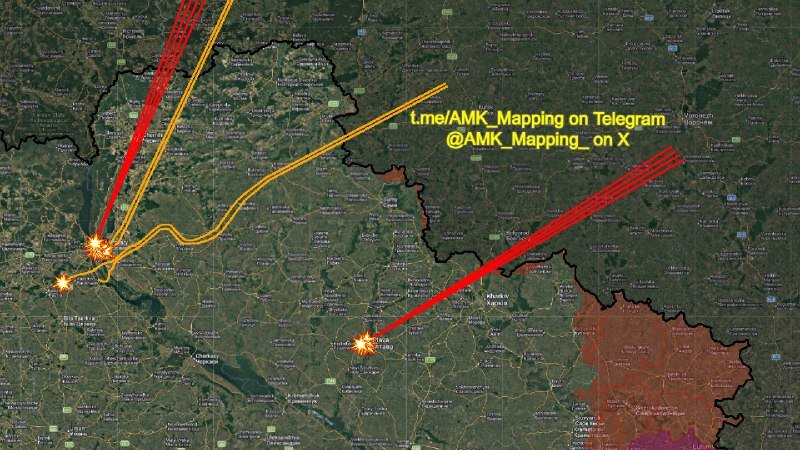
The timing was ugly, and almost certainly intentional. On 16 June 2026, the same day that Ukrainian outlet TSN reported a Russian strike on a regional centre that left at least one person dead and others wounded, a separate TSN dispatch revived one of the Kremlin's longest-running side plots: speculation that Vladimir Putin's diction has visibly deteriorated, with a dentist interviewed for the piece offering a clinical read on why the Russian president has lately appeared to "chew his words."
The two stories should not be confused, but they sit in the same news cycle for a reason. The war in Ukraine is now in its fifth year by most counts, and Western audiences have grown accustomed to a particular genre of Putin coverage — the strongman tableau, the judo-black-belt myth, the staged press conferences with marathon call-in shows that ran for hours without a single unscripted moment. Health speculation punctures that tableau. The temptation to lead with it is understandable; the analytical case for leading with it is weak.
What the strikes actually tell us
The TSN report on the 16 June strike is grimly routine. A regional centre — the dispatch does not name it, and the war's geography of which oblast absorbs which Russian missile or glide bomb changes daily — was hit, with at least one confirmed fatality and an unspecified number of wounded. TSN, one of Ukraine's most-watched national newscasts, has been documenting the civilian cost of Russia's full-scale invasion since February 2022, and its reporting on regional strikes carries the credibility of a wire outlet that has been on the ground continuously.
What the strike tells us is the same thing last week's strike told us: Moscow's air campaign against Ukrainian population centres continues at industrial tempo. The hardware mix — Shahed-type drones, Kh-101 cruise missiles, ballistic missiles from the S-300 family repurposed for ground attack — is well-documented in open-source intelligence and in Ukrainian air force morning bulletins. The pattern, not the spectacle, is the story. And the pattern is that Russia is willing to absorb the cost of sanctions, the cost of Ukrainian long-range strikes on its own refineries and military airfields, and the cost of a frozen mobilisation economy, in exchange for sustained pressure on Ukrainian cities.
Why the health story keeps coming back
Speculation about Putin's health is older than the full-scale invasion. The current round, as reported by TSN on 16 June 2026, frames the Russian leader's recent public appearances in terms a dental specialist offered to the outlet: difficulty articulating, jaw movement visible on camera, the kind of change that invites both medical and political speculation. The Russian system has, for two decades, traded in the iconography of male vigour — judo, hockey, bare-chested horseback riding. Anything that breaks that image is treated as politically radioactive inside Russia and as a news event outside it.
The counter-narrative is that the Kremlin's tight grip on Putin's medical information is itself a propaganda choice, not a transparency problem. The state has every incentive to keep uncertainty alive, because an ailing leader is a destabilising leader, and a destabilising Russia is not in Moscow's interest. Western outlets, for their part, have a structural appetite for succession stories. The result is a feedback loop in which the absence of evidence becomes its own story.
What we don't know — and what we shouldn't pretend to
This is the part the cables and the Substacks usually skip. The TSN piece, by its own description, relies on a single medical professional offering commentary on video of public appearances. That is not a diagnosis. It is a plausible reading of behaviour captured on Kremlin-friendly cameras. Anyone who has watched a two-hour Putin press conference will note that the man's on-camera persona is itself a construction — lighting, edit, the careful sequence of softballs — and that reading pathology off a state broadcast is closer to Kremlinology than to medicine.
A more honest framing: Russian succession politics are opaque by design, and they will remain so until the moment they aren't. Speculation about the dictator's health, in TSN's own phrasing, is structurally useful to two camps. It is useful to Ukrainian audiences who want to believe the war is grinding down the men who started it. It is useful to Western commentariat writers who want a tidy off-ramp. Neither utility is evidence.
The structural frame
The story is not really about a jaw or a missile. It is about the gap between two clocks. One is the Kremlin's clock — the long, grinding pace of an invasion that Moscow believes it can sustain longer than European electorates can sustain sanctions and conscription. The other is the daily clock of a Ukrainian regional centre where a strike on 16 June 2026 killed and wounded civilians. The two clocks run on different timescales, and the policy error of the past four years has been to treat them as if they were the same.
That is also why the health story is so sticky. It offers a way to compress the two clocks into one — to imagine that the war's duration is a function of one man's biology rather than of oil prices, ammunition stocks, and the political temperature in Berlin, Paris, and Washington. It is a comforting story. It is also, on the available evidence, the wrong one.
The serious stake
If the trend on 16 June holds, more regional centres will be hit, more civilians will be counted in the next morning's bulletin, and the medical speculation will continue to circulate in parallel, picking up each new video clip as evidence. The serious risk is not that one of these readings turns out to be right. It is that Western publics come to read the war as a soap opera about a single man rather than a sustained industrial assault on a neighbouring state — and that, over the medium term, is what allows the longer clock to keep running.
— Monexus framed the Russian strike on its human and structural terms, and treated the Putin health rumour as a recurring media artefact rather than a primary fact. The strike is the event; the diction is the noise.
Wire provenance
This editorial synthesis draws on the following public wire/social posts:
- https://t.me/TSN_ua
- https://t.me/TSN_ua
Follow the event.
These dated source records provide context. They do not retrospectively verify this archive article.
A dated voting record is evidence of one decision. Use the original UN record before turning it into an alignment label.
Visual explainer · historical vote of 2022-03-02 →