Trump's Iran 'deal' is half-announced, half-invented — and Qatar is doing the heavy lifting
President Trump told reporters on 16 June 2026 that a US–Iran agreement had been completed and would move to a 'second stage.' Iran's own officials have not confirmed the framework, and the geography on display was, charitably, improvised.
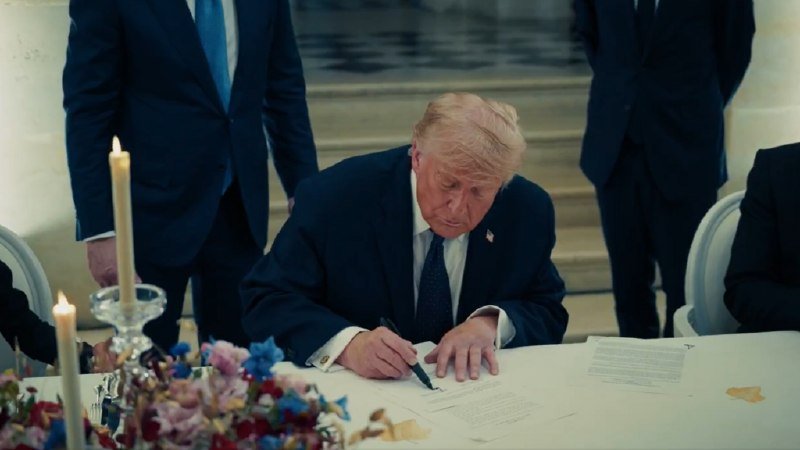
On 16 June 2026, in a televised appearance with the Emir of Qatar at the White House, US President Donald Trump declared that Washington had completed an agreement with Tehran and that it would "go to a second stage." The comments, captured in real time by regional outlets including Al Alam Arabic and Mehr News, are the most concrete the administration has been about a US–Iran deal since indirect talks resumed earlier this year. They are also, in substance, almost entirely one-sided.
What was actually announced? A "fair and good agreement," in the president's words, followed by a reassurance that "we are not investing any money" in Iran. Beyond that, the architecture is unstated. The deal, the president said, "goes to a second stage, which I think will be easier." No text has been released. No reciprocal readout has come from Tehran. The two governments do not, at this point, appear to be describing the same thing.
What the record actually shows
The most concrete claim, repeated twice in the same appearance, is that Qatar was instrumental. Trump told Sheikh Tamim bin Hamad Al Thani that he "fought, and helped us with great bravery," and that he "will always be my friend," per a transcript of the exchange carried by the Telegram channel Clash Report at 09:48 UTC. The Emir, in his own remarks, struck a more diplomatic register: the agreement between Tehran and Washington is "very important and there is still work to be done," as relayed by Al Alam Arabic at 09:43 UTC.
The most concrete counter-claim is geographic. In the same appearance, the president asserted that Qatar and Iran share a land border and that a person could walk from one to the other, a statement captured by Clash Report at 09:46 UTC. The two countries are separated by the entire Persian Gulf. The line did not appear to be a deliberate metaphor; it was delivered as a matter of physical fact. Whatever else this agreement is, the briefing that produced it was not fact-checked.
The asymmetric read-out
The asymmetry between the two governments' framings is the story. The US side is announcing a "deal done" with a "second stage" to follow. The Qatari side is offering a third-party endorsement of process, not product. And the Iranian side, at the time of these remarks, was publicly silent on the substance.
Mehr News, the Iranian state-affiliated outlet, carried Trump's "fair and good" line at 09:47 UTC without accompanying Iranian government confirmation. The reason for the silence matters: Tehran has, in recent weeks, insisted that any framework must include verifiable sanctions relief and a return to the original 2015 architecture, conditions the US side has publicly resisted. The "second stage" formulation is the kind of language that allows both sides to claim progress without reconciling their red lines.
Why Doha, and why now
The choice of the Qatari Emir as the public face of this announcement is not incidental. Qatar has, for the better part of two decades, played a unique mediating role between Washington and Tehran, hosting the Taliban's political office, maintaining diplomatic relations with both Israel and Hamas's external leadership, and serving as a financial conduit during periods of sanctions. Doha's value to this process is precisely that it can speak to both capitals without triggering either one's domestic veto.
What Doha cannot do is deliver the Iranian state. The readout structure of this appearance — the president speaking at length, the Emir speaking in support, Tehran nowhere — suggests the announcement is calibrated for American and Gulf audiences rather than for the Iranian negotiating table. A deal with Tehran that is announced to Tehran after the cameras leave is not a deal; it is a press release.
What remains uncertain
The sources do not specify the text of any agreement, the parties to it, the verification mechanism, or the timeline for the "second stage." They do not confirm that Iran has accepted the framework the US side is describing. They do not show a reciprocal readout from the Iranian foreign ministry, the office of the president, or the Supreme National Security Council. They do show a Qatari role being publicly elevated, a US president speaking with geographic confidence about a region he has negotiated with for years, and a media ecosystem in which the announcement is being treated as news because the principals are present — not because the document is.
The plausible alternative read is that this is the opening bid of a domestic communications campaign, with Doha as the validating backdrop, designed to produce an end-of-year deliverable in the run-up to US midterm considerations. The dominant framing holds only if a corresponding Iranian statement follows; until then, the "agreement" is the press release, and the "second stage" is whatever the White House needs it to be on any given afternoon.
This publication has framed this story around the asymmetry of the read-outs, rather than the inevitability of a deal the source material does not yet support.
Wire provenance
This editorial synthesis draws on the following public wire/social posts:
- https://t.me/alalamarabic
- https://t.me/ClashReport
- https://t.me/mehrnews
- https://t.me/ClashReport
- https://t.me/ClashReport
- https://t.me/alalamarabic
- https://t.me/alalamarabic
Follow the event.
These dated source records provide context. They do not retrospectively verify this archive article.
Separate what the nuclear watchdog reported from what it could not determine after the June 2025 strikes.