Trump's 'no Israel without America' remark reframes the US-Israel bargain as overt leverage
On 16 June 2026, President Donald Trump publicly told Israel it would not exist without US backing — a remark that turns a long-standing alliance into openly stated conditionality.
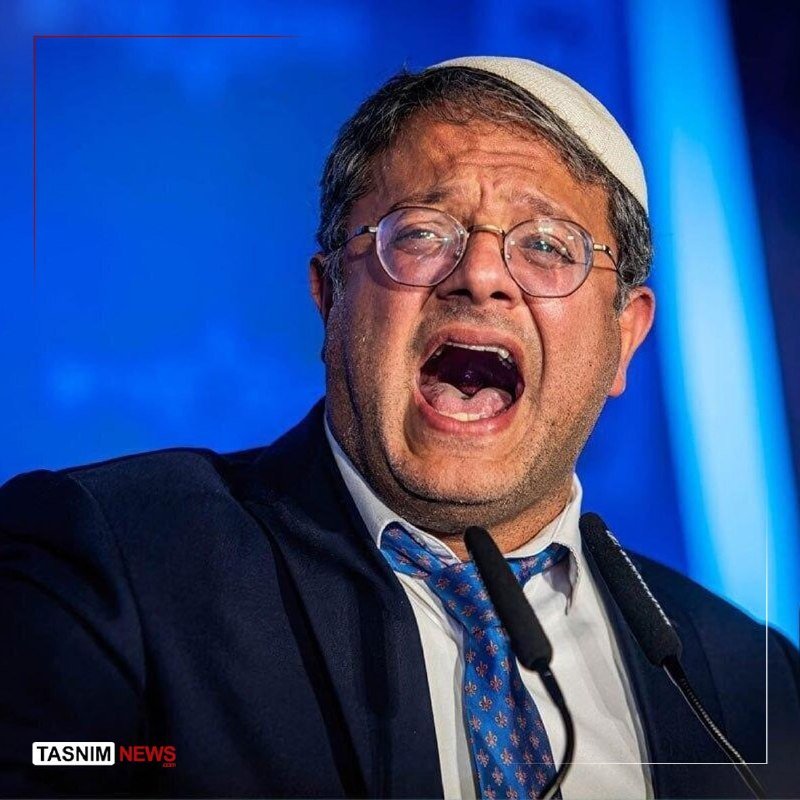
At 10:11 UTC on 16 June 2026, two wire monitors — the OSINT-affiliated account that republishes The Spectator Index on Telegram, and the Telegram channel Insider Paper — broke an off-the-cuff remark from US President Donald Trump. "Without the United States, there would be no Israel," Trump said, in a line that circulated almost immediately via the Clash Report channel and, within minutes, across the global news-feed ecosystem. By 10:42 UTC the same Spectator Index thread had logged an even sharper phrasing: "if it weren't for the United States of America" then "Israel would not exist right now." The same burst of remarks carried a second, structurally telling line — that Trump said he had suggested to Israel that Syria should deal with Hezbollah, opening a window onto a transactional Middle East posture that treats the regional balance as a managerial file rather than a strategic contest.
The political substance is not new. The framing is. For decades, senior US officials have expressed the asymmetry of the US-Israel relationship in private, in aide-mémoire, in Congressional testimony. What is unusual here is the public, performative restatement of that asymmetry as overt leverage. Strip the rhetoric and the claim reduces to a transactional premise: the United States believes it is the indispensable external backer of the Jewish state, and is willing to say so on the record. Once a guarantor states the guarantee as a billable line item, the cost of every future ask — on settlements, on Iran, on a hostage deal, on Rafah, on the West Bank — is renegotiated by both sides in real time.
A relationship recast as conditionality
The remark lands inside a wider pattern of statements from the second Trump administration that have treated the US-Israel relationship as a service contract rather than a treaty-bonded alliance. Past US presidents have described Israel as America's most reliable Middle East partner, defended it in international fora, and supplied it with diplomatic cover at the UN. Trump's line reverses the burden of proof: the existence of the state is held up as the prior gift, and every subsequent favour is a renewal of the underlying deal. The phrasing — "every smart person in Israel knows that," per Clash Report's 10:16 UTC capture — explicitly addresses an Israeli audience and warns that the political cost of publicly contesting the premise is high.
There is no immediate policy action attached to the words. No new sanctions, no troop movements, no conditionality language in a signed document. But in a region where signalling often is the policy, the signal is unambiguous. Israeli leaders have spent years cultivating bipartisan support in Washington precisely so that the relationship would not be reducible to a single president's mood. Trump's 16 June statement, taken at face value, says the mood now is the relationship.
The Syria–Hezbollah line as proof of transactional logic
The second thread in the same burst is more telling, because it attaches a regional move to the framing. According to the same Spectator Index capture at 10:11 UTC, Trump said he suggested to Israel that "Syria should deal with Hezbollah." That sentence, if accurate, is not a slip. It proposes a reorganisation of the regional security architecture in which a post-Assad, post-conflict Syrian state takes responsibility — or is made to take responsibility — for containing an Iran-aligned armed faction on its border. It also implies that the United States sees an opportunity in the Syrian transition to offload a problem the Israelis have long argued the US underwrites.
The structural move is consistent with what a string of second-term Trump administration officials have signalled in other theatres: deal-making by reassignment, rather than by direct US enforcement. A US-brokered arrangement in which Damascus absorbs the Hezbollah file would relieve Israel of a permanent northern front and would, in theory, let Washington claim a major Middle East deliverable without committing new forces. It would also deepen the dependency of the new Syrian order on US goodwill — a leverage vector, not a security guarantee.
What the alternative reading looks like
The reading above is not the only one on offer. Two alternatives deserve airtime.
The first is the personal-branding read: the remark is a Trumpian performance piece, intended for a domestic US audience already disposed to credit the President with Israel's survival, and meant to reinforce his brand as the indispensable deal-maker. On that reading, the statement is rhetorical, with no operational tail, and the Syria–Hezbollah aside is an improvisation, not a policy direction. The trouble with that read is that even rhetorical repositioning has consequences: it sets a floor for what the President can credibly claim about leverage in any future negotiation, and it hands Israel's critics in Washington and Europe a quotable line.
The second is the long-acknowledged-dependency read, which is closer to the wire consensus in the US foreign-policy mainstream: that US support for Israel has, for decades, been the central external fact of the country's existence, and that Trump is saying aloud what previous administrations either left implicit or addressed in private. On that reading, the statement is significant less for what it reveals than for what it normalises. If a US President can say it on the record in 2026, then the question becomes what an Israeli government, or a future US administration, does with the precedent.
Neither alternative cancels the transactional frame. The first concedes the framing and asks whether the words are binding; the second concedes the substance and asks whether the framing matters. Both end in the same place: Israel now operates in a region where the United States has stated the price of support more plainly than at any time in living memory.
Stakes, and what the next weeks will tell
The short-term stakes sit in three files. First, the hostage-and-ceasefire track: any Israeli government negotiating under the shadow of a US President who can publicly say the alliance is conditional will weigh every Israeli concession as a cost against a guarantor who has redefined what the guarantee costs. Second, the Iran file: Israeli strikes on Iranian assets, and the joint posture of US Central Command and Israeli air bases, will now be read in Tel Aviv through a sharper ledger of who pays for what. Third, the West Bank and the question of Palestinian statehood, where the conditionality framing gives the US side more room to demand Israeli movement in exchange for renewed cover at the UN.
The sources available in the public feed on the morning of 16 June 2026 do not yet capture an Israeli government response, a formal White House transcript, or a reaction from US Congressional leadership. They establish the words, the time, the channels through which the words spread, and the simultaneous Syria–Hezbollah aside. The thinness of that record is itself the story: a relationship that used to be communicated in joint statements and shared communiqués is now being recalibrated, in real time, on a Telegram wire.
The question for the weeks ahead is not whether the United States still backs Israel. It is whether, after 16 June 2026, the two governments — and the publics that surround them — can continue to treat that backing as a constant. The President's own language suggests they cannot. The rest of the architecture will have to be rebuilt around that admission, one way or another.
This piece was written by the Monexus staff desk and treats the 16 June 2026 remarks as a single news-burst event whose primary-source provenance is the Telegram channels that captured the statements in real time; the article distinguishes between what those captures establish — the words and the time of circulation — and what they do not yet establish, including a verified White House transcript and a formal Israeli reaction.
Wire provenance
This editorial synthesis draws on the following public wire/social posts:
- https://t.me/spectatorindex
- https://t.me/osintlive
- https://t.me/ClashReport
- https://t.me/insiderpaper