Trump's 'let the oil flow' moment: what the US-Iran memo actually says, and what it does not
A memorandum, a reopened strait, and a $300bn reconstruction fund under consideration: the US-Iran deal is being read in very different ways from Washington to Tel Aviv to Tehran.
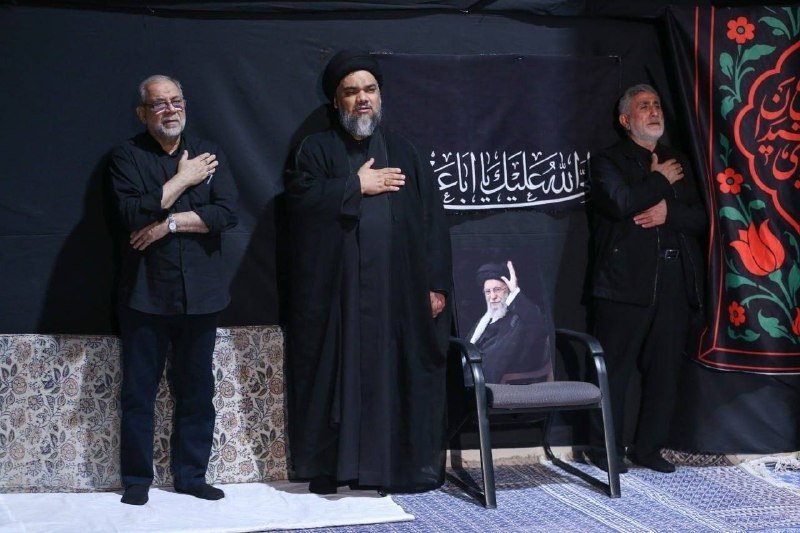
Donald Trump announced on 15 June 2026 that a memorandum of understanding with Iran has been signed electronically, ending what the White House is now calling a war that, until last week, the same administration was still framing as an open-ended military operation. The president said the Strait of Hormuz would reopen to commercial traffic from Friday, declared that oil should "let… flow," and teased that the full text of the agreement would be released "pretty soon." Vice President J.D. Vance added a second substantive claim: that the deal precludes Iran from acquiring a nuclear weapon, and that the waterway is now open. The Financial Times reported separately that the Trump administration is weighing approval of a roughly $300 billion private investment and reconstruction fund for Iran, with access conditional on Tehran upholding the memorandum.
The shape of what is being announced matters more than the word "peace." A signed MoU is not a treaty; an electronic signature is not Senate advice and consent; and a $300bn fund that is merely "under consideration" is a price tag, not a cheque. The next 72 hours will determine whether the headlines describe a diplomatic settlement or the opening of a longer, quieter contest over enforcement, inspections, and the terms under which Iranian crude re-enters global benchmarks.
What the principals are claiming
Trump's own account, carried by the BBC and by Australian broadcaster SBS on 16 June, is the most expansive. The deal, in his telling, is already done: a memorandum has been signed, the strait is open, and the war is over. The BBC, reporting the same day, noted that "there is still confusion about the exact contents of the agreement," and the broadcaster's own live coverage pointed to Iranian vessels transiting the Strait of Hormuz after the US lifted its naval blockade — concrete evidence of de-escalation, even if the legal architecture remains opaque.
Vance's framing in The Epoch Times is narrower and more technical: the agreement opens the strait and forecloses a nuclear weapon. That second claim is the load-bearing one. It is also the one the International Atomic Energy Agency and European foreign ministries have not yet endorsed on the record. Al Jazeera's live blog on 16 June carried both the Trump announcement and the immediate political reaction inside Israel, where the deal is being read very differently from how it is being read in Washington or in the Gulf.
The Israeli objection, and why it is structural
Israeli pushback is not a footnote. According to Al Jazeera's same-day live coverage, "backlash to the US-Iran deal grows in Israel as Iranian vessels pass through Strait of Hormuz after US lifts naval blockade." The substantive Israeli concern, as reported across the regional press, is straightforward: any arrangement that returns Iranian revenue to the Islamic Republic without verifiable, intrusive constraints on enrichment, missile delivery systems, and proxy reconstitution is, from Jerusalem's perspective, a pause rather than an ending. That framing is not new — it has been the Israeli default position across multiple administrations in Washington — but the speed of the announcement, and the absence of a published text, has sharpened it.
The structural point underneath the politics is that Israel's red lines and Gulf-state price-relief red lines point in different directions. For the Gulf, a reopened strait and an Iranian export quota are economic oxygen. For Israel, the same outcome is a security debit. A deal that satisfies both must do something neither announcement has yet demonstrated: produce an inspection regime with teeth, and a sanctions snap-back that bites on Iranian non-compliance rather than on allied interpretation of it.
The $300 billion fund question
The Financial Times report, surfaced by the war-witness channel on 15 June, is the most consequential financial detail in the package and the least developed publicly. A $300bn private investment and reconstruction fund, gated on Tehran upholding the memorandum, is a number large enough to matter for Iranian fiscal stability and large enough to disturb several other capitals. It implies, even before any text is released, that the US is prepared to underwrite Iranian re-integration into global energy markets in a way that goes well beyond sanctions relief.
Three things follow. First, the fund changes the politics inside Iran by making the deal's survival a domestic economic story, not only a security one. Second, it draws a sharp line between the US position and the European position, where the default instinct will be to demand that any reconstruction funding sit inside the existing sanctions architecture rather than parallel to it. Third, it raises an enforcement question the MoU has not yet answered: who verifies "upholding," on what timeline, and with what consequence for non-compliance.
Stakes and the road to Friday
If the Strait of Hormuz is genuinely open from Friday and Iranian crude reaches Asian and European refiners in the volumes the market is now pricing, the immediate winners are oil importers — including Australia, where SBS on 16 June explicitly framed the question as fuel-price and inflation relief for households. Refinery margins in the Gulf, freight rates on VLCCs, and diesel cracks in the Mediterranean will reprice within days. The longer-horizon winners, if the $300bn fund advances, are the financial institutions, construction firms, and engineering houses positioned to channel that capital.
The immediate losers are the actors whose leverage depended on the blockade continuing. That includes the political constituency for maximum pressure inside the US, parts of the Israeli security commentariat, and the Iranian factions whose business model depended on sanctions arbitrage. The most important loser, in structural terms, is the credibility of the inspection regime: every previous deal that lacked a published, mechanically triggered verification protocol has eroded, and this one has not yet been shown to be different.
What remains genuinely uncertain is the text. The BBC, the Financial Times reporting carried by war-witness channels, and Al Jazeera's live coverage all converge on the broad strokes — strait open, MoU signed, nuclear-weapon preclusion claimed, $300bn fund under consideration — and diverge on every detail that would let an outside reader judge the deal. Until the memorandum is published, the public is being asked to take the principals' word that the agreement is what they say it is, in a region where that kind of trust has historically been a poor guide to outcomes.
This publication tracks the published text of the MoU as the primary verification document. Wire reporting — BBC, SBS, Al Jazeera, Financial Times, The Epoch Times — supplies the surrounding context; the deal itself, when it appears, will be evaluated against the same standard.
Wire provenance
This editorial synthesis draws on the following public wire/social posts:
- https://www.sbs.com.au/news/article/us-iran-peace-deal-australia-fuel-prices-inflation/y5ftgyp4u
- https://t.me/wfwitness
Follow the event.
These dated source records provide context. They do not retrospectively verify this archive article.
Separate what the nuclear watchdog reported from what it could not determine after the June 2025 strikes.