US-Iran memorandum to be signed Friday at Bürgenstock: what the four-source convergence tells us
Four independent Telegram channels reported within roughly half an hour that a US-Iran memorandum of understanding will be signed Friday at the Bürgenstock Resort near Lucerne. The detail is narrow. The geopolitical read is not.
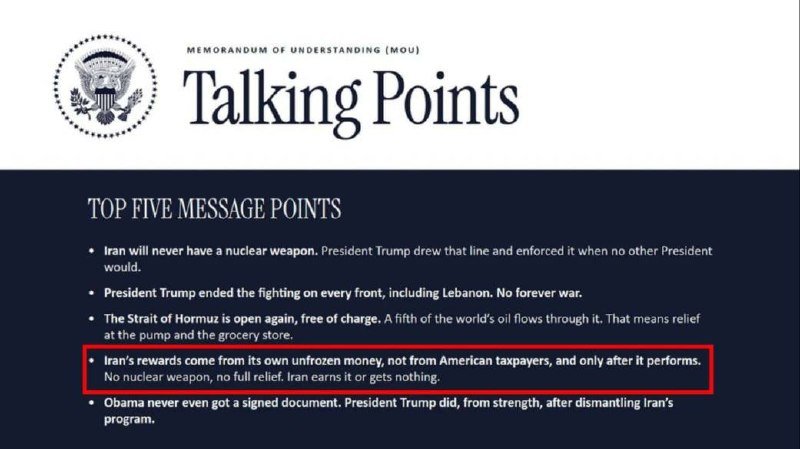
Four separate channels on the open-source intelligence wire converged inside a roughly thirty-minute window on the afternoon of 16 June 2026 to carry the same single sentence: a United States–Iran memorandum of understanding is scheduled to be signed on Friday at the Bürgenstock Resort on Lake Lucerne, in central Switzerland. The first item, posted at 13:50 UTC to Clash Report, said the signing would take place "at Bürgenstock, near Lucerne, Switzerland." A second, from the intelslava feed at 14:00 UTC, escalated the description to a "memorandum of understanding" and identified the location as "Bürgenstock, central Switzerland." A third — GeoPWatch, also at 14:00 UTC — framed the event simply as "the US-Iran deal." A fourth, posted at 14:17 UTC to the OSINTLive channel from the account @visionergeo, added the editorial flourish that Bürgenstock was "a wonderful place for agreement."
The fact pattern is narrow. The location is named, the date is named, the document type is named, and the counterparties are named. What is conspicuously absent from every one of the four items is the substantive content of the document, the names of the signatories, and the third-party facilitators who, in any honest diplomatic read, almost certainly arranged the venue. Bürgenstock is not a generic Swiss location. It is the same canton — Nidwalden, overlooking Lake Lucerne — that hosted the 2024 Summit on Peace in Ukraine, and it sits roughly eighty kilometres from Geneva, the city that has hosted essentially every modern US-Iran nuclear track since the 2000s. The venue therefore implies a European diplomatic backstop, even if the channels reporting the news do not say so outright.
What the four sources do and do not establish
Read in aggregate, the four-channel convergence does establish the bare fact of a planned signing on Friday at Bürgenstock. Each of the four items is sourced, in turn, to a social-media post on X (formerly Twitter) by an account that calls itself @visionergeo, and the Telegram channels are functioning as a relay layer for that single X post. The provenance is therefore thinner than the volume of the relay suggests. What the four sources do not establish is the substantive content of the memorandum: the document type is described variously as an "agreement," a "deal," and a "memorandum of understanding," which in diplomatic parlance are three different things with three different legal weights. An "agreement" is a binding bilateral instrument. A "deal" is colloquial. A "memorandum of understanding" is, by its own definition, not legally binding and can be unsigned, unratified, and quietly abandoned without breach.
The second thing the sources do not establish is who, exactly, is signing. No name appears in any of the four items. No institutional affiliation appears. The State Department, the Office of the Iranian President, the Ministry of Foreign Affairs of the Islamic Republic, the IAEA, and the office of the Supreme National Security Council of Iran are all plausible carriers of a US-Iran instrument of this kind; none is named. The third thing the sources do not establish is what the memorandum is about. The most charitable read — given the venue, the channel mix, and the timing — is a nuclear-file framework of the kind discussed intermittently since the collapse of the Joint Comprehensive Plan of Action in 2018. The most uncharitable read is a face-saving interim text that defers the hard questions to a later round. The four sources, taken at face value, do not let a reader choose between those two reads.
Why Bürgenstock, and why now
The choice of Bürgenstock is the part of the story that should be read carefully rather than absorbed passively. The resort sits in the canton of Nidwalden, has hosted a G7 summit in 2015 (the Lake Lucerne summit, on counter-terrorism and climate), and was the site of the 2024 Ukraine peace summit at which the Swiss federal government positioned itself as a neutral convener in a war it was not a party to. Switzerland has, for at least two decades, functioned as the default protected venue for US-Iran bilateral tracks precisely because Washington and Tehran have no formal diplomatic relations, no embassy exchange, and no shared third-country representation of equal weight. Geneva hosts the Iranian mission to the UN in the city, but it is also the city where previous rounds — the 2015 Lausanne framework, multiple post-2018 indirect tracks, the 2022 EU-coordinated talks — have either collapsed or stalled. Bürgenstock signals an attempt to step out of that gravitational pattern.
The timing also reads as deliberate. Friday, as a signing day, gives both sides the European weekend to brief capitals and to manage the political fallout in Washington, Tehran, and the Gulf before markets reopen on Monday. It also lands between two Israeli pressure points: the escalation tempo in Lebanon over the preceding weeks, and the diplomatic calendar in the Gulf, where Saudi Arabia, the UAE, and Qatar have tracked US-Iran signalling in real time. The Friday-Bürgenstack choice, in other words, looks less like a date plucked from a diary and more like a venue-and-window combination designed to give the document the best possible chance of surviving its first news cycle.
The structural read, in plain editorial prose
A signing ceremony between a government that does not recognise a government is, by itself, a structural event. The United States and the Islamic Republic of Iran have not maintained full diplomatic relations since 1980. Every instrument they have produced since — the 2015 JCPOA, the 2021–2022 EU-coordinated indirect track, the prisoner exchange mediated by Oman in 2023, the back-channel sanctions understandings of 2024 — has been a workaround around the absence of that relationship. A memorandum of understanding signed at Bürgenstock in 2026 is the next iteration of that workaround. It does not normalise relations. It does not require recognition. It does, however, lock in a written text that both sides can point to, and that is itself the asset.
The second structural element is the venue's relationship to the broader European posture on the nuclear file. The EU3 — France, Germany, the United Kingdom — has been the institutional carrier of the European stake in non-proliferation since 2003, when the EU3+3 framework was constructed. The 2015 JCPOA was technically a multilateral instrument, but the EU3 were the negotiation's diplomatic spine, and Switzerland was the depository state for the original 2003 Tehran Declaration. A Bürgenstock signing reads, in that longer arc, as the European track reasserting its custodianship of a file that drifted toward Washington-only management in 2018 and then toward Oman and Qatar mediation in the 2020s. That reassertion is significant in its own right, separate from whatever the document actually says.
The third structural element is the one the channels have not yet named. A US-Iran memorandum signed in the same week that Lebanese, Iraqi, and Gulf-track escalations have been running in parallel is not a stand-alone diplomatic event. It is a balancing instrument. The price of any Iran-facing document in 2026 is some form of reassurance to Jerusalem, Riyadh, and Abu Dhabi that the deal does not foreclose other tracks. The four Telegram sources are silent on that reassurance architecture, but it is the part of the story most likely to determine whether the memorandum survives the weekend.
Counter-read, uncertainty, and the newsroom's honest position
The honest counter-read is that this may be a face-saving interim text with little operational content. Memoranda of understanding signed in third-country venues are the standard diplomatic instrument for postponing a disagreement rather than resolving it. The 2013 Lausanne framework, the 2022 EU-coordinated text, and the 2024 back-channel understandings were all, in their time, presented as breakthroughs and then, in retrospect, treated as deferrals. A reader should hold open the possibility that the Bürgenstock document is in that lineage — a venue-optimised text that lets both governments claim movement without altering the underlying sanctions or enrichment arithmetic.
A separate piece of uncertainty is the source provenance itself. Four channels reporting the same X post is not the same as four independent confirmations. The newsroom's honest position is that the venue and the date are well-attested across the relay layer, the document type is described inconsistently, and the substantive content is, as of 16 June 2026 at 14:17 UTC, not in the public record. The signing, if it happens, will be the moment that record is written.
This publication tracked the convergence of four Telegram channels carrying a single X-sourced claim about a US-Iran memorandum to be signed at Bürgenstock on Friday, and noted the gap between the volume of the relay and the thinness of the underlying provenance. The wire story, when it breaks, will rest on the text itself, not on the channels that previewed it.
Wire provenance
This editorial synthesis draws on the following public wire/social posts:
- https://twitter.com/visionergeo/status/2066
- https://t.me/osintlive
- https://t.me/GeoPWatch
- https://t.me/intelslava
- https://t.me/ClashReport
Follow the event.
These dated source records provide context. They do not retrospectively verify this archive article.
Separate what the nuclear watchdog reported from what it could not determine after the June 2025 strikes.