Seoul redraws the line: South Korea quietly narrows its civilian buffer with the North
On 17 June 2026 Seoul announced it will push its civilian restricted line roughly six kilometres further north, narrowing the buffer that has shaped life near the DMZ for seven decades.
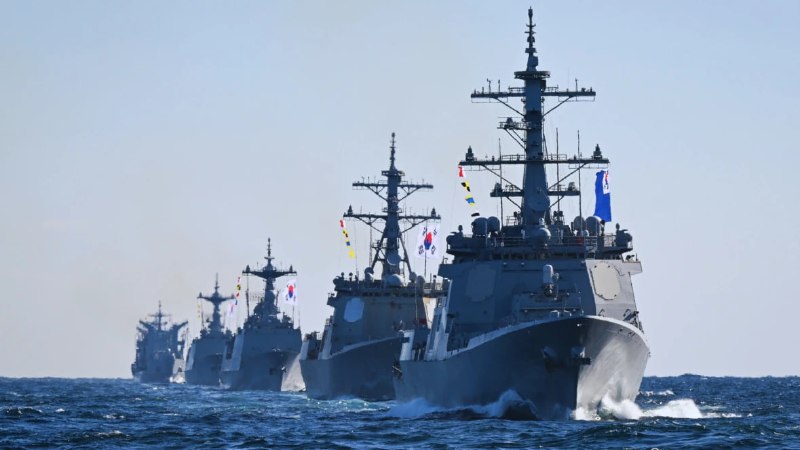
South Korea will redraw the civilian restricted line that governs life along the Demilitarized Zone, Defence Minister Ahn Gyu-back said on 17 June 2026, shifting the boundary an average of six kilometres south-to-north and shrinking the buffer that has kept residents, farmers and tourists at arm's length from the world's most heavily fortified border since the 1953 armistice. The decision, reported first by Reuters and quickly picked up by domestic outlets, is being framed in Seoul as a confidence move after years of improved surveillance and a hardening of the North's tactical posture — but it is also a quiet admission that the geographic separation between the two Koreas is no longer what it was.
The change is small in absolute distance and large in symbolic reach. For more than seven decades the restricted line, sometimes called the Civilian Control Line, has run south of the Military Demarcation Line and defined who may live, farm, or build within a few kilometres of the DMZ. Pulling that line northward, into territory that has been off-limits to civilians for a generation, signals that Seoul now believes the technical means of monitoring the border have outgrown the original legal geography drawn at the end of the Korean War. It is, in other words, a re-mapping of risk: the same ground, the same minefields, the same North Korean forward positions, but a different paper boundary between them and ordinary South Korean life.
The political weight sits not in the kilometres but in the timing. The announcement lands in a week in which South Korean retail money is doing something else striking on its own: pouring an estimated $800 million into SpaceX on its first available trading day, according to Polymarket-cited reporting from 17 June 2026. Read together, the two dispatches sketch a country that is at once pulling closer to its most dangerous neighbour and rushing further out into the global private space economy — a peninsula hedging across two registers at once.
What the new line actually changes
The civilian restricted line, in its current form, runs roughly five to ten kilometres south of the Military Demarcation Line depending on terrain, and inside it civilians need military authorisation to live, work or build. A 2014 upgrade of the zone extended it further south after a series of North Korean provocations, including the 2010 sinking of the corvette Cheonan and the artillery strike on Yeonpyeong Island. The 2026 revision moves in the opposite direction: on average six kilometres north, returning parts of Paju, Cheorwon and Gangwon to civilian use that have been restricted for years.
The change does not touch the Military Demarcation Line itself, which remains the operational border between the two Koreas' armed forces, nor the Demilitarized Zone proper, which stays off-limits. The South Korean ministry has stressed that military guard posts, sensor arrays and rapid-response units along the DMZ are unaffected, and that the move is enabled by new surveillance infrastructure — including electro-optical cameras, radar and aerial drones — that makes a smaller restricted footprint operationally safe. Local governments have been told to prepare for the administrative absorption of the new areas, which will mean property registration, building permits, and the gradual lifting of curfew restrictions that have shaped village life in the border counties for a generation.
The North Korean counterweight
Pyongyang has not yet issued a formal response to the announcement, and the South Korean ministry's briefings, as relayed by Reuters on 17 June, make no reference to inter-Korean consultations. That is itself the point. The restricted line is a unilateral South Korean instrument: North Korea has no formal role in defining where South Korean civilians may or may not go. The political problem is not procedural but perceptual. Every time Seoul loosens the geography of the border, the North Korean propaganda apparatus, which is acutely sensitive to changes in the visible line between the two Koreas, frames it as either a provocation — South Korean civilians being pushed into a militarily vulnerable posture — or, more rarely, as evidence of weakness in Seoul's position.
The most plausible Pyongyang response, judging by its playbook since 2020, is rhetorical escalation rather than kinetic. State media has, in past episodes of border relaxation, paired official denunciation with the announcement of tactical weapons tests, including short-range ballistic launches into the sea, that are calibrated to land in the political headlines without crossing the threshold of an actual incident. If that pattern holds, the weeks after 17 June 2026 will likely see a familiar cycle: a strongly-worded statement from the Korean People's Association, followed by missile tests bracketed as defensive.
The alternative read — that Seoul is moving precisely because it expects quiet from the North while it consolidates the new boundary — is also consistent with the reporting. The restricted line is being moved in a domestic security moment in which North Korean tactical activity, while persistent, has not produced a major incident since the 2022 drone incursion episodes, and in which the new surveillance architecture, much of it procured or built after 2023, gives the South Korean military a higher confidence baseline than at any previous point in the past decade.
A domestic story wearing a security costume
The 2026 revision is, for the residents of Paju and Cheorwon counties, as much a property story as a security story. Land inside the restricted line is, in effect, frozen capital: usable for agriculture under military supervision, but ineligible for the kind of residential and commercial development that has transformed similarly-positioned counties further south. Pulling the line north unlocks that land, raises its taxable value, and creates new political constituencies inside the Yoon government's already-narrow electoral coalition. The decision was, accordingly, framed in Seoul's domestic press not as a security concession but as a quality-of-life measure for border residents, paired with familiar language about modernisation of the armed forces.
The economic case is real but bounded. The six-kilometre shift, applied across a roughly 250-kilometre-long restricted zone, does not amount to a wholesale opening of the border. What it does do is move the most heavily trafficked civilian frontier — the area around the Imjingak peace park, the Dorasan train station and the Joint Security Area tourism corridor — into a legal category in which overnight stays, new small businesses, and the long-promised reconnection of cross-border rail links become administratively tractable. None of that requires a deal with the North. All of it requires Seoul to bet that its new surveillance architecture will hold.
The SpaceX tell
If the DMZ revision is a story about pulling in, the $800 million in South Korean retail money that Polymarket-cited reporting says flowed into SpaceX on its first trading day is a story about pushing out. The two share a date by accident; they share a deeper logic by design. South Korea in mid-2026 is a mid-sized economy with capital, technology, and a population educated in the high-skill trades, but with a demographic ceiling that the Bank of Korea has been warning about for a decade. Its growth model, export-led and capital-intensive, has produced world-class champions in semiconductors, batteries, shipbuilding, and — increasingly — defence. The capital that was, ten years ago, the natural province of Samsung Electronics, Hyundai Motor, and the chaebol conglomerates, is now reaching further.
The SpaceX bid is the retail end of that story. It is not the whole story. The institutional side sits in the Korean state development banks and the sovereign-style funds that have, over the past three years, taken minority positions in a range of Western and Gulf-led space and AI ventures. Retail is the visible edge of a much larger portfolio move: South Korea is, slowly, becoming a global allocator of capital in addition to a global producer of goods. The same Seoul that is redrawing the buffer with the North is the one that is, on the same Tuesday, writing cheques into the most aggressive private space company in the United States. Neither move is comprehensible without the other.
What remains uncertain
The most important uncertainty is the simplest one. The restricted line is, in legal terms, a South Korean administrative boundary; in operational terms, it is meaningless if North Korean forces move across the Military Demarcation Line. Seoul's bet is that improved surveillance, hardened rapid-response posture, and a closer integration with United States Forces Korea make the administrative shift costless. That bet is consistent with the past three years of inter-Korean friction, in which the dominant pattern has been rhetorical escalation and tactical signalling from the North rather than serious kinetic probes. It is not, however, the only pattern available. The 2010 Cheonan and Yeonpyeong episodes both came in periods of relative administrative calm on the border, and any reading of the 2026 revision has to leave room for the possibility that Pyongyang reads a narrower restricted line as a vulnerability to be tested rather than an administrative housekeeping matter to be ignored.
The second uncertainty is local. The South Korean ministry has, in the past, underestimated the political friction of re-classifying restricted land, especially when long-resident families whose property rights were extinguished in earlier expansions are still contesting compensation claims. The six-kilometre shift will create new winners among the property owners and local governments in the newly-civilian zone, and new losers among those whose compensation claims were calibrated to the old boundary. None of that will move markets, but it will shape the politics of the rollout in Paju and Cheorwon, and may test the cross-aisle consensus that has, until now, kept inter-Korean policy broadly bipartisan in the National Assembly.
The third uncertainty is North Korean. Pyongyang's silence, in the hours after the announcement, is not yet a position. A formal response, in any of the standard forms — a Korean Central News Agency commentary, a Workers' Party statement, a missile test bracketed as defensive — will arrive on its own clock, not Seoul's. Until it does, the announcement reads as a unilateral administrative move backed by a technical argument. The moment Pyongyang speaks, it becomes a piece of inter-Korean theatre, and the line on the map will be only one of the lines in play.
This article leans on Reuters' 17 June 2026 wire for the operational substance of the announcement, with the secondary $800 million SpaceX figure used as contemporaneous economic context rather than as a parallel claim about the policy itself.
Wire provenance
This editorial synthesis draws on the following public wire/social posts:
- https://t.me/wfwitness/2247
- http://reut.rs/3S4BXns
- https://x.com/Reuters/status/2067082356121333760
- https://x.com/Polymarket/status/2067081990400000000
- https://x.com/Polymarket/status/2067080980110000000
- https://en.wikipedia.org/wiki/Korean_Demilitarized_Zone
- https://en.wikipedia.org/wiki/Civilian_Control_Line_(South_Korea)
- https://en.wikipedia.org/wiki/Sinking_of_ROKS_Cheonan
- https://en.wikipedia.org/wiki/Bombardment_of_Yeonpyeong
- https://en.wikipedia.org/wiki/Ahn_Gyu-back
- https://t.me/wfwitness/2247
- http://reut.rs/3S4BXns
- https://x.com/Reuters/status/2067082356121333760
- https://x.com/Polymarket/status/2067081990400000000
- https://x.com/Polymarket/status/2067080980110000000
- https://en.wikipedia.org/wiki/Korean_Demilitarized_Zone
- https://en.wikipedia.org/wiki/Civilian_Control_Line_(South_Korea
- https://en.wikipedia.org/wiki/Sinking_of_ROKS_Cheonan
- https://en.wikipedia.org/wiki/Bombardment_of_Yeonpyeong
- https://en.wikipedia.org/wiki/Ahn_Gyu-back