The $2 Trillion Memo: Reading Trump's Iran Deal Through the Damage Bill
President Trump says US strikes cost Iran $1.5–2 trillion and floated a 60-day ultimatum on Tuesday. The figure is rhetorical — but the leverage is real.
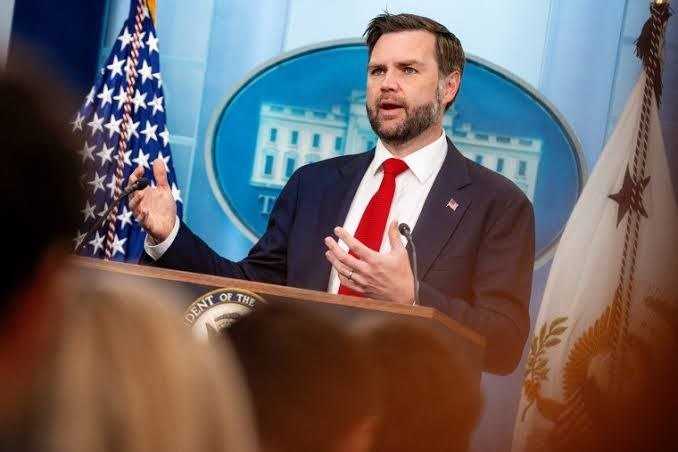
On 17 June 2026, Donald Trump did something unusual for a US president presiding over the wreckage of an air campaign: he put a dollar figure on it. The damage the United States inflicted on Iran, he said, runs between $1.5 trillion and $2 trillion. The country will need "major investment to rebuild, whether it comes from neighbors or elsewhere." He paired the estimate with a warning. If the memorandum of understanding now on the table is not implemented within 60 days, "we will return to bombing."
The headline is the ultimatum. The substance is the rebuild bill. Read together, they describe a US Middle East policy that has stopped pretending to be about non-proliferation and started behaving like what it always partially was — a bid to set the terms under which Iran is reconstructed, and on whose capital.
The number, and what it does
The $1.5–2 trillion figure is almost certainly rhetorical. No public assessment from the Pentagon, the IMF, the World Bank, or the UN has produced a number anywhere near that range for damage to Iranian infrastructure, oil facilities, and military-industrial sites. What the figure does do is establish a frame: Iran is being told that its recovery is contingent, that the United States will be a creditor power rather than a conqueror, and that the next round of strikes is a billing dispute, not a war.
In the same set of remarks, Trump called Iran's "new leaders" less radicalised than their predecessors — an acknowledgment, however grudging, that the regime has survived the strikes intact enough to negotiate. He also conceded friction with Benjamin Netanyahu, describing the United States as "the big partner" and Israel as "the very small partner," and acknowledging an active dispute with Netanyahu over Lebanon. That is not the rhetoric of a country preparing to widen the war; it is the rhetoric of a country trying to cash out.
What the deal actually is
The specifics of the memorandum remain opaque, but the shape is familiar. Iranian nuclear capacity is curtailed in exchange for sanctions relief; reconstruction financing flows through a structure that gives Washington and its Gulf partners visibility into how the money is spent. The 60-day clock is the enforcement mechanism: implement or be bombed back to the table.
French President Emmanuel Macron offered the most candid external read of the arrangement. "I think Trump's Iran deal is a good deal," he said on 17 June. "It doesn't solve everything straight away, of course not. But if we kept fighting, what would that mean?" The Macron line matters because it signals that the European Union is unlikely to obstruct the framework even if it dislikes the methods. There is no appetite in Paris, Berlin, or Brussels to test whether the American public would support a third major Middle East intervention in a decade.
The Netanyahu friction
The most under-reported element of the day is the Lebanon dispute. Trump said directly that he and Netanyahu "have a dispute over Lebanon," and the remarks suggest Washington is signalling Israel off from a northern front it has been openly preparing. Israeli security concerns on the northern border are real and longstanding; they have also, in this cycle, become an obstacle to the diplomatic settlement Trump is trying to close. The implicit message is that the United States will protect Israeli deterrence through the deal, not through an expanded campaign that would blow up the rebuild architecture.
That is a meaningful constraint on an Israeli government that has otherwise enjoyed an unusually wide operational latitude under this administration. Whether it holds depends on incidents in the field that no memorandum can pre-empt.
What remains uncertain
The damage estimate is the load-bearing claim of the day, and it is also the weakest. Iranian state-aligned outlets have not produced a competing figure; independent verification from inside Iran is impossible under current conditions. Western intelligence agencies have not, to public knowledge, published their own assessment. The $1.5–2 trillion number should be read as a negotiating anchor, not a forensic conclusion.
The 60-day window is the other unresolved variable. Implementation timelines of this kind have a poor historical record; they tend to slip, or to be interpreted asymmetrically by each side. The question is not whether the memorandum survives in form, but whether enough of it survives in substance to keep the bombers on the ground. The leverage is real. So is the precedent of using it.
Desk note: Monexus treats the Trump Iran file as a reconstruction-credit story first, a non-proliferation story second. The wire has largely framed it the other way around.
Wire provenance
This editorial synthesis draws on the following public wire/social posts:
- https://t.me/s/osintlive
- https://t.me/s/osintlive
Follow the event.
These dated source records provide context. They do not retrospectively verify this archive article.
Separate what the nuclear watchdog reported from what it could not determine after the June 2025 strikes.