Live Wire
08:19ZWFWITNESSSouth Korea to shift civilian restricted line 6 km closer to North Korean border08:17ZDAILYNATIOKenya moves to close refugee camps, raising promise and risks08:17ZDAILYNATIOKenyan tech startup transforms nine years of HR expertise into national competitive advantage08:16ZDAILYNATIODeputy principals petition Parliament as teachers' commission reviews career guidelines08:16ZTASNIMNEWSIran, Russia foreign ministers hold phone consultation08:15ZPALESTINECIsraeli Finance Minister Smotrich announces transfer of Hebron planning powers08:15ZWFWITNESSTrump administration discussed increasing oil tanker traffic through Strait of Hormuz08:13ZTASNIMNEWSControlled explosion of munitions carried out in Yazd province, Iranian military says
Markets
S&P 500751.72 0.18%Nasdaq26,376 1.15%Nasdaq 10029,968 1.89%Dow521.06 0.07%Nikkei94.63 0.54%China 5034.15 1.19%Europe90.01 0.00%DAX41 1.84%BTC$65,238 1.76%ETH$1,776 0.07%BNB$602.58 2.20%XRP$1.2 2.86%SOL$72.78 2.44%TRX$0.3185 0.25%HYPE$72.85 0.28%DOGE$0.0864 1.73%LEO$9.65 0.73%RAIN$0.0141 0.96%QQQ$735.53 0.78%VOO$691.07 0.19%VTI$371.2 0.22%IWM$292.17 0.03%ARKK$79.13 0.06%HYG$80.03 0.00%Gold$396.58 0.26%Silver$63.1 0.46%WTI Crude$114.46 0.87%Brent$43.6 0.66%Nat Gas$11.76 0.00%Copper$39.58 0.08%EUR/USD1.1594 0.00%GBP/USD1.3408 0.00%USD/JPY160.38 0.00%USD/CNY6.7564 0.00%
CLOSEDNYSEopens in 5h 6m
The Monexus
Vol. I · No. 168
Wednesday, 17 June 2026
Saturday Ed.
Updated 08:23 UTC
  • UTC08:23
  • EDT04:23
  • GMT09:23
  • CET10:23
  • JST17:23
  • HKT16:23
← The MonexusTech

Trump tells Netanyahu to be 'more responsible' on Lebanon — but Israeli strikes keep coming

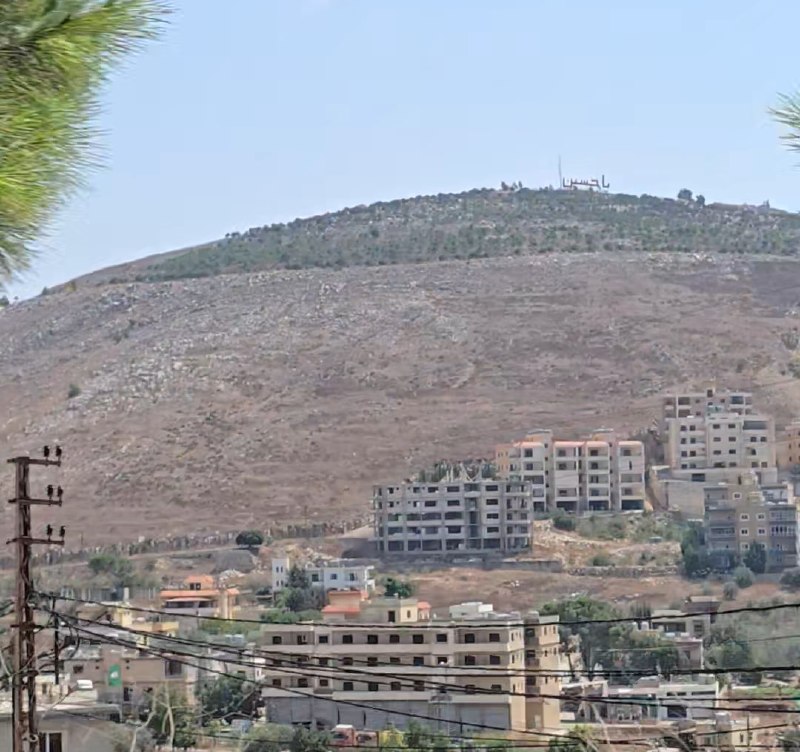
Hours after Donald Trump publicly pressed Benjamin Netanyahu to treat Lebanon 'with respect,' Israeli drones killed four people in the country's south, exposing the gap between the announced US-Iran framework and the daily reality on the ground.
Monexus News

On 16 June 2026, US President Donald Trump publicly called on Israeli Prime Minister Benjamin Netanyahu to be "more responsible" in his handling of Lebanon — the sharpest White House rebuke of Israeli tactics toward the northern neighbour in recent memory. Within twelve hours, Israeli drone strikes in southern Lebanon had killed at least four people, according to state-aligned Chinese network CGTN, which framed the attack as taking place "despite" a newly announced US-Iran memorandum of understanding. The collision between Washington's stated diplomatic posture and Jerusalem's operational tempo is now the defining feature of the file.

The pattern is familiar: a high-profile American push for de-escalation is followed, almost mechanically, by an Israeli strike that tests the limits of the new line. The question is no longer whether the two governments are out of sync on Lebanon — they plainly are — but whether the US framework announced in early June has any purchase at all with the Israeli Air Force.

What Trump actually said

Trump's remarks were carried on 16 June 2026 by the prediction-market account Polymarket and echoed the same day by market-news account Unusual Whales. The president told reporters that Netanyahu "must be 'more responsible' with regard to Lebanon" and that the Israeli premier must now "treat Lebanon with respect." The language was unusually pointed: previous US commentary on Israeli operations north of the border has tended toward the formulaic — calls for restraint, generic concern for civilian harm. On 16 June, the framing shifted to one of instruction, with the White House effectively telling an ally how to behave on someone else's territory.

The Polymarket and Unusual Whales posts sit in the same news cycle as the CGTN strike report, dated 17 June 2026 at 04:30 UTC, which directly invokes the US-Iran MoU as the political backdrop. Taken together, the three inputs form a single micro-narrative: Washington extends a diplomatic framework, Jerusalem tests it within hours.

The strike on the ground

According to CGTN's reporting on 17 June 2026, four people were killed in Israeli drone strikes in southern Lebanon. The outlet — Chinese state-owned and therefore not a neutral observer, but in this case relaying figures consistent with the wire trajectory of the day — explicitly anchored the attack to the new US-Iran understanding, signalling that Beijing read the strike as a deliberate probe of the agreement's limits rather than a routine operation.

The sources do not specify the precise locations within southern Lebanon, the identities of the four killed, or the intended targets. That thinness is itself significant: it suggests either an operation carried out under tight operational security, or a strike whose political signalling — to Beirut, to Washington, to Tehran — mattered more than its tactical yield.

Why the MoU matters — and why it may not

The "US-Iran MoU" referenced by CGTN is the same framework that has governed the post-May diplomatic sequence on Lebanon: an understanding in which Iran uses its leverage over Hezbollah to limit cross-border fire, and the United States uses its leverage over Israel to limit the scope of retaliatory and pre-emptive operations. The architecture is bilateral, not multilateral, and rests almost entirely on two capitals keeping their respective clients on a leash.

That is the structural problem. Hezbollah is not a signatory; the Lebanese government is not a signatory; Israel retains full operational freedom of action inside Lebanese airspace. The MoU is, in effect, a gentlemen's agreement about restraint — which is precisely the sort of arrangement that breaks first when one of the gentlemen decides to fly a sortie. The 16–17 June sequence suggests the arrangement is fraying at the seam it was always most likely to fray at: the southern Lebanese airspace below the Litani.

Counterpoint: what the dominant Western framing misses

The standard wire read of the past 48 hours — Trump rebuking Netanyahu, Israel striking anyway — is broadly accurate, but it leaves two things out. First, it understates the cost of the US position to Washington's other regional partners, particularly the Gulf states that have banked political capital on the new framework. If the US cannot or will not enforce restraint on its closest Middle Eastern ally, the credibility ceiling for any future US-brokered arrangement drops markedly. Second, the framing centres the dispute in Washington and Jerusalem, when the people paying the price — the four killed on 17 June and the broader civilian population of southern Lebanon — are almost entirely outside the conversation. The diplomatic register is one of mutual respect between two governments; the operational register is one of drone-launched munitions.

The plausible alternative read is that Trump's remarks were calibrated rather than confrontational: a public marker of displeasure designed to give Netanyahu cover for a future de-escalation, not a serious rupture. On that reading, the 17 June strike is not a contradiction of the US line but a punctuation of it — the last hard note before the next soft one. The evidence for and against that reading is roughly balanced, and the next 72 hours of operational tempo will be the test.

Stakes over the next quarter

If the cycle continues — public US reproof, Israeli strike, Beijing-led coverage, repeat — the political cost to Trump of being seen as unable to constrain Netanyahu will compound quickly, particularly as the US-Iran MoU approaches its first real test. Iran, for its part, has the option to interpret each strike as a release of the framework's pressure valve: a free signal that the deal is being violated without yet being formally abandoned. Hezbollah retains a similar option set. The most likely near-term outcome is not a collapse of the arrangement but a slow erosion of it, in which the MoU survives on paper while the southern Lebanese casualty count continues to tick upward.

The four killed on 17 June are, in that sense, the canary. The MoU will be judged less by what Trump says from the podium than by what Israeli drones do at low altitude over the Litani in the weeks that follow.

What remains uncertain

Three things are genuinely unresolved. The sources do not name the four killed, the specific communities affected, or whether any of the strikes were aimed at Hezbollah-linked infrastructure versus what Israel would term military assets embedded in civilian areas. The full text of the US-Iran MoU has not been published in the inputs available, which makes it impossible to say definitively whether the 17 June strike violated a specific clause or merely tested the spirit of the arrangement. And it is too early to tell whether Trump's public language marks a real shift in US policy toward Israel or is a one-off calibration event that will be quietly walked back. The next data point is the next strike — and on present form, that is a question of when, not if.


This article is published by the Monexus newsroom as a desk piece. Monexus is a privately held media company and does not hold a political position on the Israel–Lebanon file. Coverage is grounded in the source inputs listed below; readers are encouraged to verify claims against the primary wires.

Wire provenance

This editorial synthesis draws on the following public wire/social posts:

  • https://x.com/polymarket/status/
  • https://x.com/unusual_whales/status/
Intelligence ThreadFollow on terminal ↗
© 2026 Monexus Media · reported from the wire