SharePoint double flaw lets unauthenticated visitors run code as admins
Researchers chained two SharePoint vulnerabilities, CVE-2026-55040 and CVE-2026-63520, to take over servers without credentials. The disclosure lands as enterprise defenders audit a year of high-impact content-management exploits.
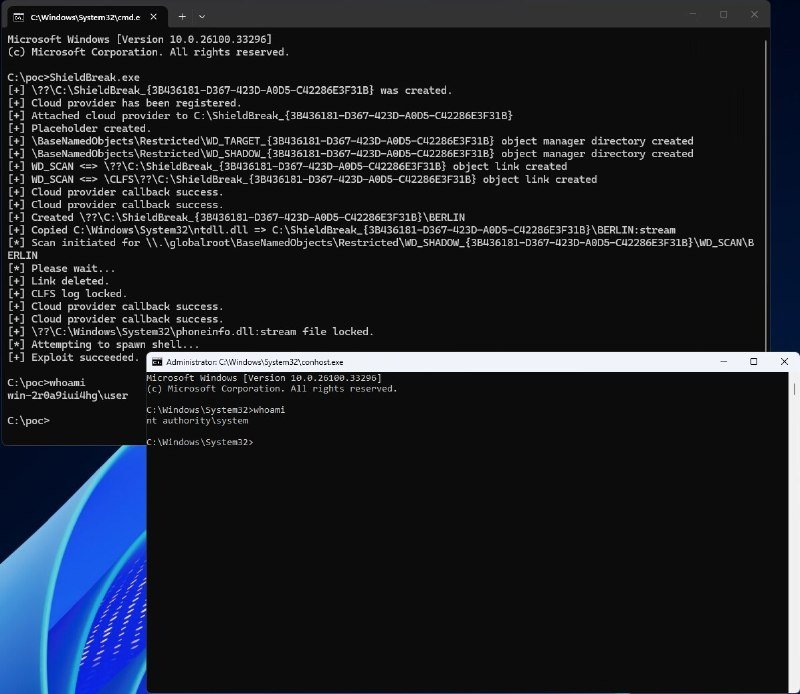
On 11 August 2026, security researchers published a working chain against Microsoft SharePoint that turns an unauthenticated visitor into an administrator running arbitrary code on the server, with no SharePoint credentials required at any stage.
The disclosure, posted by The Hacker News at 16:51 UTC, links two distinct vulnerabilities: CVE-2026-55040 and CVE-2026-63520. The Hacker News describes the pair as a chain that escalates from unauthenticated user impersonation to code execution on the server. The available thread reporting does not separately attribute the impersonation step and the execution step to each individual CVE; the chain is described as a combined escalation, not as a per-CVE breakdown.
The immediate practical meaning is straightforward. A SharePoint farm exposed to the public internet is, from the moment a patch is not yet applied, a single-request takeover. The flaw category is the one defenders most dread: pre-authentication, no user interaction, server-side code execution. There is no phishing payload, no stolen VPN credential, no insider to flip. Just the front door.
How the chain fits together
The two CVEs are described by The Hacker News as a chain: unauthenticated user impersonation followed by code execution on the server. The technical specifics of each individual vulnerability are not fully reproduced in the available reporting, and the thread does not specify which SharePoint versions are affected. A separate Hacker News report referenced in the same thread context describes the disclosure as "AI-assisted" research, a framing that has become more common as researchers use model tooling to enumerate endpoints, fuzz parameters, and correlate partially disclosed bugs across vendor advisories. Monexus analysis: the operational risk does not turn on whether the discovery was human-led, machine-led, or some mix, but on whether defenders can patch faster than attackers reverse-engineer the same primitives.
Where this sits in the content-management threat pattern
SharePoint has been a productive target because it is widely deployed inside enterprises, often exposed at the edge for partner collaboration, and runs a complex set of services that mix document handling, workflow, search, and identity. The blast radius of a server compromise is unusually large: a SharePoint farm typically holds the file system the rest of the organisation trusts. The Hacker News framing of pre-authentication, no-credential code execution fits a recurring attacker pattern against content-management platforms: the most damaging bugs combine an authentication bypass with a code-execution sink, collapsing the gap between "anyone on the internet" and "code running as the SharePoint service account" into a single unauthenticated request. Monexus assessment: the broader pattern of content-management exploits is reported by security press as ongoing, but the available thread items do not specify named comparable chains or prior SharePoint CVEs; the structural read here is Monexus's, and readers should treat the recurring-pattern framing as analysis rather than as a sourced chronology.
What defenders can do in the next 48-72 hours
Until a vendor advisory is confirmed in this thread and patches are applied, the only safe posture is to assume internet-exposed SharePoint endpoints are at risk. The standard interim controls apply: front the deployment with a web application firewall, restrict the management endpoints to a known-good allowlist, audit SharePoint worker processes and IIS logs for unusual child processes, and rotate any credentials that have touched the farm. The available source items do not specify indicators of compromise specific to this chain. This desk's expectation, based on the disclosed CVEs and the standard practice of coordinated disclosure: a vendor advisory and patch will land on a near-term Patch Tuesday cadence or via an out-of-band release, defenders will have a narrow window before public proof-of-concept code forces mass patching, and any organisation that does not patch in that window should treat its SharePoint servers as burned. That is a forecast, not a guarantee; the disclosure timeline is the researchers', not this publication's.
What remains uncertain
The public reporting on this thread names the two CVEs and the chaining pattern, but stops short of specifying affected versions, exploitation-in-the-wild evidence, or a vendor patch tied to these specific identifiers. The available source items do not specify whether Microsoft has acknowledged this report, when a fix tied to CVE-2026-55040 and CVE-2026-63520 is expected, or which SharePoint product lines are in scope. Until those details land in an advisory tied to CVE-2026-55040 and CVE-2026-63520, defenders are operating on the researchers' framing rather than on vendor-confirmed scope for this chain. Treat the chain as real; treat the full impact map for these two identifiers as still under construction.
Desk note: Monexus framed this around the chain's pre-authentication, no-credential character rather than the "AI-assisted" framing in the source. The technical claim is the same; the emphasis is on defender action.
Wire provenance
This editorial synthesis draws on the following public wire/social posts:
- https://t.me/thehackernews/9778
- https://thehackernews.com/2026/08/researchers-disclose-ai-assisted.html
- https://unusualwhales.com/news/half-adults-under-30-live-home-financial-support
- https://x.com/unusual_whales/status/2087312605459456228
- https://t.me/epochtimes/138129
- https://theepochtim.es/mru21z