Amazon's October Echo line adds a camera to its most capable speaker
Amazon's October 2026 Echo launch adds a camera to what Ars Technica calls its most capable smart speaker, and a sleep-sensing feature to its clock. The coverage in the sources does not specify how the camera's data is handled.
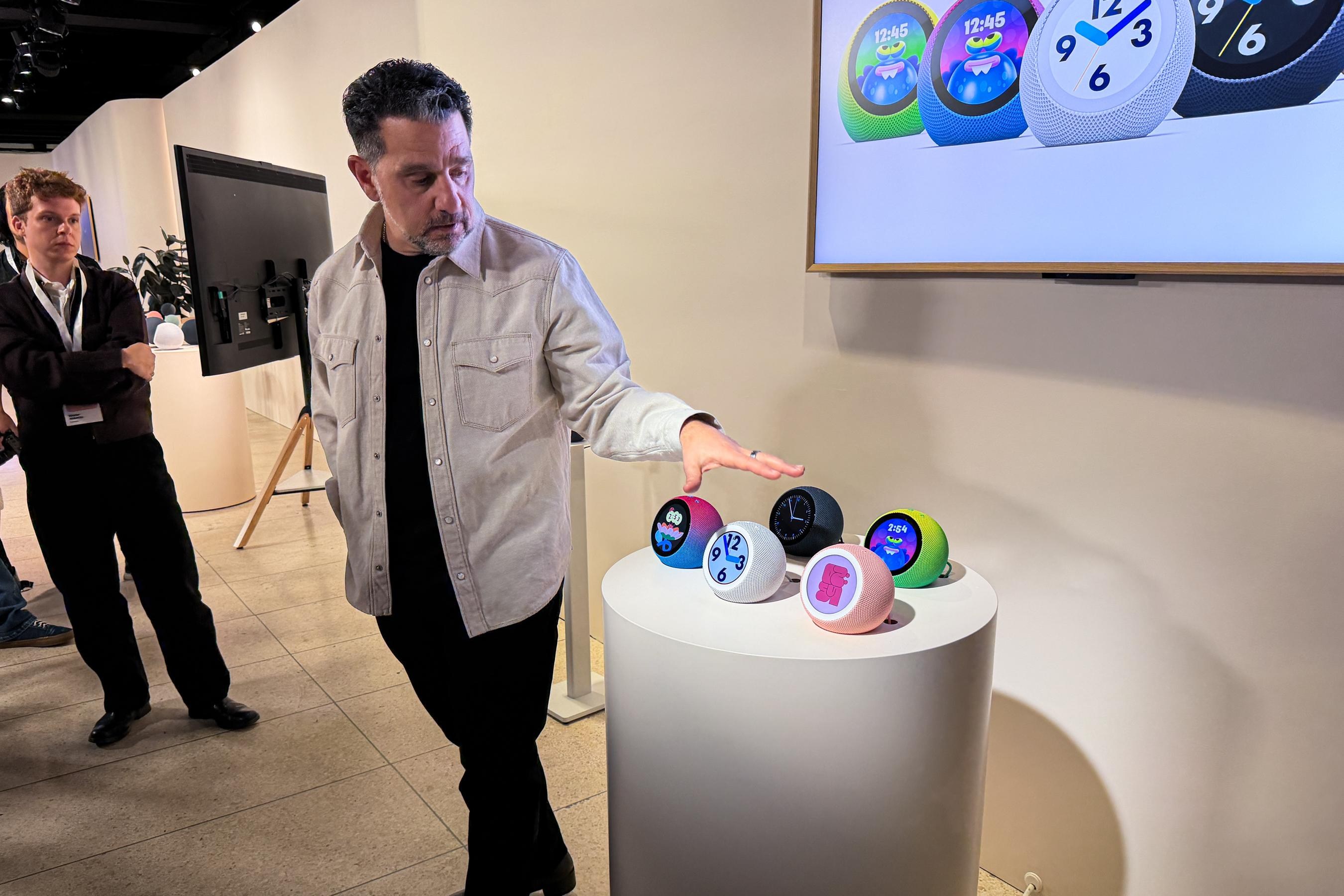
On 28 October 2026, Amazon put a camera inside what Ars Technica calls its most capable smart speaker. According to Ars Technica, the Echo Studio with Home Camera can "see and understand what's in front of the camera." Two days later, a Telegram repost described a second device from the same launch. The Echo Time, as that post tells it, senses lighter sleep without a wearable and wakes the sleeper within 10 to 60 minutes of the set alarm, brightening its screen as it does. The hardware is incremental. The question it raises, about what a household is being asked to trust, is not.
Monexus reads the October launch as a change in what the Echo is for. Each step on its own is incremental: a camera on a higher-end speaker, a new Echo Dot, a clock with a sensor. Taken together, the Echo becomes a device that perceives a room and, in the case of the clock, a sleeping body. None of the cited items says where that perception is processed, how long anything is kept, or who can review it. This article has not reviewed Amazon's own product documentation for these devices, so the limits described here belong to the source set, not to the company's full disclosures.
Fewer products, more weight on each
Amazon's hardware events were once a parade. The Verge notes that the company "used to blast out dozens of products onstage at annual hardware events," and argues that this October's slate shows a shift: the company has, in the outlet's words, "wisely changed its strategy to put more focus on each new product." That is The Verge's judgment, and a defensible one. A smaller slate gives reviewers and buyers fewer things to misread at once.
The slate itself is short. The Verge's launch roundup, headlined as the six biggest updates, centres on the Echo Studio with Home Camera, a new Echo Dot and the Echo Time. The same outlet reports that almost all of the new Echo gear is available now, so the claims can be tested against products people can actually buy.
For a buyer, the sequence matters. The two items in this launch that ask a household to accept a new kind of sensing are the camera and the sleep clock. Those are also the two items whose descriptions rest most heavily on launch coverage rather than on documents this desk has read. Monexus analysis: launch coverage is a useful first read and a poor final one for devices of this kind.
The case for the camera, and where the sources stop
The strongest case in favour is the one the launch coverage makes. Ars Technica's headline describes the Echo Studio with Home Camera as Amazon's most capable smart speaker, and the camera extends that capability from sound into sight. A household that wants a hub that understands the room, rather than one that only hears a request, now has a device built for that buyer. Owners who already accept a voice assistant in the kitchen will read the camera as an extension rather than a leap, and that reading deserves weight.
The skeptic's case starts with the same sentence. Ars Technica says the camera can see and understand what is in front of it. The cited items do not say what footage or recognition data is retained, who can view it, or whether recognition runs on the device or on Amazon's servers. The available source items do not specify those details, and this article does not fill the gap with assumptions.
A second reading of the slate is available too. Fewer products are easier to fund, easier to explain and easier to present as deliberate. The Verge reads the change as focus. The same facts could also support a reading in which Amazon has concentrated its launch on a few devices whose features depend on more data. The sources do not settle between the two readings, and neither does this article.
The software context is also on the record. The Verge's roundup of everything announced notes that Alexa Plus became available to everyone in the US in February, and that the October updates build on that release. The camera and the clock therefore arrive on an assistant that has been available to everyone in the US since February.
The sensing assessment behind the new hardware
Monexus analysis: when a device sells itself on its ability to understand a room, the commercial centre of gravity shifts. The hardware becomes the entry point. What the device keeps perceiving becomes the reason to stay inside the ecosystem and to lean on the assistant. The speaker stops being a product sold once and becomes a sensor a buyer lives with for years. Nothing in the sources contradicts that reading, but nothing in them confirms the business model either.
The sleep clock makes the same move with a body rather than a room, and its sourcing has two strands. The aipost relay describes the Echo Time as a device that senses lighter sleep without a wearable and wakes the sleeper within 10 to 60 minutes of the set alarm. The Verge's roundup, in the excerpt this desk reviewed, also points to a hands-on piece that calls the Echo Time a smart clock that senses sleep. The sensing claim therefore rests on first-party coverage as well as a relay. The 10 to 60 minute wake window rests on the Telegram relay alone, and that figure carries the lowest certainty of any product claim in this article.
Many households will find a clock that wakes them at a lighter moment useful. It is also a setup in which the person being sensed may not be the person who bought or configured the device. The sources do not address how a shared household would handle that.
The governance questions are practical. Who decides how long footage is kept? Does the clock's sleep data stay with the wake function? Can a household member decline the camera without giving up the speaker? These are questions of product design. The launch coverage raises them only by implication, and the cited items do not answer them.
What would settle the questions
The desk's expectation is that the most useful answers will come from Amazon's setup and privacy documentation for the Echo Studio with Home Camera, which is where recognition location and footage retention would normally be stated. That is a forecast about where the answers sit, not a finding about what they say. The desk has not reviewed that documentation for this article.
Three things would move this read. A published account of where the camera's recognition runs, on the device or in the cloud, would answer the largest open question. A control that switches off the camera while leaving the speaker working would show that the design treats the camera as optional. Independent testing of the Echo Time's sleep detection, measured against a reference rather than the descriptions in launch coverage, would show whether the clock's claims hold.
A reader weighing either device can run those checks without waiting. Look for camera controls in the setup screens, look for a statement of where recognition runs, and check whether the sensing can be switched off separately from the wake function. Each check produces a fact the launch coverage does not supply.
If the current trajectory continues, the beneficiaries are easy to name. Amazon gains a richer input stream for its assistant and a reason for buyers to climb its hardware line. Households that adopt the devices without a clear view of what they retain carry the most exposure, and rival speaker makers will need answers of their own once a camera-equipped speaker becomes the reference product. The time horizon is the next product cycle, when these choices either harden into defaults or get argued out case by case.
Where the evidence is thin, the gaps are specific. The wake window comes from a single Telegram relay, and the sources give no accuracy figure for the sleep detection. The camera's capabilities rest on Ars Technica's item and on The Verge's launch coverage. Several entries are Telegram relays of Verge posts, so the product facts trace back to the outlet's own pages. The sleep-clock description should be read as a claim to test, not a settled specification.
The next date to watch is not a keynote but a settings screen. The first owner who opens the camera's controls and finds them complete, or finds them missing, will have answered a question these sources cannot.
Desk note: The Verge and Ars Technica treat the launch as a product story, and Monexus has framed the same facts around the data questions they leave open.
Wire provenance
This editorial synthesis draws on the following public wire/social posts:
- https://www.theverge.com/tech/1020035/amazon-fall-2026-hardware-launch-biggest-announcements
- https://www.theverge.com/tech/1020403/everything-announced-at-amazons-october-2026-hardware-launch
- https://www.theverge.com/gadgets/1019686/amazon-echo-dot-studio-camera-frame-show-16-buy
- https://arstechnica.com/gadgets/2026/10/amazon-adds-a-camera-to-its-best-sounding-smart-speaker-for-30-extra/
- https://t.me/theverge_news/9864
- https://t.me/theverge_news/9867
- https://t.me/aipost/8652