Amazon's October Echo lineup puts a camera inside the speaker
Amazon's most capable smart speaker now comes in a version with a camera that, according to Ars Technica, can "see and understand what's in front of the camera." The available source items do not say what the camera keeps.
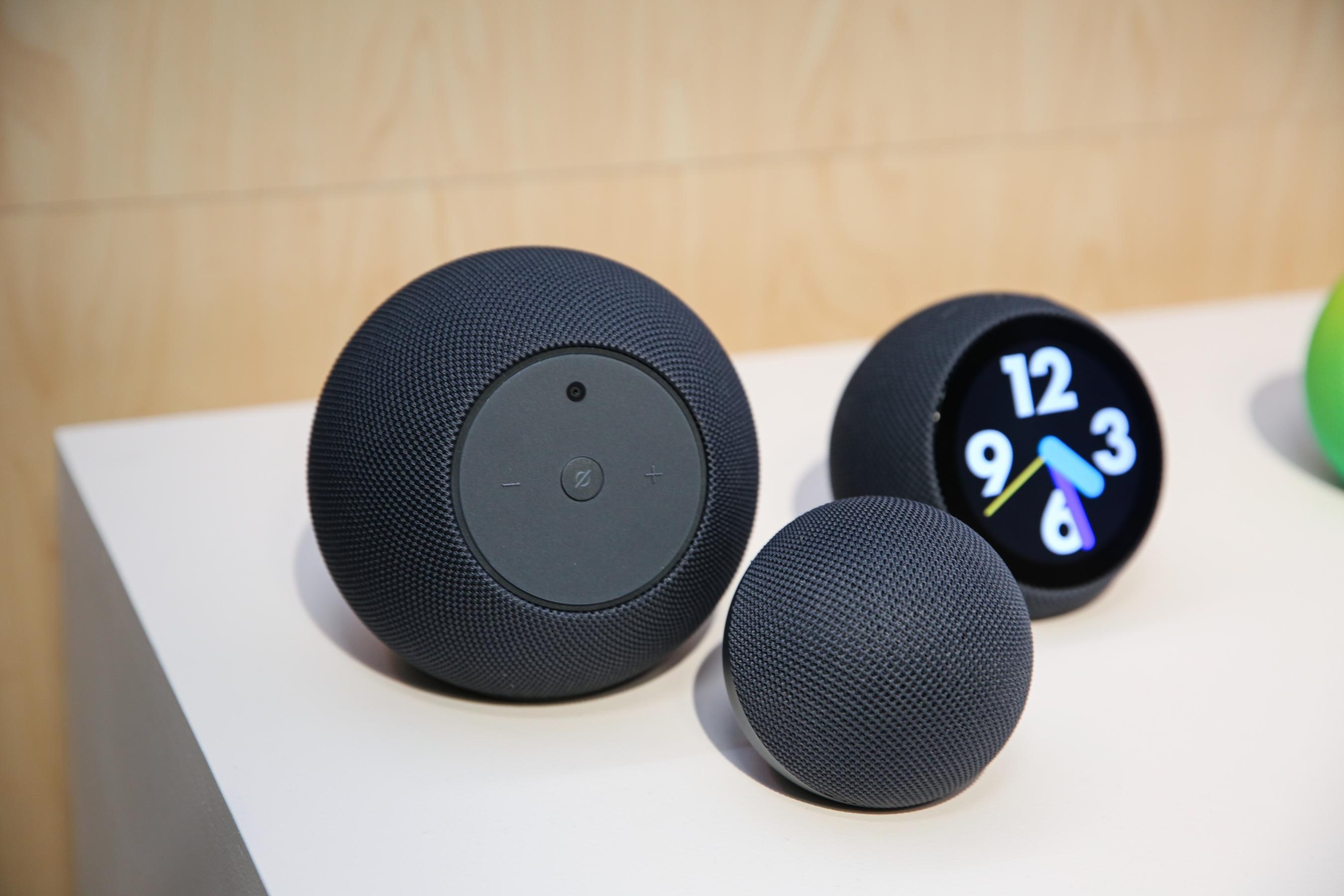
At 12:00 UTC on 28 October 2026, The Verge published its first look at the Echo Show 16, a display the outlet describes as a ground-up rebuild of Amazon's smart display line. The piece opened on price: the screen is "big, gorgeous, and eye-wateringly expensive." At 18:05 UTC the same day, Ars Technica reported the more consequential item. Amazon's most capable smart speaker, the Echo Studio with Home Camera, can, according to the outlet, "see and understand what's in front of the camera." A speaker is now being asked to look, and the coverage in this thread does not say what happens to what it sees.
Amazon's October hardware cycle reads as a restructuring of what an Echo is for. The company is putting more weight behind fewer launches, its most capable speaker now carries a lens, and Alexa Plus, the AI-powered assistant that ties the line together, has been available to everyone in the United States since February. Monexus analysis: taken together, these moves point toward a home device whose value rests on sensing, and on a model that interprets what it senses, rather than on the sound it makes. That shift raises questions about consent, retention and control that the launch coverage in this thread does not answer.
Fewer launches, more weight on each one
A Verge piece published at 12:29 UTC on 28 October recalls that Amazon used to blast out dozens of products onstage at its annual hardware events. This October, the outlet argues, the company has changed its strategy to put more focus on each new product. The shape of the launch is consistent with that reading. The outlet's roundup names the Echo Studio with Home Camera, the new Echo Dot and the Echo Time among the headline updates, and the Show 16 received a first look of its own. The coverage arrived in a rolling sequence across the morning, from the 12:00 UTC first look at the Show 16 to the 12:29 UTC availability report.
The availability detail matters as much as the framing. The same 12:29 UTC report says almost all of the new Echo gear is available now. Monexus analysis: a product that can be bought on the day it is unveiled has been planned around a retail calendar as much as a stage. The contest shifts away from the keynote and toward the product page, where price, reviews and the devices a buyer already owns do most of the persuading.
Monexus analysis: concentration carries its own risk. Fewer products means each one must justify its cost on its own terms, and The Verge's verdict on the Show 16 shows how exposed that position can be. A display the outlet calls eye-wateringly expensive asks buyers to pay a premium for a screen whose appeal depends on the Alexa ecosystem they already use.
A speaker that now looks back
Ars Technica's headline puts the change plainly: Amazon has turned its most capable smart speaker into a smart camera, too. The verb carries the weight. A camera that records is a familiar appliance. Monexus analysis: a camera that interprets produces labels, and labels are what an assistant acts on.
The thread does not specify how footage is stored, how long it is kept, whether recognition runs on the device or in the cloud, or who can access it. This article has not independently established those details, and the available source items do not address them. Those gaps are not a footnote. In a kitchen, a bedroom or a child's room, the difference between local processing and remote storage is the difference between a convenience and a standing record.
Monexus analysis: the camera also changes what a buyer is evaluating. A speaker is judged on sound and placement. A device with a lens is also judged on what it might see, including guests who never agreed to appear in a frame and people who pass a doorway during a delivery.
Monexus analysis: the more useful question is structural. A camera in a living room has usually been a product a homeowner owns outright. A camera attached to an assistant is bought as part of a service, and the terms of that service can change after the box is opened. The Verge's 12:20 UTC roundup places the hardware beside updates to Alexa Plus, which is why the device and the service are hard to assess separately. Any consent a buyer gives attaches to a platform as much as to a box on a shelf.
The spec sheet will settle what the lens can detect. It will not settle who is allowed to ask it.
The assistant is the real product
The Verge's 12:20 UTC roundup describes Alexa Plus, the AI-powered version of Amazon's assistant, as available to everyone in the United States since February. Monexus analysis: an October hardware launch that arrives eight months after that rollout suggests the devices are being positioned as surfaces on which the assistant is experienced, rather than as stand-alone products that happen to include one.
Monexus analysis: an assistant that interprets speech gains from more inputs. A microphone supplies voice, a display supplies a place to show an answer, and a camera supplies context that neither can. Read that way, the new display and the camera-equipped speaker form two halves of one bet: that a household assistant becomes more useful as it sees the room, and that owners will accept the trade. The source items document the lineup, not the company's reasoning behind it.
Monexus analysis, not a claim the sources make: a device that also serves as a sensor for a service invites a different commercial logic from a speaker sold once. The thread contains no revenue figures, and this article does not supply any. What the coverage does establish is narrower. The new hardware is arriving alongside a service that has already reached US customers.
The case for the product, and what stays open
The argument for the product is not frivolous. Ars Technica describes the Studio with Home Camera as Amazon's most capable smart speaker, and a buyer who wants one device in a room to handle voice and now sight has a coherent reason to choose it. The Verge describes the Show 16 as a ground-up rebuild of the line. Monexus analysis: a company that narrows its slate and concentrates effort can produce better devices, and consolidation is not automatically a warning sign. It also makes each product easier to compare with its predecessor, which helps a buyer who wants a clear answer.
The counter-case concerns price and trust. The Verge's opening line calls the Show 16 big, gorgeous, and eye-wateringly expensive, a verdict that puts the premium at the center of the buying decision. On trust, the supplied items do not address the questions a buyer most needs answered, and this article has not independently verified retail prices or privacy terms. It does not treat either as settled.
The stakes run in two directions. If camera-equipped speakers become the default across the Echo line, a growing number of rooms could become sensing environments tied to a service that changes after purchase, and the costs may land first on households. If the camera stays an option, the consolidation will look like sensible pruning. Monexus analysis: the desk expects the holiday buying season to be the first large test of how buyers read the camera, as a feature or as a fixture.
What remains uncertain is larger than any spec sheet. The thread confirms the camera variant, Ars's description of its ability to see and understand a scene, the broad availability of the new Echo gear and the US rollout of Alexa Plus. It does not establish how scene understanding works, what leaves the house, or how these choices compare with competing devices. A careful buyer needs those answers, and the available source items do not supply them.
The lens is the easy part to announce. The harder part is the list of what it is allowed to remember, and the supplied coverage does not say where that list is published.
Monexus framed this as a data-governance question as much as a hardware launch, drawing on the product coverage in The Verge and Ars Technica that the supplied thread contains, a framing the launch coverage in the thread does not adopt.
Wire provenance
This editorial synthesis draws on the following public wire/social posts:
- https://arstechnica.com/gadgets/2026/10/amazon-adds-a-camera-to-its-best-sounding-smart-speaker-for-30-extra/
- https://www.theverge.com/gadgets/1019686/amazon-echo-dot-studio-camera-frame-show-16-buy
- https://www.theverge.com/tech/1020403/everything-announced-at-amazons-october-2026-hardware-launch
- https://t.me/theverge_news/9864
- https://www.theverge.com/tech/1020035/amazon-fall-2026-hardware-launch-biggest-announcements
- https://t.me/theverge_news/9859
- https://www.theverge.com/tech/1020286/amazon-echo-show-16-hands-on-price-screen-styles