US-Iran memorandum: what 14 points actually say — and what they leave out
A 14-point US-Iran memorandum, circulated to White House reporters on 17 June 2026, sketches the architecture of a permanent ceasefire. The text is short on enforcement, timelines, and who counts as an 'ally.'
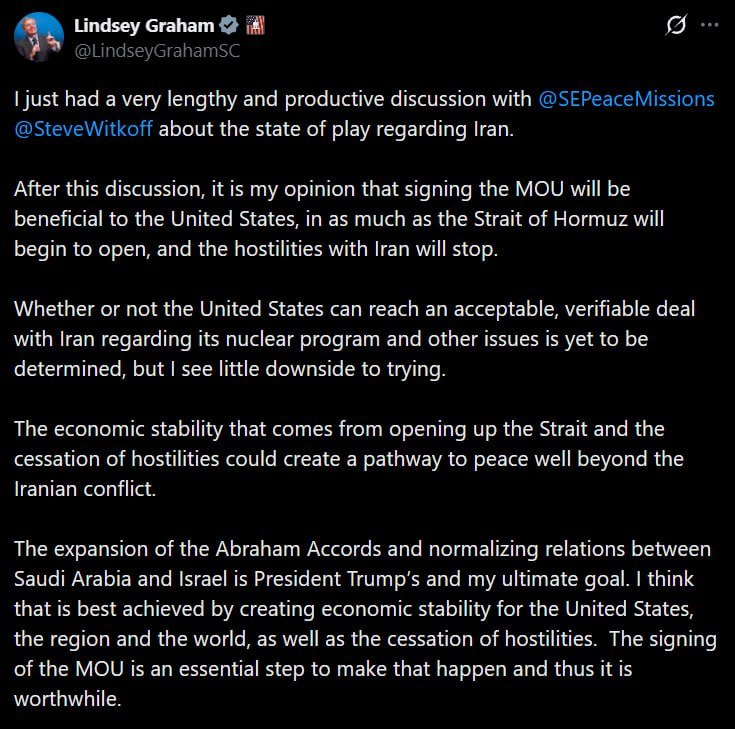
On the afternoon of 17 June 2026 — at roughly 17:33 UTC — White House correspondents began receiving the text of a 14-point memorandum of understanding between the United States and the Islamic Republic of Iran. The document, described in pool reports as the framework for the deal announced the previous week, was circulated by a senior administration official and reproduced within hours by open-source intelligence channels including OSINTtechnical and Faytuks News. By 18:16 UTC, the document had been mirrored across Telegram accounts that track US-Iran negotiations. What follows is what the published text actually commits the two governments to, and where it stops short.
The MOU, as reproduced, opens with a joint declaration: "The United States of America and the Islamic Republic of Iran and their allies in the current war by signing this MoU, declare" an immediate and permanent ceasefire on all fronts. The phrasing is significant. It is the first public document in the current conflict in which Washington and Tehran have used the same instrument to bind not only themselves but a wider set of "allies" — a category that, on the American side, is widely understood to cover Israel and the Gulf states that have hosted US strikes, and on the Iranian side the so-called Axis of Resistance: Hezbollah, the Houthi movement in Yemen, and a constellation of Iraqi militias. The ceasefire is "permanent" in the text, not conditional on subsequent negotiations.
What the four published points commit
Pool reports and OSINT accounts reproduce four substantive commitments at the head of the document. First, both sides agree to the ceasefire declaration. Second, they commit to the cessation of all hostile actions by their respective forces and those acting on their behalf or in coordination with them — a phrase aimed squarely at proxy fires from Lebanon, Yemen, and Iraq. Third, the parties undertake to open a political track, the modalities of which are to be defined in a follow-on arrangement. Fourth, they commit to refrain from actions that would jeopardise the agreement, a standard non-undermining clause.
The text's first paragraph frames the document as a joint commitment "in good faith." That language matters in any subsequent dispute over compliance: it gives each side a vocabulary for accusing the other of bad-faith behaviour without yet triggering any formal enforcement mechanism. There is no mention, in the four points reproduced publicly, of an independent verification body, of an inspection regime, or of automatic consequences for breach. The MOU is a political instrument, not a treaty in the technical sense — and the distinction will shape how it is enforced, or not.
The "allies" question Tehran and Washington are not naming
The most consequential ambiguity sits in the word "allies." The MOU binds not just the two signatories but "their allies in the current war." That formulation creates a chain-of-command problem for both governments. Iran's regional partners — Hezbollah, the Houthis, Ansar Allah-aligned forces in Yemen, the Popular Mobilisation Forces in Iraq — do not take orders from a single switchboard. The United States, for its part, coordinates with Israel, Saudi Arabia, the United Arab Emirates, and host governments in the Gulf, each of which retains independent decision-making on strikes, intercepts, and force posture.
Iranian coverage of past deals has repeatedly emphasised that any agreement must respect the security architecture of the "Axis of Resistance," framing the network not as a proxy force but as a sovereign-aligned coalition. American commentary, conversely, treats ceasefire compliance as a question of Iranian command-and-control over those same groups. The MOU's language is agnostic: it commits the parties without specifying who, on either side, is responsible for ensuring that fires from Lebanon, Yemen, or Iraq actually stop. That gap is where a permanent deal either holds or frays.
Why the text is being published now
Publishing the MOU rather than simply announcing it is a deliberate signal. The administration has chosen maximum daylight over the document's content — pool distribution to wire reporters, then leak into the open-source ecosystem — at exactly the moment when both Tehran and Washington face domestic constituencies that will read the text line by line. Hardliners in Iran will look for any clause that constrains the Axis of Resistance; Israel and the Gulf will look for any clause that does not. By making the four points public, both governments are tying their own hands in public before the next round of bargaining.
The arrangement also resembles the structural pattern that has governed US-Iran diplomacy for two decades: a framework document, followed by technical annexes on nuclear constraints, missile ranges, and sanctions relief, followed by a verification regime built later rather than sooner. Nothing in the four published points settles the nuclear file, the missile file, or the sanctions file. They are deferred.
What the published text leaves out
Several items one would expect in a comprehensive settlement are not present in the four points circulated on 17 June. There is no mention of enriched-uranium stockpiles, of Fordow or Natanz, of IAEA inspection access, or of sanctions sequencing. There is no reference to the Strait of Hormuz, to tanker traffic, or to the freedom-of-navigation regime the US Navy has enforced since 1988. There is no prisoners exchange, no hostage file, no reference to the Iranian scientists and dual nationals whose cases have been a recurring irritant. The text is a ceasefire architecture, not a peace settlement.
That distinction matters for markets and for regional governments. A permanent ceasefire is a different financial event from a full normalisation: oil premia fall on the former, but only partially; sovereign-risk spreads in the Gulf compress on the former, but the absence of a sanctions track means Iranian oil exports do not move. Tehran gets breathing room without the cash. Washington gets a de-escalation headline without the political cost of a deal with the Islamic Republic.
Counterpoint
The dominant read in Western commentary is that this MOU is a strategic win for Washington: Iran constrained, the proxy network frozen in place, an opening for an extended negotiation. The structural counter-read is that Tehran extracts the maximum value from a moment of American war-weariness — a permanent ceasefire that costs Iran nothing on the nuclear file, nothing on the sanctions file, and nothing on its regional architecture, while giving it the diplomatic recognition that years of pressure failed to deliver. A third, more cautious read holds that neither side has a clear enforcement lever and that the MOU is best understood as a gentlemen's agreement that will be tested within weeks by incidents in Lebanon, the Gulf of Oman, or the Red Sea. All three readings are consistent with the four points publicly released; the text does not adjudicate between them.
The MOU's claim to permanence is also a hostage to fortune. Permanent ceasefires are rare in this conflict; the 1988 ceasefire in the Iran-Iraq war held, but most declared pauses since have not. The signatories have chosen a strong word and bound themselves to it without, in the four published points, building the institutional scaffolding that would make it stick. That is the bet the document asks both governments — and their respective allies — to make.
This publication framed the MOU as a political, not a legal, instrument; the published text contains no enforcement architecture, and the published text of the four substantive points is the only public record available at the time of writing.
Wire provenance
This editorial synthesis draws on the following public wire/social posts:
- https://t.me/sprinterpress
- https://t.me/GeoPWatch
- https://t.me/osintlive
- https://t.me/wfwitness
- https://t.me/Faytuks