Hezbollah's parliamentary bloc sets a 60-day clock on Israel in Lebanon, betting on Iranian deterrence
Mohammad Raad, head of Hezbollah's parliamentary Loyalty to the Resistance Bloc, told Lebanese officials on 18 June 2026 that the 'Zionist regime' had 60 days to leave Lebanon — a deadline pegged explicitly to Iranian leverage rather than to any negotiated framework.
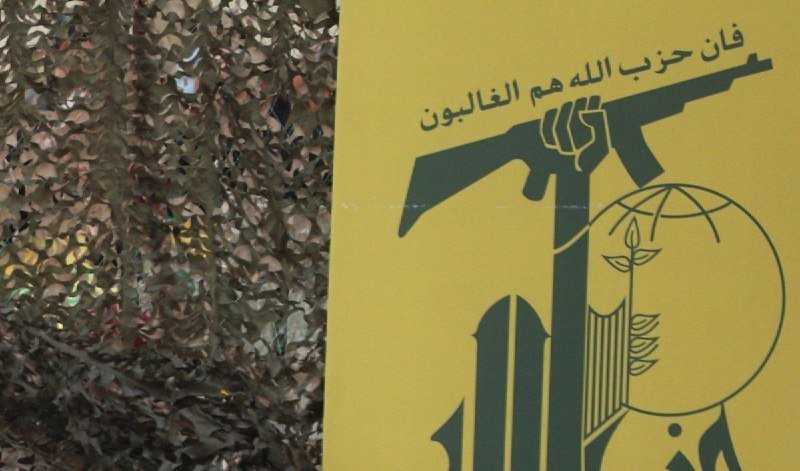
On Thursday, 18 June 2026, Mohammad Raad — the head of Hezbollah's Loyalty to the Resistance Bloc in the Lebanese parliament — used a public address to put a hard calendar on the conflict between Israel and Hezbollah. The Zionist regime, he said, has 60 days to leave Lebanon. The deadline, crucially, was not anchored to any UN process, any bilateral Lebanese-Israeli track, or any ceasefire currently under mediation. It was anchored to Tehran.
What the three Iranian state-affiliated outlets reporting the remarks — Fars News, Tasnim, and the Jahan-e Tasnim English desk — agreed on is the framing device: a Lebanese Shia political actor publicly attaching a Lebanese political demand to an Iranian deterrence clock. Raad's argument, stripped of its theological packaging, is that Lebanese officials have been behaving as if Iran's capacity to deter Israel were an optional variable. He is telling them, in effect, to price it back in. The statement lands in a Lebanese political environment where Beirut has spent much of 2025 and the first half of 2026 trying to keep the Lebanese state formally outside the next Hezbollah-Israel round.
What Raad actually said
The wire of the statement, as carried by Fars in English at 16:59 UTC on 18 June 2026, frames Raad's remarks around two claims. First, that Lebanese officials should not ignore Iran's ability to deter what the statement terms the Zionists. Second, that this Iranian capacity translates into a concrete deadline — sixty days — within which Israel is to leave Lebanese territory. Tasnim's English desk published the same core message within minutes of Fars, at 16:55 UTC, and the Jahan-e Tasnim service carried a parallel version at 16:46 UTC. The convergence of three Iranian state-affiliated outlets on a single paragraph within roughly fifteen minutes is itself the story: this is a message Tehran wants disseminated, and the wording is coordinated.
What is striking — and what the Iranian-language press did not soften — is the explicit appeal to Iranian leverage as the operative variable. The statement is not "Lebanon's army will compel a withdrawal," nor "the United Nations will enforce Resolution 1701," nor "a Lebanese negotiating team will deliver this outcome." It is "Iran has the capacity; we are setting a clock against that capacity." That is a public statement of Hezbollah's strategic theory of the case in 2026: that the deterrent value Tehran provides is the principal asset the movement holds over both Beirut and Jerusalem, and that it is being under-priced by both.
The Lebanese context Raad is speaking into
The 60-day clock lands inside a Lebanese state that has spent the past year trying to assert a monopoly on the diplomatic file. The Lebanese government has, at various points in 2025 and 2026, attempted to position itself as the sole interlocutor on border questions, partly under US and French pressure and partly because the wreckage of the 2023–2024 Hezbollah-Israel exchange left the Lebanese army holding territory the movement itself had once administered. Within that context, Raad's statement functions as a public correction. He is telling the cabinet, and the speaker of parliament, that no Lebanese negotiating posture which ignores Tehran's deterrent weight is going to deliver what it claims to deliver.
The structural problem is straightforward: a 60-day ultimatum with no enforcement mechanism other than the implied threat of renewed escalation is not, in any conventional diplomatic sense, a negotiation. It is a pressure tactic whose success depends entirely on the Israeli side believing — or being made to believe — that the Iranian lever is real and that the Lebanese state will be carried along by it. Whether that belief is present in Jerusalem or Washington is the empirical question the next sixty days will test.
The Iranian counter-narrative
The Iranian outlets carrying the statement are not passive transmitters. Fars and Tasnim both have an institutional interest in presenting Hezbollah's posture as the operative fact on the ground in south Lebanon. The framing — "Iran's ability to deter the Zionists," echoed across three services within minutes — is a deliberate piece of regional signalling. It tells domestic Iranian audiences that the deterrent investment of the past two decades is producing returns; it tells audiences in Baghdad, Damascus, Sanaa, and the wider Axis of Resistance network that the umbrella holds; and it tells Israeli decision-makers that the cost-benefit calculation around any new Lebanon operation has not improved.
This is the counter-narrative to the Western wire frame, which has tended over the past eighteen months to describe Hezbollah as a weakened, post-pager-attack organisation whose capacity has been structurally degraded. The Iranian state-affiliated line is the mirror image: degraded tactically, perhaps, but still rhetorically central, and still treated by its own alliance as the deliverer of strategic effects that no other regional actor can substitute for. Both framings are partially correct. The honest reading is that Hezbollah's ability to project a 60-day ultimatum at all — to set calendars for the Lebanese state, not the other way round — is itself evidence that the organisation retains a degree of political and military weight that the "degraded proxy" framing does not capture.
What the statement does not contain
Two things are notably absent from the wire. First, there is no specification of what "leaving Lebanon" means in operational terms — whether this refers to the disputed border points, to Israeli air activity over Lebanese airspace, or to a maximalist reading of the full 2023 line. Second, there is no indication of what happens on day sixty-one. A deadline without a specified consequence is, in negotiation theory, a bargaining opener rather than an ultimatum. That ambiguity may be deliberate: it preserves Hezbollah's flexibility to frame whatever follows — a political push, a diplomatic complaint at the UN, a military escalation, or simply a renewed ultimatum — as the appropriate response to non-compliance.
The sources do not specify whether the Lebanese government has been formally informed of the 60-day timeline, whether any Lebanese official has responded on the record, or whether parallel diplomatic contact between Beirut and Tehran has accompanied the public statement. Those gaps matter. A public deadline from a parliamentary bloc leader is one thing; a deadline delivered through diplomatic channels to the prime minister's office is another. The available reporting, all of it routed through Iranian state-affiliated outlets, cannot distinguish between the two.
Stakes over the next sixty days
The trajectory the statement implies is binary. If the Israeli side treats the 60-day clock as a serious negotiating signal, the next two months could see renewed shuttle diplomacy — potentially with Omani, Qatari, or French intermediaries — to test whether the deadline can be converted into a formal framework. If the Israeli side treats it as rhetoric, the more probable path is that the deadline passes without incident and Hezbollah then either escalates, extends, or quietly drops the timeline. Either way, the speech has reset the regional baseline: any Lebanese government move on the border file between now and mid-August 2026 will be read against Raad's clock, and any Iranian posture that looks weaker than the statement implies will be read as a Hezbollah-internal embarrassment.
The wider structural frame is that the Middle East's deterrence architecture is being publicly priced again. After the shocks of late 2024 and the inconclusive exchanges of 2025, regional actors are signalling what they believe their own leverage is worth. Raad's 60-day clock is the Lebanese leg of that re-pricing — and it is, deliberately or not, an invitation to every other capital in the region to update its own.
How Monexus framed this: Western wires on Lebanon in 2026 have tended to focus on state-to-state diplomacy and on the technical file of UN Resolution 1701. The Iranian state-affiliated press is doing the opposite — foregrounding a non-state political actor attaching a state-level timeline to an Iranian deterrence claim. Monexus is treating both registers as legitimate primary sources and reading them against each other, rather than accepting either as the dominant frame.
Wire provenance
This editorial synthesis draws on the following public wire/social posts:
- https://t.me/FarsNewsInt
- https://t.me/tasnimnews_en
- https://t.me/JahanTasnim
Follow the event.
These dated source records provide context. They do not retrospectively verify this archive article.
Separate what the nuclear watchdog reported from what it could not determine after the June 2025 strikes.