Airstrikes on South Lebanon Are a Press Beat, Not a Strategy
Three overnight Telegram pings about Israeli strikes on southern Lebanon tell you everything about how the story is being delivered — and almost nothing about what is actually happening on the ground.
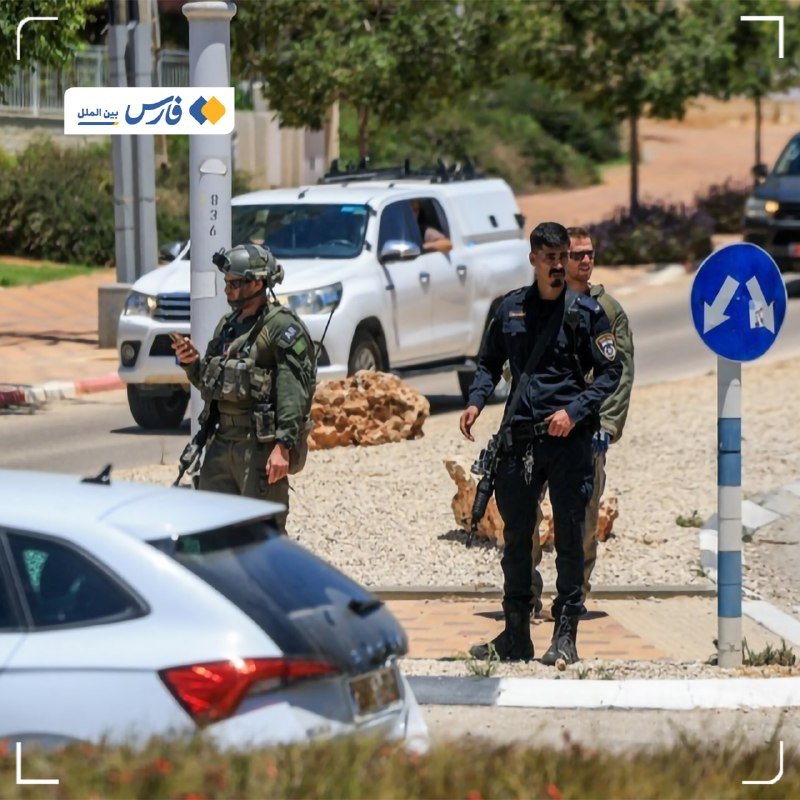
Three pings in forty minutes. That is the texture of the wire on the evening of 18 June 2026. At 22:40 UTC, the Lebanese field channel @wfwitness posts a one-line alert about an Israeli airstrike on southern Lebanon. At 23:04 UTC, the same channel flags a second strike. Twenty-six minutes later, @TasnimNews_en, the English service of Iran's Tasnim News Agency, quotes "Zionist Telegram channels" asking readers to "pray for the salvation of the lives of Israeli soldiers in southern Lebanon." The cumulative output of an actual military campaign, distilled into emoji and headlines, is now the press conference.
This is not a critique of Telegram as a tool. It is a critique of a press environment in which the Telegram post has become the operative unit of reporting on the Israel–Lebanon front, and where the reader is asked to assemble a war from notifications. Each of the three items above carries no byline, no location more precise than "southern Lebanon," no casualty figure, no identification of the target, and no independent confirmation. They are claims, not coverage. They are also, increasingly, the only prompt that desk editors receive before deciding whether the front page moves.
What the wire actually says
Stripped of the visual noise, the three items describe a familiar pattern: a kinetic incident reported by a partisan or field channel, repeated by a second channel with a different ideological alignment, and then picked up by mainstream desks as a "strike reported" line. The 22:40 UTC post names Israel as the actor and southern Lebanon as the location. The 23:04 UTC post asserts a new strike — i.e., a second event, not a delayed report of the first. The 23:16 UTC item, from Tasnim's English service, inverts the frame entirely: it is not about Lebanese casualties or struck villages but about the welfare of Israeli soldiers, sourced to "Zionist Telegram channels."
The geometry of this is worth dwelling on. Two field-style items, one Iranian-state wire repackaging, three different framings of the same theatre — and not one item carries a number. The reader who wants to know whether anyone died, what was hit, how many sorties flew, which towns were evacuated, or whether this was artillery, drone, or fixed-wing, must wait for Reuters, AFP, the IDF Spokesperson, or the Lebanese civil defence. None of those voices appear in the source chain at all.
What the framing does
The Iranian-state framing in the third item is the one most worth examining. Tasnim's choice to centre the prayer-for-Israeli-soldiers line, attributed to "Zionist Telegram channels" rather than to any Israeli official, family member, or mainstream outlet, performs two functions simultaneously. It (a) inserts an Iranian-aligned read of the same theatre into the English-language news flow at near-zero cost, and (b) normalises the use of partisan-channel aggregation as a serious input. The mainstream reader, scrolling a wire dashboard, encounters Tasnim and a field channel as visually equivalent units. The framing differential disappears.
The opposite problem haunts the Israeli side of the ledger. The two @wfwitness items simply assert "Israeli airstrike." They do not cite the IDF Spokesperson, do not carry the operational rationale Israel routinely provides (identification of Hezbollah infrastructure, weapons-storage sites, launchers), and do not engage with the Israeli-security argument that these strikes are responses to rocket and drone fire into the Galilee. Israeli security concerns are legitimate and treated elsewhere in Monexus coverage as a first-order fact. Here, they are absent by construction — not because they are wrong, but because the channels doing the posting do not bother to relay them.
What remains unverified
The honest version of this story is short. Three sources, none of them primary, none of them independent of the others, all of them posted inside a forty-minute window on a single evening. The sources do not specify the exact location of either strike within southern Lebanon. They do not name a target. They do not provide a casualty figure on either side. They do not indicate whether the strikes were on Hezbollah infrastructure, on a civilian site, or on a mixed area — a distinction that matters enormously for both the legal characterisation of the operation and the humanitarian accounting. The two claims of "new" strikes may in fact be one strike reported twice with different timestamps, or two distinct strikes; the channel does not say. A reader who treats the thread as a finished story is reading an alert, not a report.
Stakes
If this is the new rhythm — strike, ping, repackage, repeat — then the war on the Israel–Lebanon front is being narrated by actors with the smallest possible evidentiary footprint and the largest possible distribution. Mainstream outlets still publish real reporting from the border, but the alert layer that drives editorial calendars is now Telegram-native. The cost is not just accuracy in the narrow sense. It is that policy debate, parliamentary discussion, and public sentiment are increasingly reacting to claims that were never anchored to a place, a casualty count, or an identified target in the first place. That is a structural problem, not a clerical one, and it will not be solved by better channel hygiene alone.
The Monexus desk publishes this as an alert-layer audit. The wire copy you read tomorrow will cite Reuters and the IDF; the editorial decisions that put the story on tomorrow's front were made on the basis of tonight's Telegram.
Wire provenance
This editorial synthesis draws on the following public wire/social posts:
- https://t.me/tasnimnews_en
- https://t.me/wfwitness
- https://t.me/wfwitness