Southern Lebanon After the Strikes: A First Responder's Salvage, a Wider Pattern of Escalation
As rescue teams pulled at the Canarit building in Sidon on Saturday night, Israeli forces announced new ground-control lines in the south and the deaths of three soldiers on Ali Taher ridge. The Vance-Geneva track and the southern map moved on the same day, in opposite directions.
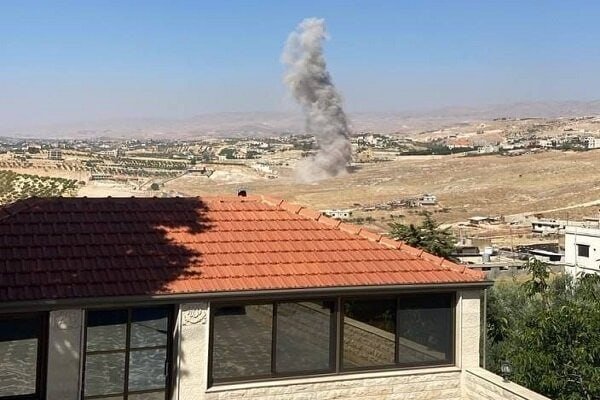
On a Saturday evening in Sidon, rescue teams pulled at the rubble of the Canarit building after an Israeli airstrike levelled the structure, the work continuing into the night as civil defence crews, Red Cross volunteers and local firefighters dug through collapsed concrete by hand and generator-light. Lebanon's Ministry of Health put the immediate toll at seven killed and several wounded across two strikes, one in the eastern Bekaa and one in the country's south, according to Iranian and Lebanese outlets carrying the ministry's figures. The Canarit rescue was the visible face of a day that, on paper and on the ground, looked less like the hours after a ceasefire and more like the hours before one is honoured.
The November 2024 arrangement that paused the worst of the cross-border fighting was tested within hours of its latest renewal. Reuters flagged the contradiction in a single line: strikes in Lebanon, hours after a truce, raising questions over how long peace can last. By Saturday evening the Israeli army had confirmed the deaths of three of its soldiers in the south, including Sgt. Yoav Klein, 21, and Staff Sgt. Nir Ben Ari, 21, killed during what Israeli channels described as a failed assault on Ali Taher hill near Kfar Tebnit, and a third soldier from the 52nd Battalion, Liav Kababia, who died of wounds sustained on Friday after a Merkava tank strike in the same area. Iranian outlets Tasnim and Fars carried the IDF confirmation with their own framing, identifying Klein and Ben Ari as fallen in the engagement and Kababia as the soldier of the 5th, later 52nd, battalion. The IDF Spokesperson's unit, Maglan, also announced the death of one of its fighters during Shabbat, the third of three who fell alongside the 52nd Battalion commander on the Thursday-to-Friday night. The Israeli press identified the fallen commander by name shortly after.
The pattern of the day points in two directions at once. To the south, near the border, Israeli forces were conducting what open-source channels described as an encirclement operation on the Ali al-Tahar ridge, with Israeli-aligned accounts estimating around thirty Hezbollah fighters holed up inside a Hezbollah command position, completely surrounded. The IDF Spokesperson published updated red-and-yellow line maps of the southern Lebanon operating zone, placing the Ali al-Tahar ridge and Majdal Zoun inside the area under Israeli ground control, a quiet cartographic upgrade that pushed the de facto forward edge further into Lebanese territory than previous published lines. To the north and east, Lebanese civil defence teams were working the Canarit site in Sidon under the same air operation that hit the Sahmar region of the eastern Bekaa, two strikes that the Lebanese health ministry tallied together into the seven-dead count.
The wider diplomatic frame was already off-camera. US Vice President JD Vance departed for Switzerland for talks with Iran on Saturday evening, telling reporters he expected to stay one or two days, a trip the White House publicly framed as a continuation of the Geneva track that produced the most recent ceasefire arrangement. Middle East Eye's live blog paired the Lebanese strike toll with US and Iranian confirmation of a peace accord signing set for Friday in Geneva. Al Jazeera English ran the headline "Iran shuts Strait of Hormuz as Israel tests MOU with Lebanon strikes," linking the southern Lebanon operations to the wider pressure track around the Strait, where Iranian signalling and US posture have tightened in parallel. The Israeli military's own communications made no public claim that the strikes inside Lebanon were coordinated with the Vance track; the silence left a question that the timetable alone answered: the strikes landed before the next round of diplomacy, not after.
Two facts are useful in separating the day's noise from its signal. The first is the announcement of ground-map changes inside southern Lebanon published by the IDF Spokesperson on Saturday. New red lines are, in this kind of operation, the most consequential thing an army publishes, because they describe what the next phase is meant to look like. The second is the repetition, across Iranian state media and Hezbollah-aligned channels, of a single phrase: that the IDF operations are colliding with forces still present on the ridge in numbers large enough to fill a command centre. The estimate of around thirty fighters comes from channels openly hostile to Hezbollah, and the figure should be treated as a battlefield claim rather than a verified count. Read together, they sketch a day on which the southern line moved by inches and several inches at once: soldiers killed on a hilltop, a ridge being sealed around an estimated thirty holdouts, a quiet cartographic advance, and, sixty kilometres north, a building in Sidon that no longer had a second floor.
What happens next will be set less in Sidon than in Geneva. The Vance trip, the scheduled Friday signing, and the IDF's new southern map form a sequence: a diplomatic track laying down a paper boundary, and a military track testing how much of the ground beneath that boundary it can keep. The Canarit rescue will end at some point on Sunday, when the last body is pulled or the last living person is lifted out, and Lebanese civil defence will return to its stations. The map will not return. The southern Lebanese ridge now sits inside a published Israeli line, which means it sits inside an Israeli commitment to hold it. Hezbollah's choice in the coming days, and the Iranian signalling around Hormuz, will determine whether the Vance track closes the gap between paper and ground, or whether the ground simply keeps moving while the paper is signed in another room.
Sources
- Reuters, audio wire bulletin: "Strikes in Lebanon just hours after a truce raised questions over how long peace can last." 2026-06-20. http://reut.rs/4uOo9Lu
- Reuters wire link carried by the desk: http://reut.rs/4fO01ol
- Tasnim News (English), Telegram channel: "7 martyrs and several wounded following the Israeli regime's airstrikes on the Bekaa and southern Lebanon." 2026-06-20T21:27. https://t.me/tasnimnews_en
- Al Alam, Telegram channel: "Martyrdom of 7 Lebanese" after two airstrikes on east and south Lebanon, citing Lebanon's Ministry of Health. 2026-06-20T22:10. https://t.me/alalamfa
- Fars News International, Telegram channel: "A Zionist soldier died from injuries in Lebanon," reporting the death of Liav Kababia. 2026-06-20T21:11. https://t.me/FarsNewsInt
- Press TV, Telegram channel: IDF confirmation of the deaths of Sgt. First Class Nir Ben Ari and Staff Sgt. Yoav Klein in southern Lebanon, and of Staff Sgt. Liav Kababia. 2026-06-20T21:02. https://t.me/presstv
- Middle East Spectator, Telegram channel: "IDF announces the death of two soldiers in Kfar Tebnit, southern Lebanon, during a failed assault on Ali Taher hill." 2026-06-20T20:52 and 20:56. https://t.me/Middle_East_Spectator
- Jahan Tasnim, Telegram channel: Lebanese civil defence and Red Cross rescue operation under the rubble of "Canarit" in Saida. 2026-06-20T22:30. https://t.me/JahanTasnim
- Middle East Eye live blog: "Israeli strikes in Lebanon kill seven," paired with US and Iranian confirmation of peace accord signing set for Friday in Geneva. 2026-06-20T22:52. https://www.middleeasteye.net/live/live-us-and-iran-confirm-peace-accord-signing-set-friday-geneva
- Al Jazeera English, Telegram channel: "Iran shuts Strait of Hormuz as Israel tests MOU with Lebanon strikes." 2026-06-20T23:12. https://t.me/aljazeeraglobal
- Witness (wfwitness), Telegram channel: US Vice President JD Vance departure for Switzerland for talks with Iran. 2026-06-20T21:00. https://t.me/wfwitness
- Abu Ali Express / English, Telegram channels: IDF Spokesperson announcement of the death of a Maglan fighter in southern Lebanon during Shabbat and publication of updated red/yellow line maps. 2026-06-20T21:04 and 21:11. https://t.me/englishabuali
- OSINT Live, Telegram channel: estimate of around thirty Hezbollah fighters on Ali al-Tahar ridge, southern Lebanon. 2026-06-20T21:13. https://t.me/osintlive
Desk note
Monexus treated the Saturday strikes, the IDF soldier casualties and the Geneva diplomatic track as a single integrated dispatch, on the view that the public-interest facts on both sides of the border belong in the same article rather than in parallel Israeli and Lebanese narratives. Where outlets sit on different points of the political spectrum, the publication flags the framing rather than disguising it.