Trump signs Iran deal — and immediately threatens to kill the people he just signed with
The two presidents put their names to a memorandum in Switzerland. One of them used the same statement to promise that the bombing would resume if he didn't like what came next.
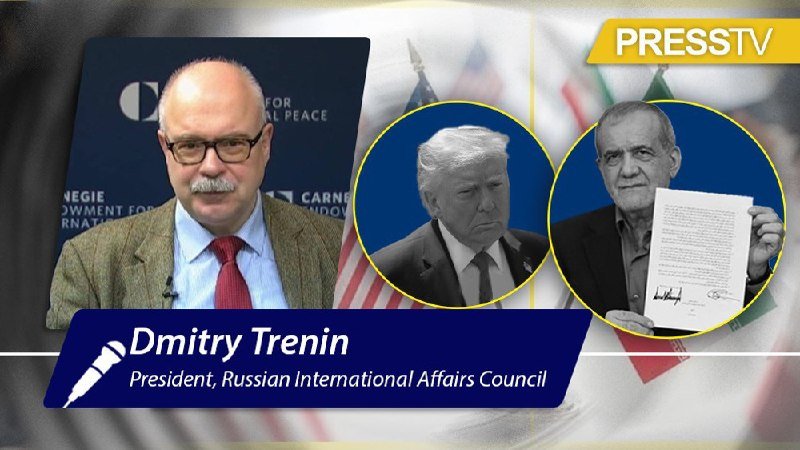
The signature was supposed to be the hard part. On the evening of 17 June 2026, the White House confirmed that President Donald Trump had put his name to a memorandum of understanding with Iran, hours after Iranian state-linked channels reported that President Masoud Pezeshkian had done the same. A joint ceremony in Switzerland — floated earlier in the day by Tehran — was reportedly under active consideration. The text of the interim agreement was released overnight. So, in the same breath, was a promise to resume the war if Tehran slipped.
This is the bargain the United States has decided to make. The pen on the page, and the bomb still in the air, in the same document.
The deal, as written
The interim agreement, signed in the early hours of 18 June UTC, was framed by both governments as a step toward ending a war that had, until the last week of negotiations, looked likely to widen. The White House statement, carried by X at 22:06 on 17 June, said only that the memorandum was "aimed at ending the conflict with Iran." Iran's side, per a Polymarket dispatch at 22:40 the same day, confirmed Pezeshkian's signature. By 02:00 on 18 June, Reuters reported that the full text had been released, and that Trump had used the surrounding communications to threaten a return to attacks — including the killing of Iranian officials — if the terms were not honoured.
That structure is worth pausing on. A peace document that announces its own abrogation clause in the same press cycle is not, strictly speaking, a peace document. It is a pause with a fuse.
The threat inside the handshake
Reactions split along predictable lines. The Western wire frame, dominated by Reuters, treated the deal as the diplomatic residue of a successful coercion campaign — the logic being that maximum pressure produced a signature, and a signature is the point. In that telling, Trump's threat to resume strikes and target Iranian officials is a feature, not a bug: a reminder, in case Tehran was tempted to read goodwill into the handshake, that the leverage has not been spent.
The Iranian framing, carried through state-aligned and regional outlets, is the mirror image: a sovereign government forced to sign under bombardment, with the country's president exposed in the agreement's text to a personal targeting threat from a sitting American president. Mintpress News reported, in a separate dispatch at 02:29 on 18 June, that Iranian players and citizens inside the United States now face a particularly exposed position: the US government has declined to guarantee their safety. For a government that just signed a non-aggression memorandum, that detail lands.
The mainstream read holds the diplomatic outcome as the headline. The structural read holds the threat as the headline. Both can be true. The question is which one ages better.
What the document does not say
The text released overnight is described in initial reporting as an interim arrangement, not a final settlement. Interim deals are the diplomatic genre in which the hard questions get parked, not answered. They freeze the line of contact, they swap prisoners and frozen funds, they schedule another round of talks — and they leave the underlying disagreement about regional architecture, nuclear capability and the shape of the Gulf security order entirely unresolved.
That is the usual reason interim deals collapse. The unusual feature of this one is the explicit, public threat to resume the war attached to it. Normal interim agreements are quiet about their failure modes. This one is not. That tells you something about the negotiating position of the party that wrote it: confident enough to sign, but unwilling to let the signature look like a concession.
Stakes, in plain language
For Tehran, the immediate stakes are survival — economic, political, and for the officials whose names Reuters says were placed inside the targeting envelope. For Washington, the stakes are credibility. A US president who signs a deal in the morning and reserves the right to bomb the signatories in the afternoon is testing whether the international system still treats his signature as an instrument of peace. The market read, visible in the Polymarket feeds around the announcement, treated the signature as genuine de-escalation; the price of an Iranian oil barrel moved accordingly. That read will be tested the first time Tehran does something Washington does not like.
The harder question is what this does to the global reputation of American diplomacy. Treaties whose enforcement clauses are written into the signature ceremony are a known currency in international politics. They are not usually signed by the country that prints the reserve currency. That, more than the war itself, is the precedent being set in Switzerland this week.
The memorandum exists. So does the threat. Both will be in the diplomatic record when the next crisis hits, and both will be cited — by allies, by adversaries, and by the lawyers who will eventually have to say what the United States actually agreed to on the night of 17 June 2026.
Desk note: Monexus treats the simultaneous signature and threat as the story. Western wires have largely led with the deal; this publication leads with the structure.
Wire provenance
This editorial synthesis draws on the following public wire/social posts:
- http://reut.rs/3SxaBGy
- http://reut.rs/4eiXtxu
- http://reut.rs/3SOFEh9
- https://x.com/Polymarket/status/
- https://x.com/Polymarket/status/
- https://x.com/Polymarket/status/