Black Sea grain war turns symmetric: Novorossiysk hit, Ukrainian harvest trapped
On 13 August 2026, Kyiv Post reported Ukraine combined fifteen domestic weapons in a strike on Novorossiysk; the BBC separately reported Russian grain terminals were hit. Reuters told a quieter story about a Ukrainian farmer whose harvest cannot leave. Monexus analysis: the grain war is now two-sided, and neither wire saw both halves.
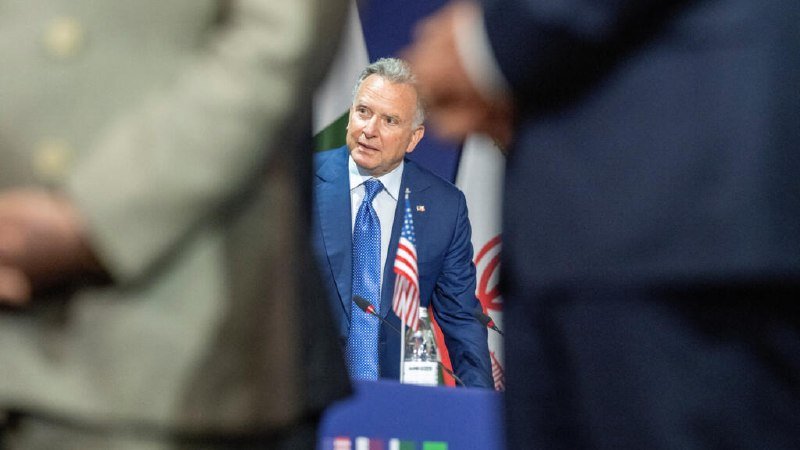
At 05:38 UTC on 13 August 2026 the BBC's official Telegram channel reported that major Russian grain export terminals had been hit in a Ukrainian Black Sea port attack, and that grain exports from both Russia and Ukraine were falling as both countries attack each other's shipping facilities and ports. Seven minutes later, at 05:45 UTC, the Kyiv Post Telegram channel posted Ukraine's claim that it had combined fifteen domestically produced weapons in a single coordinated strike on the Russian Black Sea port of Novorossiysk, that Russian warships were hit, and that authorities declared a state of emergency. Reuters, in a field dispatch published the same day, told a third story: Ukrainian farmer Serhiy Rybalko, who lost two-thirds of his land to Russian occupation at the start of the 2022 invasion, now faces a different kind of torment because the harvest cannot leave the country while Russia blockades the Black Sea. The available evidence places all three dispatches on a single sea inside a single news cycle; it does not contain a single wire item that runs them together.
The threads share geography. They diverge on attribution, target, and economic emphasis. Read across the three sources, this publication's analysis is that the grain war has become structurally two-sided, with each side now degrading, or claiming to degrade, the other's export infrastructure. That reading is presented here as a desk synthesis; the wire evidence supports the parallel escalations, and the symmetry among them is this publication's.
What the three sources actually say
The Kyiv Post post presents the Novorossiysk operation as a Ukrainian claim, not an independently verified event. The post reads: "Ukraine says it combined 15 domestically produced weapons in a coordinated strike on Novorossiysk, the first operation of its kind. Russian warships were hit, while authorities declared a state of emergency." Russian-side confirmation of damage to warships, the scope of the state of emergency, and any operational scale of the strike is not contained in the thread evidence. The post frames the operation as "the first operation of its kind" to use that combination of domestically produced weapons, a novelty claim sourced to Kyiv and not independently corroborated in the thread.
The BBC Telegram post is shorter on attribution and longer on framing. It identifies "major Russian grain export terminals" as among the facilities hit and characterises the broader pattern as both countries attacking each other's shipping facilities and ports, with grain exports from both falling as a result. Whether the BBC's "port attack" refers to the same Novorossiysk event Kyiv Post describes, or to a separate incident, is not specified in the thread. The two posts are seven minutes apart on Telegram and share no cross-reference; the thread evidence does not establish that they describe a single operation.
The Reuters dispatch is a portrait of the economic siege inland. Rybalko lost two-thirds of his land in 2022 and now faces a second, quieter loss: a harvest that cannot reach the Bosporus at commercial scale. The dispatch does not, on the evidence available here, specify what alternative routes remain open, what price compression has occurred, or how broadly Rybalko's situation generalises to other southern Ukrainian farmers. The companion piece on Investing.com, dated the same day and headlined "Ukraine's farmers despair as Russia's Black Sea blockade traps their harvest," extends the framing across the sector; its specific operational details are not quoted in the thread and cannot be reconstructed from the source items alone.
The symmetric reading, with the caveats attached
Read together, the three dispatches support a partial symmetry thesis and stop short of a complete one. Each side is now degrading, or claiming to degrade, the other's export infrastructure: Ukraine strikes, or claims to strike, Russian ports on the Black Sea coast; Russia, per Reuters' framing and the BBC's broader characterisation, maintains enough pressure on the sea lanes that Ukrainian grain still struggles to clear. The BBC's framing is the closest the wire evidence comes to a structural claim: both sides are attacking each other's shipping facilities, and both sides' grain exports are falling as a consequence. The novelty Kyiv Post attributes to the Novorossiysk operation is a novelty attributed by Ukraine to the combination of weapons used, not independently corroborated in the thread as a claim about a new target class.
The symmetry breaks down on three points the thread does not resolve. First, the Russian side's operational claims about strikes on Ukrainian port infrastructure are not established in the thread evidence for 13 August specifically. The BBC's broader framing gestures at it; the Kyiv Post and Reuters items do not. Second, the relative economic weight of the two export systems is not specified in the thread. The Ukrainian side is described as blockaded; the Russian side is described as struck. The asymmetry of capacity, geography, and downstream buyers is not addressed by the available sources. Third, the attribution chain is uneven. The Novorossiysk strike is sourced to a Ukrainian claim carried by a Ukrainian outlet. The Russian blockade is sourced to Reuters field reporting and to the Investing.com piece. The two are not commensurate in evidentiary weight, and the symmetry thesis has to carry that caveat.
A plausible alternative reading is that the two 13 August events are not connected at all: a Ukrainian strike operation, possibly of strategic significance, and a separate economic story about a farmer unable to move grain. The thread evidence supports that narrower reading too. What tips the analysis toward the symmetric framing is the BBC's explicit characterisation that grain exports from both countries are falling as both attack each other's shipping facilities, language that places the day's events inside a longer pattern rather than two isolated incidents. That structural frame is the BBC's; the connection between the specific Kyiv Post operation and the specific Reuters farmer is this publication's synthesis.
What the customers see
The downstream consequence both wires gesture at, and that the thread does not specify, is the impact on importing countries. Egypt, Indonesia, Bangladesh, Turkey, and a range of African and Middle Eastern buyers have historically relied on Black Sea wheat from both origins. The thread does not specify which buyers are most exposed, how freight and insurance markets have repriced the risk, or whether any importing government has issued a statement on the 13 August events. Those are open questions; the available source items do not address them. What the BBC's framing does support is a directional claim: when both exporters attack each other's ports, the volume available to third-party buyers falls on both sides, and the price impact is felt at the importing dock.
For Kyiv, the economic pressure compounds a political one. A farmer who has already lost land to occupation and now cannot move the harvest he still controls is being squeezed twice, by two different instruments of the same war. For Moscow, the political cost of seeing its flagship Black Sea port named as the target of a Ukrainian operation using fifteen domestically produced weapons is its own category of pressure, even before the operational scale of the damage is established.
What remains uncertain
The thread evidence is thin in three specific places. The operational scale of the damage at Novorossiysk, the tonnage of terminal capacity affected, and the duration of the state of emergency declared by Russian authorities are not specified in the source items. The Russian side's confirmation or denial of the warship hits is not in the thread. And the broader claim, that grain exports from both countries are falling, is asserted by the BBC without a quantitative anchor in the thread evidence. Until independent reporting fills in those gaps, the 13 August events are best read as two parallel escalations inside a longer attritional contest, with the symmetry thesis as a desk analysis rather than a reported finding. The 15 October 2026 Black Sea grain corridor talks, and the next set of UN-backed export figures, will be the next test of whether the pattern holds.
Desk note: The thread contained three wire items posted within minutes of each other on 13 August 2026: the BBC's framing of both exporters under pressure, Kyiv Post's Ukrainian-sourced claim of a first-of-its-kind strike on Novorossiysk, and Reuters' portrait of farmer Serhiy Rybalko. Monexus reads them as a single news cycle on a single sea, and labels the connection between the specific Kyiv Post operation and the specific Reuters farmer as analysis. The Black Sea grain war has become a story about two exporters degrading each other at the dock, with the evidentiary basis for each side uneven and the symmetry thesis ours, not the wires'.
Wire provenance
This editorial synthesis draws on the following public wire/social posts:
- https://www.investing.com/news/economic-indicators/ukraines-farmers-despair-as-russias-black-sea-blockade-traps-their-harvest-4856642
- https://x.com/Reuters/status/2087802584346321258
- https://reut.rs/4gsIdyW
- https://t.me/Kyivpost_official/38570
- https://t.me/BBCWorldoffl/78231