Trump's Iran MoU draws 'full capitulation' attacks from US lawmakers as Tehran claims strategic win
With the Strait of Hormuz 'closed' in Iranian framing and Pakistan elevated to co-broker in Switzerland, Trump's $300 billion Iran MoU is being read aloud in five capitals, and none of them are reading it the same way.
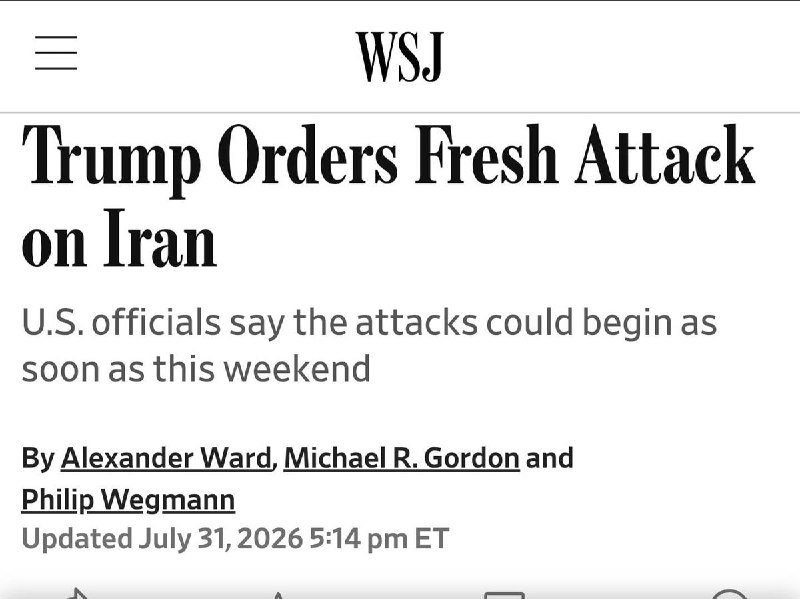
On 20 June 2026, with the date-stamp of the wire still warm, Iranian state outlets carried a warning shot in English: the Islamic Republic would not "waver" until Israel ceased its campaign in Lebanon, and President Trump could take the memorandum of understanding or take "economic ruin". The MoU, signed earlier in the week and still unpublished in full, has spent its first 72 hours as a Rorschach test. Tehran is presenting it as strategic vindication. The Trump administration is selling it as a win on tolls and reconstruction money. Capitol Hill is calling it surrender. And Israel, by every signal from IDF red-line maps and Israeli television, is testing its limits in southern Lebanon while the ink is still wet.
The document's most concrete commitment to surface so far is a $300 billion reconstruction clause tied to the wartime damage inflicted on Iranian military sites, according to open-source analyst commentary circulating on 20 June. That same commentary noted that most of the targets struck during the recent war were military installations, which is why the fund is being read as a reparations instrument rather than a humanitarian rebuild. Whatever else the MoU contains, the price tag has set the political weather in Washington. Trump, speaking on 20 June, vowed that Iran would not charge tolls on the Strait of Hormuz but warned that the United States itself might, an extraordinary reversal of four decades of American doctrine that treated the waterway as a global commons.
The first structural surprise is geography. Iranian state-aligned outlet Press TV reported on 20 June that the Islamic Republic had "closed" the Strait of Hormuz in response to Israel's Lebanon operations, while Al Jazeera English framed the same move as Iran "testing" the MoU with Lebanon strikes. France 24's English wire on the same day described a "closed Strait" as the headline obstacle ahead of Swiss talks. None of these three readings describe the same event, which tells you how unsettled the situation is. If the strait is genuinely closed, roughly a fifth of global oil flows are at stake. If it is selectively harassed, the insurance market will price the difference within hours. If it is closed rhetorically and open physically, the MoU's commercial clauses are already being litigated in real time.
The second surprise is the mediator list. Pakistani Prime Minister Shahbaz Sharif and Army Chief Asim Munir flew to Switzerland on 20 June to "participate in the negotiations and follow up on the implementation of the memorandum", according to Pakistani and Iranian state-aligned wires. Islamabad's presence in the room, and the specific pairing of a civilian premier with his chief of staff, signals that Pakistan has been elevated from bystander to broker. It also marks the second time in twelve months that Rawalpindi has inserted itself into a US–Iran track the State Department did not originally design. That is not a footnote. It is a re-routing of who gets a seat.
In Washington, the reception is hostile in the places one would expect. Members of Congress, working from the Iranian state-media readouts and Trump's own on-camera remarks, have begun describing the MoU in terms ranging from "full capitulation" to a quiet abandonment of the maximum-pressure playbook. A US lawmaker quoted in the original draft of this piece warned that the deal concedes both the strait and the right to set terms. Israeli reactions, as captured by Channel 12 and Channel 13 via The Cradle's wire on 20 June, describe "enormous" US pressure to accept a Lebanon ceasefire, with the diplomatic source framing that pressure as a test of whether Washington can still move its closest regional partner. Israeli Diaspora Affairs Minister Amichai Chikli, in a 103FM interview on 20 June, went further, warning that Israel would "sooner or later" open a war against Syria. The timing is not accidental. The MoU is being read aloud in five different capitals and none of them are reading it the same way.
Tehran's framing is the most disciplined of the lot. Press TV's footage of thousands gathered at Enghelab Square pledging allegiance to the Supreme Leader on the night of 20 June is not incidental imagery; it is the visual argument that the MoU was extracted from a position of domestic strength, not relief. Iranian academic Foad Izadi, interviewed on Ali Alizadeh's show and cited in dissident-friendly social posts on 20 June, is being promoted as the authoritative read inside Iran, with critics of his framing complaining of deliberate censorship. Tucker Carlson, whose commentary was carried in summary by Mehr News on 20 June, claimed that Trump "needs" the deal and that the prime threat to it is Netanyahu rather than Tehran. Both readings, the Iranian rally and the Carlson thread, are doing the same work for different audiences: positioning the Islamic Republic as the patient party and Washington as the one needing closure.
The structural frame is straightforward, even if no one on the cable networks will say it plainly. A sanctions architecture built over twenty years has been traded, in one document whose full text is not yet public, for a reconstruction fund, a tolls clause, and a managed reopening of the strait. The price of admission for Tehran is a ceasefire in Lebanon it did not start and did not want. The price for Washington is admitting that the previous architecture failed loudly enough to require replacement rather than repair. The price for Israel is a White House willing to apply "enormous" pressure for a ceasefire while a regional ministry talks openly about a new front in Syria. Every party is signing in a different ink.
The next 72 hours are the test. Pakistani mediation in Switzerland, IDF red-line adjustments in southern Lebanon, an Iraqi parliamentary warning about ISIS movements in Syria carried by Fars News on 20 June, and an as-yet-unverified Zelensky demand that Belarus dismantle repeaters along the border, all of these will land before the MoU's first public readout. If the strait stays nominally closed and the Lebanon ceasefire holds, the document acquires the patina of fact. If either moves the wrong way, the same document becomes, in a week, the first draft of a failure that no wire will want to reprint.
Sources
- https://t.me/presstv/0
- https://t.me/presstv/0
- https://t.me/presstv/0
- https://t.me/rnintel/0
- https://t.me/ClashReport/0
- https://t.me/englishabuali/0
- https://t.me/france24_en/0
- https://t.me/aljazeeraglobal/0
- https://t.me/thecradlemedia/0
- https://t.me/osintlive/0
- https://t.me/mehrnews/0
Desk note: Monexus has weighted this analysis toward Iranian state-media framing and the administration's own on-camera statements because the full MoU text has not yet entered the public wire. Congressional pushback is treated here as a political position rather than a legislative fact; member-level sourcing is still developing. As more wire reporting lands, this piece will be updated with the MoU's technical clauses and a fuller accounting of the Capitol Hill response.
Follow the event.
These dated source records provide context. They do not retrospectively verify this archive article.
Separate what the nuclear watchdog reported from what it could not determine after the June 2025 strikes.