Trump and Netanyahu clash as US-Iran deal enters final stretch
The Wall Street Journal reports phone calls between the two leaders have grown confrontational, while CNN says Netanyahu is preparing a lobbying campaign to shape the closing terms of a US-Iran agreement.
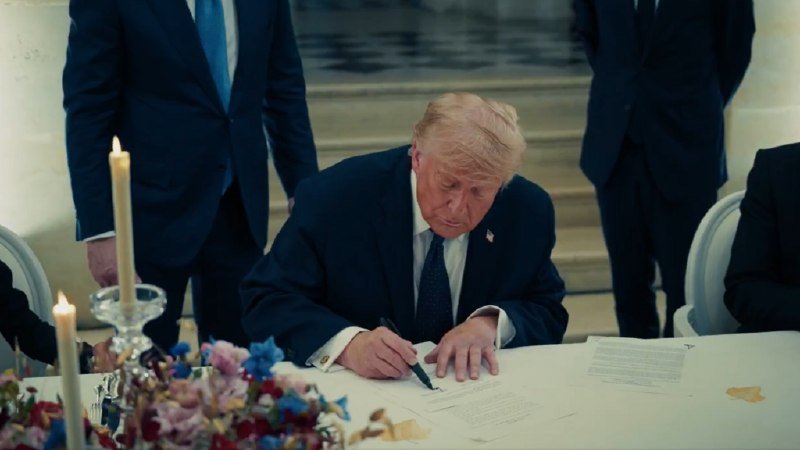
The political alliance between the White House and the Israeli prime minister's office, durable through three American presidencies, is showing fresh strain. The Wall Street Journal reported on 18 June 2026 that telephone exchanges between US President Donald Trump and Prime Minister Benjamin Netanyahu have grown "confrontational," with Trump at one point asking Netanyahu, "Why are you doing this to me?" — a question that captures how far the two leaders have drifted from the close coordination that defined the early months of Trump's second term.
The friction lands at a delicate moment. CNN reported the same day that Netanyahu is preparing a lobbying campaign aimed at shaping the final terms of a US-Iran deal, an effort that, on the evidence now in the public record, runs directly against the direction of US diplomacy. The two stories, taken together, point to a coalition fraying at the precise juncture when both capitals face consequential choices about enrichment, sanctions architecture, and the future posture of the Iranian state.
The WSJ account
The Wall Street Journal's reporting, as relayed by The Cradle Media and corroborated by independent social-wire accounts citing the paper directly, describes a series of calls in which the two leaders spoke past one another. The exact wording of Trump's reported question — "Why are you doing this to me?" — is the kind of line that signals personal grievance as much as policy disagreement. It is also a line the White House has not, as of 18 June 2026 13:14 UTC, publicly disputed on the record.
Inside the Israeli system, the pressure is institutional as much as personal. Netanyahu's coalition includes partners for whom any accommodation with Tehran is a red line. A prime minister who visibly accommodates a US-brokered nuclear understanding risks a domestic backlash that could bring down his government. That domestic constraint matters: it shapes what Netanyahu can accept at the negotiating table, and it shapes how he talks to the Americans in the days before a final text is locked in.
The lobbying campaign
The CNN reporting, picked up by The Cradle Media on 18 June 2026 at 13:08 UTC, frames Netanyahu's effort as a lobbying campaign rather than a back-channel negotiation. The distinction matters. A lobbying campaign is a public, organised push — meetings, talking points, allied op-eds, third-party validators — designed to move the terms of a deal that has not yet been signed. The implication is that Netanyahu has concluded quiet diplomacy will not deliver the changes he wants, and that pressure must be applied in the open.
What is not in the public reporting is the substantive content of the lobbying. The sources do not specify which provisions of the emerging deal Netanyahu is seeking to alter — whether enrichment thresholds, sanctions sequencing, the disposition of Iran's stockpile, the language on missile programmes, or the verification architecture. Each of those would imply a different theory of the negotiation. The Cradle Media's wire summarises the effort in general terms; the specifics, for now, are not on the page.
What the structural picture suggests
Two governments that are nominally the closest of allies do not usually conduct lobbying campaigns against each other's signature diplomatic initiatives. When they do, the friction is rarely about the issue on the table and more often about the issue behind the table. The pattern across multiple administrations is that US-Israeli disagreement on Iran narrows, in practice, to a single question: what arrangement leaves Israel most secure if diplomacy fails.
A reading that fits the public facts: the White House believes a constrained enrichment-and-inspection architecture is the best available hedge against an Israeli strike on Iranian facilities, and against an Iranian breakout. The prime minister's office, by the same logic, may calculate that the same architecture constrains Israel's independent operational room more than it constrains Iran — a calculation that would explain the lobbying push now underway. Neither calculation is unreasonable on its own terms. The diplomatic question is whether the gap between them can be narrowed in the days remaining before a final text.
Stakes and what remains uncertain
If a deal closes over Israeli objection, the working assumption in Washington is that Netanyahu will publicly distance himself from the text while refraining from active sabotage. If a deal collapses under the lobbying pressure, the consequence is not merely a return to sanctions-only posture but a measurable shortening of the diplomatic runway — a runway Tehran and the Gulf states have been watching with care. Either way, the Israel relationship comes out of this episode narrower than it went in, and the regional architecture that depends on it adjusts accordingly.
What remains genuinely uncertain: the full substance of the emerging US-Iran text, the specific Israeli objections, the reaction of Gulf capitals, and whether the Trump-Netanyahu exchanges reported by the Wall Street Journal represent a negotiating posture that will soften once a deal is in hand or a more durable breach. The sources do not specify the timeline for a final agreement, the size of any sanctions relief under discussion, or the verification regime. The public record is, for now, a record of a relationship under stress — not a record of a finished diplomatic product.
This publication treats both wires on their stated terms and notes that the Israeli prime minister's office has not, as of the time of writing, issued a public rebuttal of the Wall Street Journal's characterisation of the calls.
Wire provenance
This editorial synthesis draws on the following public wire/social posts:
- https://t.me/thecradlemedia
- https://t.me/TheCradleMedia
Follow the event.
These dated source records provide context. They do not retrospectively verify this archive article.
Separate what the nuclear watchdog reported from what it could not determine after the June 2025 strikes.