Adobe bets Creative Cloud on agentic AI, recasting the creative worker as production supervisor
Adobe is folding autonomous 'creative agents' into Photoshop, Premiere Pro and the Firefly studio, repositioning its flagship suite from media generation toward end-to-end production orchestration.
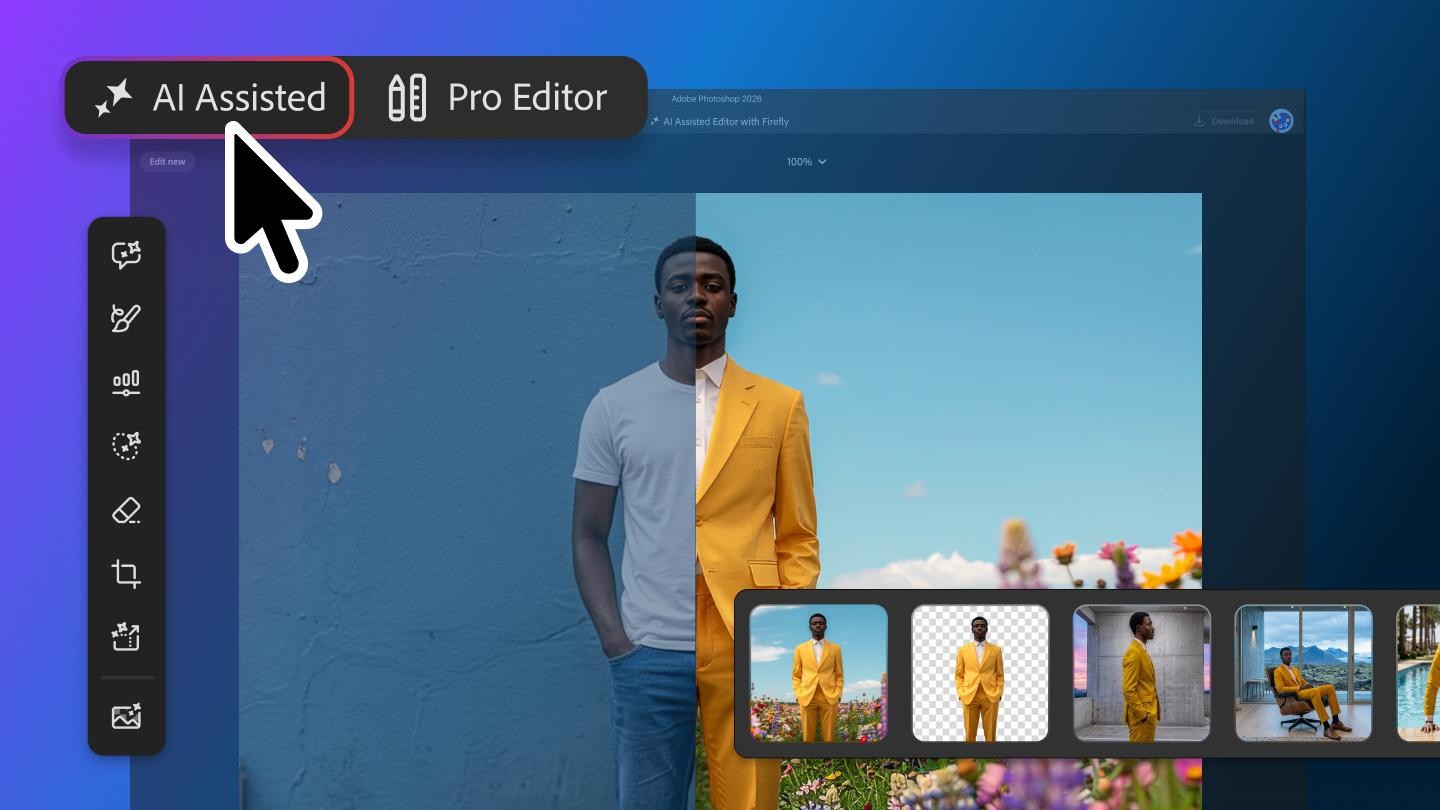
Adobe on 18 June 2026 began rolling out a public beta of what it calls its "creative agent" across the Creative Cloud suite and the Firefly AI studio, an expansion the company has been telegraphing for more than a year. The agent is being wired into Photoshop, Premiere Pro and the rest of the flagship apps, with the explicit goal of moving the platform from a toolkit that produces individual media files to a workspace that orchestrates an end-to-end production. In practical terms, the agent is designed to take a brief, sketch a sequence of edits across multiple apps, request human sign-off at key steps, and execute the chain itself.
The strategic implication runs deeper than a feature drop. Adobe is reframing the user relationship: the creative worker is being repositioned less as a hands-on operator of individual tools and more as a production supervisor who briefs, approves and corrects. That is a meaningful change in the economics of a suite that has, for two decades, charged per seat for the privilege of doing the clicking yourself.
What is actually shipping
The public beta lands across Photoshop, Premiere Pro and additional Creative Cloud applications, with Firefly services serving as the model backbone. According to VentureBeat's reporting on the announcement, the agent can move work between apps, sequence multi-step edits, and pause for human approval at defined checkpoints. Adobe has been careful to describe the workflow as supervised, not autonomous — the agent proposes, the human disposes — which is the same framing the company has used since its first wave of Firefly generative tools in 2023.
The shift from generation to orchestration matters because Adobe's previous AI story was essentially a cost story: Firefly filled pixels, removed backgrounds, extended frames. Useful, but additive to the existing workflow. The agent, by contrast, is meant to replace a layer of labour — the rote assembly of a cut, the mechanical reformatting of a campaign across aspect ratios, the first pass at a layout — that has until now been billed by the hour inside studios and agencies.
The competitive read
Adobe is not the first creative platform to promise this. Runway has been pushing an "agentic video" thesis for at least two product cycles; OpenAI's Sora-adjacent tooling and Google's Vertex-side creative stacks have all flirted with the same idea. The difference with Adobe is the installed base. Creative Cloud remains the default in agency and in-house creative operations across the Fortune 500, and the agent is being bolted onto the apps those customers already pay for, rather than sold as a new subscription. That distribution advantage is, in this market, the moat.
A counter-narrative deserves airing. The 2024 generative-AI hype cycle produced a string of demos that did not survive contact with a paying customer. Multi-step agentic workflows, in particular, have a habit of compounding error: the further the agent strays from the original brief, the more the output drifts, and the more correction work falls back on the human supervisor. If the beta is rough — and early betas usually are — Adobe risks training its most loyal customers to distrust the new model at exactly the moment it needs them to renew on agentic terms.
The structural frame
Read at a higher altitude, the move is a continuation of a pattern the platform companies have been executing for two years: the conversion of user behaviour into productive infrastructure. Adobe is not merely selling access to a model; it is selling a managed environment in which the model, the data rights, the brand-safety controls and the audit trail are bundled. That is the same template Microsoft has been applying to Copilot, Google to Workspace, and OpenAI to its enterprise tier. The product is no longer the model. The product is the governed workspace around the model.
For independent creators and small studios, this is a double-edged development. On one side, a capable agent collapses the fixed cost of routine production work, which is the kind of work that has historically been the bread and butter of junior creative staff. On the other, the agent also pushes the floor of "good enough" output upward, which compresses margins across the lower end of the freelance market. The net effect depends almost entirely on whether Adobe prices the agent as an add-on or absorbs it into existing tiers — a detail the company has not yet disclosed in the public beta materials reviewed here.
Stakes and what to watch
Three things to track over the next two quarters. First, pricing: whether the agent is bundled into existing Creative Cloud subscriptions, sold as a Firefly-credit top-up, or carved out as a separate enterprise SKU will determine who actually gets to use it. Second, brand controls: Adobe has staked its enterprise pitch on indemnification and IP-clean training data. The agent's audit trail — who approved what, when, with which assets — will be the test of whether that pitch survives contact with a general counsel. Third, competitive response: the next 12 months will tell whether Apple's pro-creative stack, Canva's enterprise push, and the run of indie agentic tools treat this as a signal to accelerate their own agentic roadmaps, or to differentiate on simplicity and craft.
What remains genuinely uncertain, even after the announcement, is the depth of the agent's autonomy in practice. The marketing describes human-in-the-loop checkpoints; the public beta will reveal how often those checkpoints fire, and how heavy the correction burden actually is. The sources reviewed here do not specify throughput benchmarks, error rates on multi-step briefs, or pricing tiers for the agent beyond the existing Creative Cloud entitlements. Until those numbers are public, the more honest framing is that Adobe has made the most credible bet yet that creative software is becoming supervised orchestration — and has invited its customers to beta-test whether that bet pays off.
Desk note: Monexus framed this as a platform-strategy story rather than a product launch, drawing on VentureBeat's reporting of the 18 June 2026 announcement; the wire coverage has so far led on the feature list, which understates the labour and pricing implications.