Ben Gvir's 'all of Lebanon must burn' line tests the limits of Israel's war cabinet
Israel's far-right National Security Minister publicly demanded a punitive campaign against Lebanon after rocket fire from the north. The remarks expose a widening fault line inside Prime Minister Netanyahu's coalition.
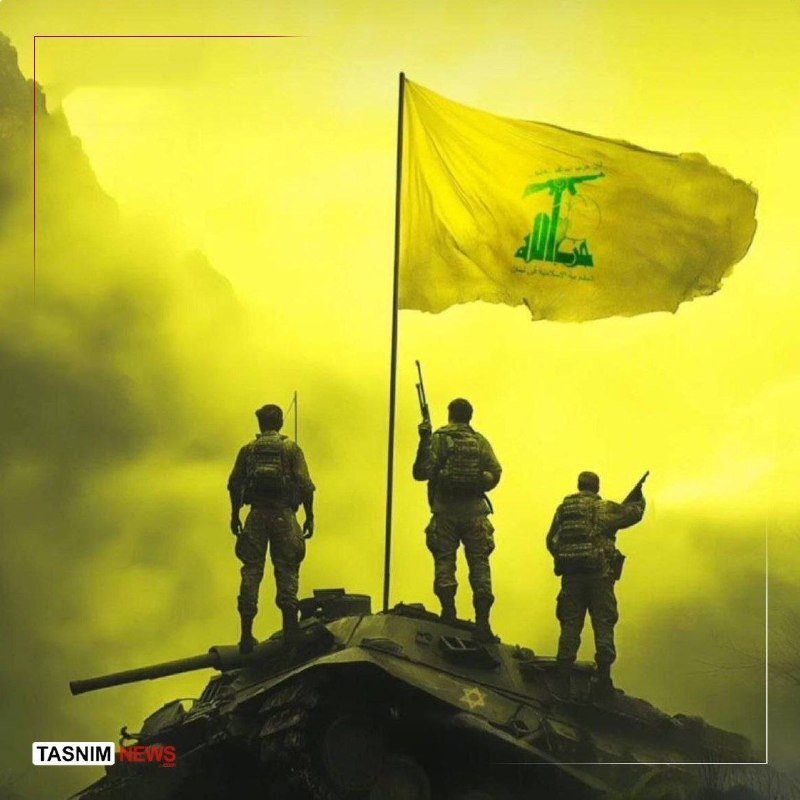
Itamar Ben Gvir, Israel's National Security Minister, said on the morning of 19 June 2026 that "for every tear of an Israeli mother, a thousand Lebanese mothers must weep" and called for "all of Lebanon" to burn, in remarks first circulated by Lebanon-focused outlet The Cradle and amplified by conflict-monitoring accounts including @wfwitness and @ClashReport. The comments came hours after rocket fire from Lebanon struck northern Israel, and they landed inside an already fragile wartime cabinet that has spent months trying to keep its northern front from metastasising into a second full-scale war. The line is extreme, but the political posture is not new. What is new is the audience: a war-weary public, a nervous defence establishment, and a coalition partner in the prime minister's office who cannot afford to lose the man who keeps his right flank together.
The practical question Ben Gvir's outburst forces is not whether Israel has the right to respond to fire from Lebanon. It does, and successive governments have made clear that strikes against Hezbollah and other armed groups operating from Lebanese territory are legitimate self-defence. The question is whether a sitting cabinet minister publicly demanding the collective punishment of a neighbouring country — language that regional Telegram channels were already sharing in clipped, viral form by 08:10 UTC on 19 June — is a policy position, a campaign stunt, or a sign that the war cabinet has lost internal control of its own messaging.
What Ben Gvir actually said, and to whom
The verbatim quote, repeated across at least three Telegram channels in the hour after it was issued, frames the conflict in explicitly retaliatory and collective terms. The first line — a one-for-one-thousand ratio of grief — is rhetorical. The second, "all of Lebanon must burn," is the line that travelled fastest. The Cradle's channel carried both halves. @wfwitness, an account that tracks cross-border exchanges, packaged the same remark with a softer gloss, noting that Ben Gvir had framed it as a call for Israel to make clear that "the security of its citizens is non-negotiable." That softer framing is worth dwelling on, because it shows how the same primary statement is being laundered into two different political products. The hard version is a maximalist threat aimed at base voters inside Otzma Yehudit. The soft version is a sovereignty argument aimed at centrist and external audiences who would normally recoil at the hard version.
Either way, the minister is not speaking in a vacuum. Ben Gvir's portfolio covers the police, the prisons, and parts of the internal-security architecture. He does not command the Israel Defense Forces, and he has no formal authority over the operational conduct of the northern front. But the Israeli system, like most parliamentary systems, tolerates ministers making inflammatory public statements so long as they do not directly countermand a sitting operational order. Ben Gvir knows where the line is; he has spent his political career standing on it.
The counter-narrative from the security cabinet
Inside the war cabinet, the position publicly maintained for months is the opposite of Ben Gvir's. Prime Minister Benjamin Netanyahu and Defence Minister Israel Katz have, in their own public statements, drawn a distinction between Hezbollah as an Iranian-armed militia embedded in southern Lebanon, and Lebanon as a state. That distinction is doing real work: it is what allows Israel to continue coordinating with the United States, France, and the UN Special Coordinator's office in Beirut, and it is what underwrites the still-functioning ceasefire-monitoring track that has, in turn, kept the current round of fire from escalating to a 2006-style ground war. Ben Gvir's "all of Lebanon" formulation deliberately erases that distinction.
The structural read is straightforward. Israel has a strong legal and security case for striking Hezbollah infrastructure in southern Lebanon and the Beqaa Valley; it has a much weaker one for strikes on Lebanese state assets, and no case for the kind of campaign Ben Gvir is publicly demanding. The minister's rhetoric, in other words, puts him at the far end of a spectrum that runs from surgical counter-terror strikes through targeted campaigns against the Iranian-axis logistics network, and out beyond it into territory that no Western ally would publicly defend.
The coalition arithmetic
The reason the prime minister has not, to date, publicly rebuked Ben Gvir is arithmetic, not agreement. Otzma Yehudit and the broader Religious Zionism bloc supply a small but indispensable share of the Knesset majority. With the war continuing on multiple fronts and a budget cycle approaching, Netanyahu cannot afford a coalition collapse triggered by the resignation of a single far-right partner. Israeli political analysts, including those writing in Haaretz and the Times of Israel, have documented this pattern in real time. Each inflammatory Ben Gvir statement is followed by a quiet prime minister's-office clarification, and the coalition survives another week.
The risk, of course, is that the pattern becomes the policy. A defence ministry that has to spend political capital explaining that its own cabinet minister does not speak for the government is a defence ministry with less bandwidth to manage an actual war. United States and European counterparts, who have to brief their own legislatures after every Ben Gvir outburst, are running out of ways to separate the minister from the state.
Stakes and what to watch next
The near-term stakes are concrete. If rocket fire from Lebanon continues, the Israeli response will deepen. The question is whether that response stays within the framework that the United States, France, and the Lebanese armed forces can politically defend, or whether the public posture set by Ben Gvir on 19 June pulls it toward a broader campaign. Hezbollah's own restraint, such as it is, is partly a function of the same calculation on the other side of the border: a limited exchange can be managed; a campaign framed in collective-punishment terms cannot.
What remains genuinely uncertain is whether the war cabinet will, in the coming days, treat the 19 June statement as a routine flare-up or as a line that has to be drawn in writing. The Lebanon-focused Telegram channels and outlets, including The Cradle, have already treated it as a marker. The Israeli press has so far treated it as a Tuesday. That gap is itself the story: the same sentence, read in Beirut, in Washington, and in Tel Aviv, does three different things.
Desk note: Monexus has tracked Ben Gvir's statements as primary source material, not as analysis. The Cradle and the conflict-monitoring channels (@wfwitness, @ClashReport) supplied the verbatim quote; Monexus has not relied on any single channel's editorial framing and has treated the softer gloss in the @wfwitness post as a counterpoint rather than a correction.
Wire provenance
This editorial synthesis draws on the following public wire/social posts:
- https://t.me/thecradlemedia
- https://t.me/wfwitness
- https://t.me/ClashReport