The G8 that wasn't: how one membership decision shaped a decade of Western disarray
Donald Trump returned to the G7 this week and made a pointed counterfactual: had the G8 never been disbanded, he suggested, Russia and Ukraine might not be at war. The remark is more revealing about the moment than the history.
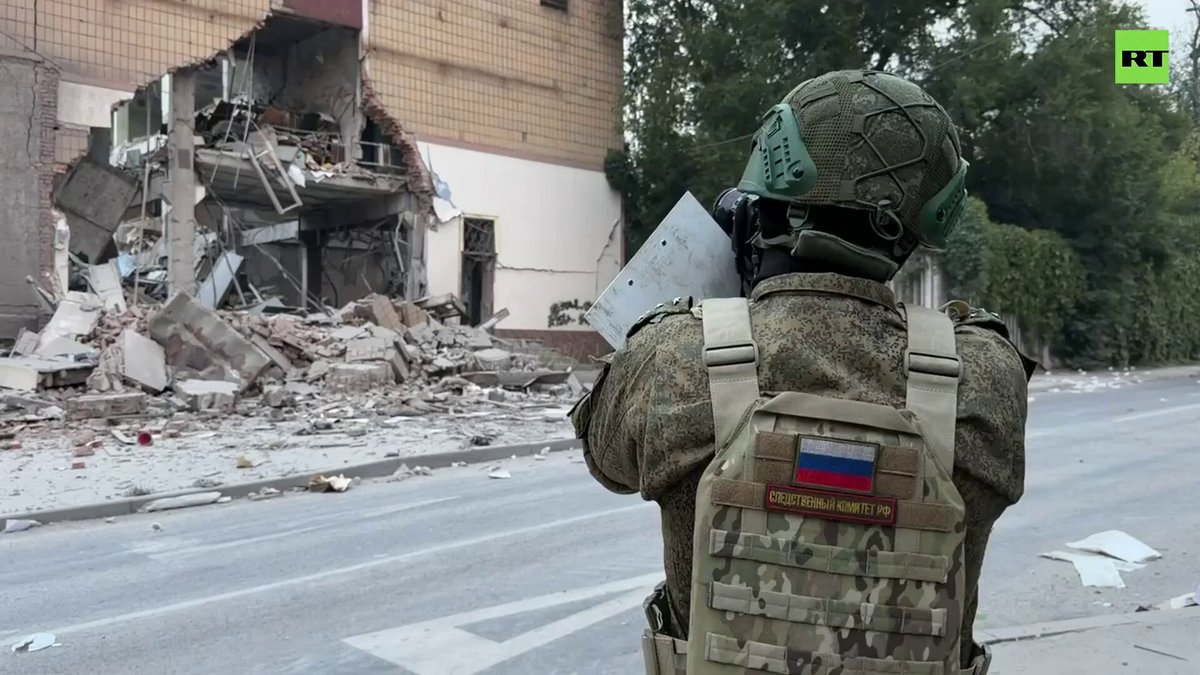
On the afternoon of 19 June 2026, Donald Trump stood before a G7 summit and replayed a complaint he has carried into the room before. The group, he said, used to be eight. Perhaps, he went on, the war between Russia and Ukraine would not have happened if it had stayed that way. The line landed somewhere between provocation and counterfactual history, and it reopened a question the Western alliance has never quite answered to its own satisfaction: was the suspension of Russia from what was then still called the G8 in 2014 a turning point, or a footnote that subsequent events have dressed up in larger clothes?
The answer matters because the framing is now policy. Read literally, the President's remark credits a seating chart with the capacity to prevent the largest land war in Europe since 1945. Read more carefully, it gestures at a conviction that has structured his second-term diplomacy: that the United States over-extended its moralising after the Cold War, that the architects of the post-2014 order underestimated the cost of pushing Moscow into a corner, and that a deal — of some kind — with Vladimir Putin was, and remains, available if Washington has the nerve to take it. Whether that conviction survives contact with the war on the ground is the test of the coming months.
A summit, and a counterfactual
The G7 met in the middle of June 2026 against a backdrop that would have looked familiar to anyone who watched the run of summits between 2014 and 2022: a war grinding on in eastern Europe, transatlantic unity fraying around the question of how to finance and arm a defending country, and a U.S. President whose instinct is to compress all of the above into a transaction. The headline from the press conference was the G8 remark. The substance, less noticed, was the harder question of what the assembled leaders now believe the architecture of the post-war settlement should look like — and who, if anyone, will sit at the table when it does.
It is worth stating the diplomatic record plainly. Russia was a member of what was then the G8 from 1997, when the group formally absorbed the Russian Federation under a rotating presidency that Boris Yeltsin used, with the support of the Clinton administration, to argue that a defeated Cold War enemy could be tied into the Western-led order. The arrangement survived Yeltsin's collapse, Vladimir Putin's rise, and the second Chechen war. It did not survive Russia's annexation of Crimea in March 2014 and the destabilisation of the Donbas that followed. The other seven members of the group announced Russia's suspension that same month; they reconvened without Moscow as the G7, and the format has remained in place ever since.
The decision in 2014 was not, on the historical evidence, a strategic choice between engagement and confrontation so much as a recognition that engagement, as it had been practised, had reached its limit. There had been no shortage of attempts to bind Russia into cooperative structures: the NATO-Russia Council established in 2002, the Obama administration's "reset" of 2009, the European Union's negotiation of partnership frameworks, the persistent German economic relationship built up under chancellors Schröder and Merkel. None of it prevented the decision to use force against a neighbour, and the G7's response was to suspend the country whose leadership had made the decision. That is the chain of events. It does not, in any straightforward sense, establish that keeping Russia inside the tent would have changed the calculation in the Kremlin.
The case the President's remark makes
It is, however, worth taking the counterfactual seriously, because it points at something the post-2014 order has struggled to name. The argument runs like this: when a great power is excluded from the principal club of wealthy democracies, the exclusion does not make the great power less powerful. It makes it less predictable, less embedded in the habits of negotiation, and more available to the first alternative structure that will have it. By 2026 the alternatives have names and addresses — the BRICS+ grouping, the Shanghai Cooperation Organisation, deepening ties with Beijing across energy, payments, and arms, and a quiet web of transactional relationships across the Gulf and the Maghreb. From this vantage point, the suspension of 2014 is less a punishment than a release valve: Russia is no longer constrained by the etiquette of the G7, and the G7 is no longer obliged to extend that etiquette.
The structural reading that follows is uncomfortable for the Western foreign-policy establishment. If the argument is even partly right, then the architecture built after 2014 — the sanctions regimes, the diplomatic isolation, the insistence that no settlement can be legitimate that does not begin with the restoration of Ukrainian sovereignty — has spent a decade creating the conditions for the war it was meant to deter. The G8, on this telling, would have been a forum in which disagreements of the kind that produced the war could have been negotiated before they became casus belli: spheres of influence, security guarantees, the long-running argument about NATO enlargement that the West prefers to treat as settled but that Russia has never accepted as settled. It is a reading that has respectable adherents in policy schools in Washington, Berlin, and Beijing, and it has at least one serving head of state.
The strongest version of the Western counter-argument is also worth stating. A seat at the table is a privilege that comes with obligations. Russia's membership of the G8 was extended on the understanding, repeatedly stated by every other member, that the sovereignty and territorial integrity of its neighbours would be respected. The annexation of Crimea was a deliberate, public, and unreversed violation of that understanding. Suspending Russia was, on this reading, the minimum credible response — not the cause of the estrangement, but the consequence of it. To argue the opposite, as the President's remarks do, is to invert cause and effect: to treat a punishment as a provocation, and a violation as a misunderstanding that better seating might have prevented.
What the history actually shows
Neither reading fully accounts for the evidence. The G8 did not prevent the 2008 war between Russia and Georgia; the war happened while Dmitri Medvedev held the rotating presidency of the group, and the response from the other members, beyond a suspended summit in Sochi, was a freeze on the political relationship that thawed quickly enough for Vladimir Putin to attend the 2013 Lough Erne summit as a guest. The forum did not produce a negotiated settlement for the Donbas in 2014; the Minsk agreements, for all their flaws, were negotiated in the Normandy format (France, Germany, Russia, Ukraine), not in the G8. And the G8 did not stop the full-scale invasion of February 2022, by which point Russia had not been a member for eight years and was already deeply integrated into the alternative architecture that the suspension is now blamed for enabling.
What the record does support is more modest. Membership of a multilateral club produces habits: meetings on the margins, intelligence-sharing arrangements, the small exchanges of personnel and information that lubricate great-power relations in peacetime and make them less combustible. Russia inside the G8 had those habits; Russia outside it does not. Whether those habits, sustained, would have prevented the worst of what followed is a counterfactual that cannot be proved one way or the other. What can be said is that the loss of the habits is real, that no equivalent substitute exists, and that the diplomatic work of repairing them — to the extent it is attempted at all — will be harder than the work of suspending them was in 2014.
The further complication is that the war itself has changed the political geometry inside the G7. By 2026, the European members of the group have spent four years funding and arming Ukraine, absorbing more than seven million Ukrainian refugees, and accepting the sustained economic cost of weaning their energy systems off Russian supply. None of that is reversible on a handshake. Whatever the merits of a settlement that brings the war to an end, the terms on which that settlement would be acceptable to Kyiv and to the European Union capitals are not the terms that the Kremlin has been prepared to accept at any point in the last four years. A return to the G8 would not, by itself, change those terms; it would only change the room in which the disagreement is performed.
The structural frame
The deeper pattern here is not unique to Russia. It is the pattern of a hegemonic order in slow retreat, attempting to manage the transition by a mixture of punishment and engagement that satisfies neither constituency. The 2014 suspension was a punishment. The 2022 sanctions regime is a punishment. The persistent willingness of Western leaders, including this President, to talk about a future Russian role in any settlement architecture is engagement. The two cannot be fully reconciled, and the cost of the unresolved tension is visible everywhere: in the proliferation of parallel institutions that the West does not control, in the steady erosion of the dollar-based financial system's monopoly on cross-border settlement, in the emergence of a diplomatic vocabulary in which "the rules-based order" is a phrase that Beijing, Moscow, and a growing number of capitals use with a straight face to mean exactly what the West means by it.
A counterfactual that took the G8 seriously would have to take the parallel structures seriously too. If keeping Russia inside the tent in 2014 would have prevented the war, then by the same logic keeping China inside the WTO, keeping Iran inside the JCPOA, and keeping the Gulf monarchies inside the petrodollar system would prevent the next rounds of fragmentation. The premise is that inclusion is always cheaper than exclusion. The evidence of the post-2014 period is more mixed than the President's remark allows: inclusion that is not reciprocated becomes a subsidy to the included party, and exclusion that is not enforced becomes a stage performance. The diplomatic work that follows from this is unglamorous and slow: patient, transactional, uninterested in the cathartic moments that make good press conferences.
What remains uncertain
The most important thing this counterfactual cannot answer is whether Vladimir Putin, in 2026, wants a seat at any table that includes the United States and its allies on anything like the terms that obtained in 2013. The reading from Moscow — insofar as it can be reconstructed from public statements, op-eds in Russian state-aligned outlets, and the few on-record interviews — is that the demand has shifted from inclusion on Western terms to a renegotiation of the terms themselves. The treaty architecture that the G8 era assumed, including the principles of the OSCE and the Helsinki Final Act, is treated in Moscow as a Western instrument rather than a shared compact. A G8 with a Russian seat, in this reading, would not be a return to the pre-2014 arrangement but a new arrangement in which the post-2014 gains are consolidated.
The European response to the President's remarks will be the next indicator worth watching. France, Germany, and the United Kingdom have, in this century, been the most consistent advocates of engagement with Russia where engagement was possible, and the most consistent advocates of punishment where it was not. Their reaction to a sitting U.S. President publicly musing about a Russian return will signal whether the transatlantic consensus on the post-2014 order has any life left in it, or whether the United States has decided to manage the question unilaterally. The summit communiqué, when it is released, will be read for what it does not say as carefully as for what it does.
What can be said with confidence is that the President's remark is not, as some of the more breathless commentary suggested, a policy announcement. It is a frame — a way of locating responsibility for the war, and a way of opening diplomatic space for a settlement that the post-2014 order has, until now, refused to consider. Whether that frame survives the autumn of 2026, when the diplomatic season opens in earnest and the military reality on the ground will be harder to compress into a sentence, is the question that the President's own advisers will be asking in private. The G8 that wasn't will be debated for as long as the war continues, and probably for some time after.
This article was assembled from on-the-record remarks at the 19 June 2026 G7 summit, as reported by Clash Report, Euronews, and the @sprinterpress account on X. The historical record on Russia's G8 membership, its 2014 suspension, and the diplomatic architecture that preceded the full-scale invasion is uncontested; the counterfactual the President sketched is one this publication treats as analytically interesting and politically consequential, but not as established history.
Wire provenance
This editorial synthesis draws on the following public wire/social posts:
- https://t.me/ClashReport
- https://t.me/euronews
- https://x.com/sprinterpress/status/2068050238250577920
- https://en.wikipedia.org/wiki/Group_of_Eight
- https://en.wikipedia.org/wiki/Russia%E2%80%93Ukraine_war
- https://en.wikipedia.org/wiki/Annexation_of_Crimea_by_the_Russian_Federation
- https://en.wikipedia.org/wiki/Minsk_agreements
- https://en.wikipedia.org/wiki/2026_G7_summit
- https://en.wikipedia.org/wiki/Russo-Georgian_War
Follow the event.
These dated source records provide context. They do not retrospectively verify this archive article.
A dated voting record is evidence of one decision. Use the original UN record before turning it into an alignment label.
Visual explainer · historical vote of 2022-03-02 →- https://t.me/ClashReport
- https://t.me/euronews
- https://x.com/sprinterpress/status/2068050238250577920
- https://en.wikipedia.org/wiki/Group_of_Eight
- https://en.wikipedia.org/wiki/Russia%E2%80%93Ukraine_war
- https://en.wikipedia.org/wiki/Annexation_of_Crimea_by_the_Russian_Federation
- https://en.wikipedia.org/wiki/Minsk_agreements
- https://en.wikipedia.org/wiki/2026_G7_summit
- https://en.wikipedia.org/wiki/Russo-Georgian_War