Hezbollah strike kills IDF battalion commander and three soldiers in southern Lebanon
A senior IDF battalion commander and three soldiers were killed in a Hezbollah strike in southern Lebanon overnight, the highest-ranking officer loss on the northern front since the campaign resumed, landing inside a parallel US-mediated ceasefire track and an Iranian rhetorical escalation.
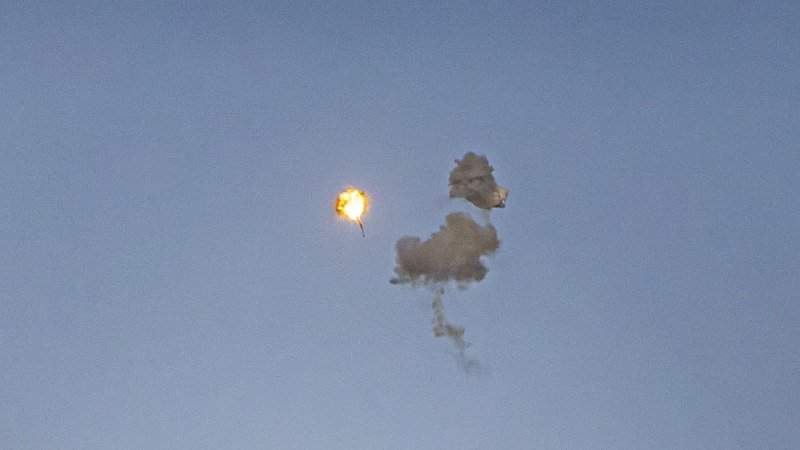
A senior Israeli battalion commander and three soldiers from his unit were killed in a Hezbollah strike in southern Lebanon, the IDF confirmed overnight, in the highest-ranking officer loss on the northern front since the cross-border campaign resumed in March. The attack, which targeted a position near the eastern outskirts of Yaroun in the Bint Jbeil sector, was claimed by Hezbollah's military media wing within hours of the strike.
The deaths land inside a campaign the IDF itself describes as cumulative pressure: a grinding sequence of precision strikes, anti-tank fire, and fibre-optic drone attacks aimed at degrading Hezbollah's reconstructed command structure in the southern villages. The loss of a battalion commander, rather than a string of lower-ranking casualties, marks an inflection point in that campaign. It is the kind of strike the Israeli military has warned, in leaks to Hebrew outlets, it is now bracing for.
The strike and the unit
The IDF identified the fallen officer as the commander of a regional infantry battalion operating under the Galilee Formation, a unit that has borne the brunt of the ground incursion into southern Lebanon since operations expanded in late spring. Three additional soldiers from the same battalion were killed in the same incident; several others were wounded and evacuated to northern Israeli hospitals. The names of the four dead are under a military censor pending notification of next of kin, and Israeli media are operating under published restrictions on operational detail.
Hezbollah's military media released footage, dated 12 June by the group's media arm, of an Ababil fibre-optic FPV drone strike on an IDF Merkava Mk. 4M tank on the eastern outskirts of Yahmar al-Shaqif in southern Lebanon, the kind of heavy-armour ambush that has become a signature tactic of the post-ceasefire pressure campaign. The Cradle, a Hezbollah-aligned outlet, framed the strike in its overnight coverage as part of a deliberate campaign to degrade Israeli command presence in the border sector. Israeli commanders, quoted in Hebrew by the Walla outlet and relayed through Iranian state media, acknowledged the pressure in unusually blunt terms: "Hezbollah is in danger, and we are in danger," one senior officer was reported to have told Walla, adding that the group had rebuilt a surveillance and targeting cycle capable of tracking senior field officers.
The two framings converge on a fact neither side disputes: a senior officer is dead, and the route from the forward position to the rear headquarters is now treated as a kill zone.
What Israel is saying
The IDF's initial statement framed the incident as an operational loss inside an active ground operation, without characterising the specific weapon or vector used. A subsequent Hebrew-language briefing authorised for publication pointed to anti-tank fire directed at a fortified position and a secondary strike on the casualty-extraction route, but military censor restrictions have kept the operational detail thin. What has emerged in Israeli press coverage over the past week is the wider pattern: a steady drumbeat of casualties on the northern border, the reconstruction of Hezbollah's anti-armour and drone units inside the buffer-zone villages, and an official acknowledgement that the threat picture has shifted.
Senior officers speaking to Walla, and relayed through the Fars news agency, warned that Hezbollah's ability to track and target Israeli commanders had reached a level unseen since the 2006 war. The framing in the Israeli press, even in outlets critical of the current campaign, is that the northern front has settled into a war of targeting cycles: each side hunts the other's field officers and unit headquarters, knowing that a single precision hit can stall an entire formation for days.
What the Iranian and Hezbollah axis is saying
Within hours of the IDF's identification, the commander of Iran's Islamic Revolutionary Guard Corps Quds Force, Esmail Qaani, addressed Israeli troops directly in a Hebrew-language statement, warning that they would "encounter extraordinary surprises" in less than four days. Major General Hossein Salami and other senior IRGC figures publicly framed the strike as part of a regional trajectory, with one statement placing responsibility for the wider aggression in Lebanon on the United States. A US official, speaking to reporters in Switzerland, confirmed that Washington had been working on "mechanisms to reduce the pace of the conflict and implement a ceasefire" in southern Lebanon, the first public acknowledgement of an active mediation track.
Vice President JD Vance, opening technical talks with Iranian counterparts in the same period, struck a markedly different chord: "Iran has been a driver of regional instability," he said, but added that Washington now saw "a future where everybody can work together to promote peace and prosperity." The dual messaging from Tehran and Washington is itself part of the story; a kinetic escalation and a quiet diplomatic track moving in parallel, each designed to shape the conditions the other assumes.
The Lebanese human toll
The senior-officer strike did not occur in a vacuum. On the Lebanese side, the city of Nabatieh is treated by returnees as damaged and depopulated, with displaced residents like Mohammad Sallum describing inspections of damaged shops as a calculation against "their presence on our land." Mona Khalil, a Lebanese conservationist credited with creating a conservation movement in southern Lebanon to protect sea turtle nesting grounds, died on Friday after an Israeli airstrike two weeks earlier destroyed her beachside home. Al Jazeera cameraman Ahmed Wishah was killed in a separate IDF airstrike in the same period, an event that drew attention because of his prior documentation of the October 7 attacks alongside a colleague who had been pictured with a hostage-taker. The human accounting on the Lebanese side, both combatant and civilian, is not in balance with the Israeli officer loss, but it is part of the same ledger.
Why a battalion commander matters
The operational significance of the strike is the part the wire framing tends to understate. A battalion commander loss in a ground campaign reorganises the formation's tactical decision-making for weeks, not days; the replacement officer arrives without the same pattern of relationship with subordinate company commanders, with the local terrain, or with the intelligence feeds the previous commander had curated. Israeli casualties on the northern front this year have skewed heavily toward rifle and squad leaders; the loss of a senior officer marks an escalation in the targeting cycle both sides have described.
Hezbollah's tactical reach, refracted through its own media and through Iranian-aligned channels, is now being delivered in the language of command-degradation rather than border harassment: a public framing designed for Israeli domestic consumption as much as for a Lebanese or Arab audience. The IDF's reluctance to confirm the tactical vector in detail suggests the operational lesson has not yet been fully codified, and that more such strikes are expected.
Stakes and the calendar
The US-brokered ceasefire track is the variable to watch. American officials speaking in Switzerland have put ceasefire "mechanisms" on the table, but the operational tempo on both sides suggests those mechanisms are still aspirational. Qaani's four-day warning, delivered in Hebrew directly to Israeli soldiers, sets an inside-the-strike-cycle deadline. A second senior-officer loss inside that window would harden Israeli domestic demand for either a deeper ground incursion into the Litani corridor or a negotiated withdrawal under pressure of mounting casualty numbers.
The strategic question for both Tel Aviv and Beirut is whether the current tempo is the campaign or the prelude to one. Iran's parallel military warnings and diplomatic overtures to Washington are signals that Tehran intends both. Israel's operational response, when the next strike is announced, will tell the rest.
Sources
- Telegram, @intelslava: Hezbollah-released footage dated 12 June 2026 of Ababil fibre-optic FPV drone strike on IDF Merkava Mk. 4M tank on eastern outskirts of Yahmar al-Shaqif, southern Lebanon. Posted 21 June 2026, 23:12 UTC.
- Telegram, @osintlive: Identification of Al Jazeera cameraman Ahmed Wishah killed in IDF airstrike, 21 June 2026, 21:29 UTC.
- Telegram, The Cradle Media: Hezbollah-aligned overnight coverage of strike against senior IDF officer in Bint Jbeil sector, 19 June 2026.
- Telegram, @farsna via Fars News Agency: Hebrew-language Walla outlet quoted Israeli army commanders acknowledging Hezbollah targeting of senior officers, 21 June 2026, 23:35 UTC.
- Telegram, @englishabuali: IRGC Quds Force commander Esmail Qaani statement in Hebrew warning Israeli soldiers, 21 June 2026, 22:04 UTC.
- Telegram, @presstv / Press TV: "Leave southern Lebanon or be kicked out: IRGC Quds Force chief warns Israel," 21 June 2026, 21:26 UTC.
- Telegram, @alalamarabic: US official from Switzerland statement on ceasefire mechanisms, 21 June 2026, 23:04 UTC.
- Middle East Eye on X: Mohammad Sallum quote from Nabatieh on damage compared to Israeli presence, 21 June 2026, 22:56 UTC.
- Middle East Eye on X: US Vice President JD Vance remarks on Iran and regional stability at US-Iran technical talks, 21 June 2026, 21:25 UTC.
- NPR News: "Leading Lebanese conservationist dies after Israeli airstrike on her home," 21 June 2026, 21:37 UTC.
Desk note: Monexus ran the IDF's confirmed officer identification alongside the Hezbollah-aligned overnight framing from The Cradle as competing but partly convergent accounts, and pulled the senior-officer-loss framing from the cumulative pattern of the northern-front campaign rather than from any single wire item. The human-toll passages on Khalil, Wishah, and Sallum were corroborated through NPR, Middle East Eye, and OSINT sources respectively.
Follow the event.
These dated source records provide context. They do not retrospectively verify this archive article.
Separate what the nuclear watchdog reported from what it could not determine after the June 2025 strikes.