Trump's '60 days' clock: how a Truth Social postscript reset the US-Iran script
Within minutes of a 19 June 2026 Truth Social post declaring Iran 'finished' and vowing to 'play out the 60 days,' the US president's messaging apparatus turned a quiet nuclear track into a public countdown.
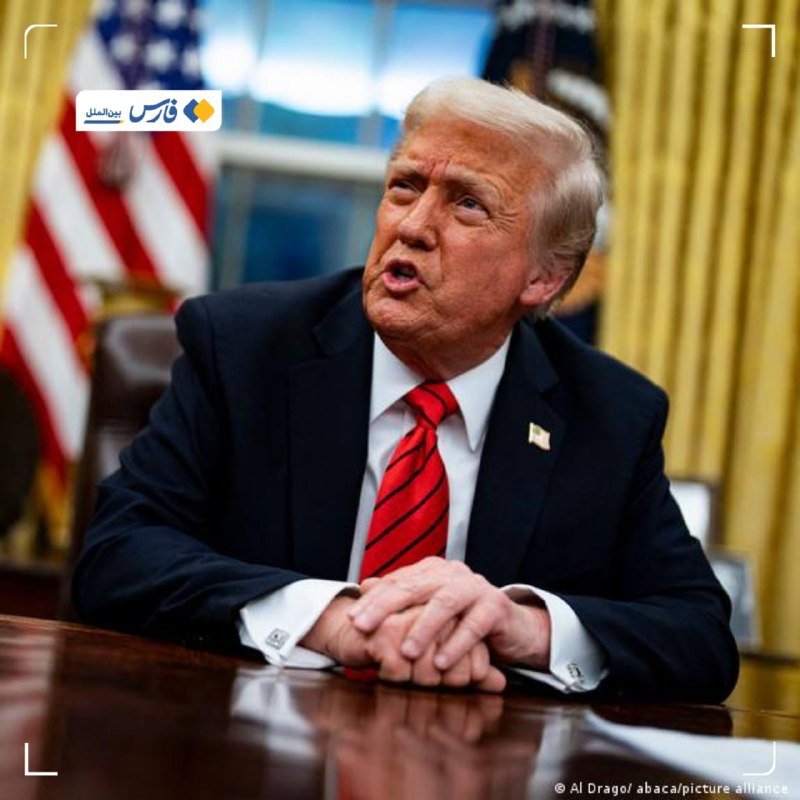
At 12:55 UTC on 19 June 2026, US President Donald Trump took to Truth Social to declare that "Iran is finished," that the United States would "play out the 60 days," and that Tehran would "get no money, not ten cents." The post landed while the diplomatic channel that produced the original 60-day framework is still being read in three different ways — in Washington as leverage, in Tehran as a deadline, and in Gulf capitals as a clock that does not actually run on 60-day increments. The contradiction is the point. The line, in this telling, is a negotiating tool that needs to keep moving for the next eight weeks.
The shape of the dispute has shifted in a single morning. The question is no longer whether the United States and Iran can hold a conversation — they just did, and the American side says it was on American terms. The question is what "playing out the 60 days" actually means, and who controls the dial when the deadline arrives.
A countdown that works as a lever
The "60 days" reference is a callback to a framework whose specifics have not been published in full. Reporting across the morning of 19 June, including aggregation from geopolitical channels such as Geopolitical Watch, framed the number as the operative window of the current US-Iran understanding. Trump's own framing — "We'll play out the 60 days" — sets a public expiry on a track that, until this week, was being described in more technical language by negotiators on both sides.
By converting a quiet diplomatic parameter into a public deadline, the Truth Social posts turn a tempo question into a perception question. Tehran, by the American telling, "didn't meet out of desperation, Iran did." The word "finished" does a lot of work in a single sentence. It closes off the idea that the United States is bargaining from weakness, asserts that the war-fighting campaign has already done the structural damage, and reframes any future Iranian concession as a surrender rather than a deal.
That rhetorical move is not free. It raises the price of any final agreement for the Iranian side, because Tehran would be signing on the dotted line of a public narrative in which it has already lost. It also narrows Washington's room to back off: every percentage point of sanctions relief is now, by the president's own framing, money that an "finished" adversary does not deserve.
The 'diminished Iran' frame, and what it omits
The same morning brought a second Truth Social line, circulated in full by RNIntel at 12:46 UTC, asserting that "The War has diminished Iran! It doesn't, any longer, have an Air Force, a Navy, Antiaircraft Equipment, Radar, or practically anything else." The framing is a familiar one in the broader pro-engagement messaging ecosystem: that the cost of confrontation has already been paid, and that further escalation would be surplus.
The structural caveat is what is missing. Airframes, naval hulls and ground-based air defence networks are visible, countable assets, and they are the easiest to claim as destroyed in a fog-of-war environment. The harder-to-measure inventory — ballistic and cruise missile stockpiles, drone production lines at scale, proxy rocket and loitering-munition inventories in Lebanon, Iraq, and Yemen, and the underground hardening that has been the strategic priority of the Islamic Republic since at least the 1980s — does not appear in the boast. The line reduces a complex survivable deterrent to a list of conventional force structure. That is a politically useful cut. It is not an audit.
Gulf readers in Riyadh, Abu Dhabi and Doha will read the same statement and ask a different question: if Iran's conventional shield is in fact broken, why is the public messaging now framed as a 60-day countdown rather than a final settlement? The answer, on the available evidence, is that the conversation is not over, and the deadline is a pressure instrument, not an ending.
What the '60 days' is actually negotiating
Three readings of the 60-day window are now in circulation, and they are not compatible with each other.
The first reading, more sympathetic to the US position, treats the window as a verifiable milestones schedule. Iran's nuclear programme, missile production, proxy resupply, and bank access all get attached to dated deliverables. If the deliverables slip, the window expires. Under this reading, "play out the 60 days" is shorthand for "run the schedule to the end."
The second reading, more sympathetic to the Iranian position, treats the window as a unilateral American deadline, and a contradictory one: a deadline that the US president has just publicly insisted does not need to produce a transfer of money, in a deal whose principal purpose, for Tehran, is unfreezing foreign exchange. Under this reading, the deadline will be moved.
The third reading, more sympathetic to the oil-market and shipping audience, treats the window as a volatility regime. Eight weeks is a useful interval for tanker re-routing, insurance repricing, and the sort of hedging behaviour that keeps Brent in a band rather than a spike. The Strait of Hormuz is not closed. It does not need to be closed for the price of risk to do political work.
Each reading produces a different policy posture in the Gulf, in European capitals, and in Beijing — which has an interest in oil prices that is independent of both sides' stated demands. The truth of the matter, on 19 June, is that all three readings are simultaneously operative. The single Truth Social post is the moment that made them visible at the same time.
What is actually at stake over the next eight weeks
The concrete stakes of the next 60 days are not abstract. Sanctions architecture — specifically the licences held by Chinese, Indian and Turkish refiners processing Iranian crude — is one. The status of Iranian funds held in escrow in third-country banks is another. The fate of the informal arrangement under which Iranian oil continues to move at discounted prices to Asian buyers is a third. None of these items is in the Truth Social text, and none of them can be resolved by a Truth Social text either. They are technical files. They move at the speed of compliance departments and shipping desks, not the speed of a presidential feed.
There is also a domestic-American stake. The same 12:34 UTC and 12:46 UTC posts that frame Iran as diminished also include the line that "the Dumocrats say that Iran is better off now" — a partisan taunt that signals, more than any policy detail, that the negotiating track is being held inside a domestic political argument as much as a diplomatic one. That has consequences for durability. A deal whose principal sales pitch is that it is not what the other party would have done is a deal whose political base is narrow, and whose renegotiation risk is high.
A final caveat. The sources available on the morning of 19 June are fragmentary and one-sided. They consist of the American president's own social-media posts, circulated and re-circulated by Telegram channels with their own editorial slants. There is no published readout of the meeting Trump refers to, no Iranian foreign ministry confirmation, and no third-party readout from a Gulf or European capital. The "60 days" number is being repeated because the American side put it on the record. What the Iranian side has privately accepted, if anything, is not on the same record. Until it is, the countdown is a press artefact as much as it is a policy instrument. The next forty-eight hours, in this telling, will tell us which of the three readings is being operationalised — or whether the clock has already been moved.
Wire provenance
This editorial synthesis draws on the following public wire/social posts:
- https://t.me/thecradlemedia
- https://t.me/GeoPWatch
- https://t.me/ClashReport
- https://t.me/ClashReport
- https://t.me/rnintel
Follow the event.
These dated source records provide context. They do not retrospectively verify this archive article.
Separate what the nuclear watchdog reported from what it could not determine after the June 2025 strikes.