The Vance-Iran Memorandum Is a Stress Test, Not a Deal
A Washington-Iran memorandum is being sold as a breakthrough. Western officials briefed by the Post call it a flawed document that pushes the United States to deliver concessions. The gap between those two readings is the story.
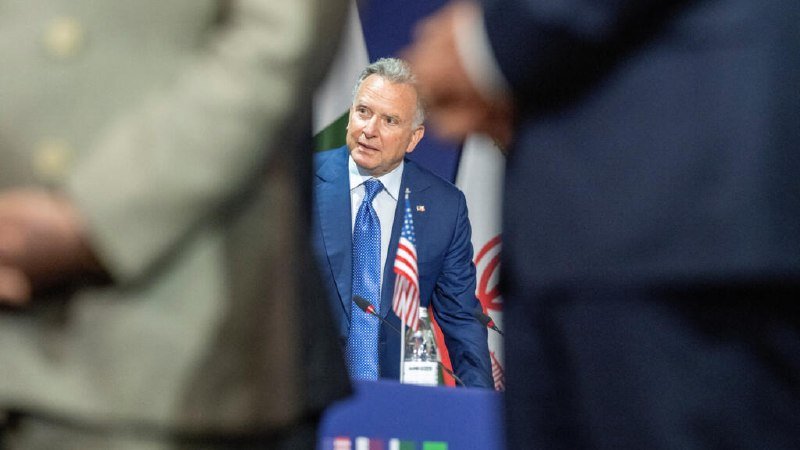
The US-Iran memorandum that Vice President JD Vance presented on 18 June 2026 as a "win-win" is, by every visible measure, less a deal than a stress test — of Tehran's negotiating posture, of the Trump administration's second-term diplomacy, and of a regional order that no longer has the JCPOA's scaffolding to lean on. A Washington Post analysis circulated via the WarMonitor channel on 19 June 2026, 03:39 UTC, describes the document as flawed, with vague terms that place the onus on Washington to deliver concessions. The South China Morning Post, reporting the same Vance remarks, carried the Vice President's framing that the arrangement is a "win-win" and that opponents are "fools." Both can be true. The dispute is over what, exactly, was won.
The pattern is familiar: a high-profile Western diplomatic announcement, a public posture of triumph, and a slow leak of expert and official scepticism that the substantive text does not match the rhetoric. The Vance-Iran memorandum sits squarely inside that pattern. The question is whether the gap closes in the next thirty days — and on what side of it Tehran ends up.
The announcement, and what Vance actually said
In remarks reported by the South China Morning Post on 19 June 2026, 04:10 UTC, Vance characterised the memorandum as a "win-win" arrangement between Washington and Tehran and dismissed its critics as "fools." The Post also reported that President Donald Trump, in an exchange captured the previous day at 13:17 UTC by the Unusual Whales account, joked: "If [the Iran deal] works out, I'm going to take the credit; if it doesn't work out, I'm blaming [Vance]." The remark, delivered in a joking register, nonetheless names the political geometry of the deal precisely: the White House retains the upside, the Vice President absorbs the downside. Polymarket traders, by 18 June 2026, 18:14 UTC, were pricing a 59% probability that Vance himself meets Iranian counterparts before month's end — a figure that is both a confidence vote and a hedge against the deal's stated terms being thin enough to require senior-level reinforcement.
The Post's read: vague terms, US-side concessions
The Washington Post reporting summarised by WarMonitor on 19 June 2026, 03:39 UTC, gives the more cautious reading. Western officials and outside experts describe the memorandum as a flawed document with vague terms that put the onus on the United States to deliver concessions. The language matters. "Vague" is the operative word in any arms-control text: the same sentence can be read as a confidence-building measure in Washington and as a foothold in Tehran. When the framing specifies that the burden of delivery falls on Washington rather than on Iran, it suggests the document is structured around US movement — sanctions relief, escrow arrangements, unfreezing of foreign-currency accounts — in exchange for Iranian commitments whose verification protocols have not been spelled out. That is not a deal in the JCPOA sense. It is a purchase order, with delivery dates pencilled in.
What the Iranian side can plausibly claim
Treating the Iranian position on its own terms, the memorandum serves Tehran's interest in demonstrating that it has reopened a direct channel to the Vice President's office without paying the up-front price the 2015 framework demanded. Tehran's diplomatic establishment has, for over a decade, framed Western sanctions as the principal instrument of pressure short of war; a text that commits Washington to act first, even conditionally, is a structural win regardless of the verification regime. Iranian state-aligned outlets will read the document in exactly that register. Western analysts who call the text "flawed" are not, in this framing, neutral observers — they are partisans for a tougher posture that Iran has spent years outlasting.
The structural read
The memorandum lands inside a wider pattern of US Middle East policy under the second Trump administration: visible bilateralism, less visible multilateralism, and a reliance on presidential authority to compress negotiating timelines. The Vance-Iran track is the diplomatic counterpart to the airpower the United States has used in the same theatre in 2025 and 2026. Both share a tactical logic — keep Tehran off-balance, deny it the conventional deterrent payoff of a nuclear threshold, and re-open economic space only in return for verifiable constraint. The flaw in the Washington Post's critique, if there is one, is the assumption that the alternative is a more enforceable text. The more likely alternative is no text at all, and a slower drift toward the same conditions by other means.
What remains contested
The sources do not specify the size of any sanctions package under discussion, the verification mechanism, or the timeline for Iranian compliance. The Post's framing — vague terms, US-side onus — is the official read inside the Western expert community. Vance's framing — win-win, opponents as fools — is the political read. Polymarket's 59% is the market read. Three different instruments, three different answers. The honest position is that the memorandum is real, the text is thin, and the next thirty days will determine which framing the deal is built on.
Monexus framed this as a contested document rather than a breakthrough; the wire cycle pushed triumphalism, and the Post's reporting pushed scepticism, and both belong on the same page.
Wire provenance
This editorial synthesis draws on the following public wire/social posts:
- https://t.me/warmonitorrt
Follow the event.
These dated source records provide context. They do not retrospectively verify this archive article.
Separate what the nuclear watchdog reported from what it could not determine after the June 2025 strikes.