Iranian delegation lands in Switzerland as US-Tehran accord signing slated for Geneva
An Iranian delegation has arrived in Switzerland ahead of a Friday accord signing in Geneva, ending a fortnight of shuttle diplomacy and reviving a track the Biden-era talks never closed.
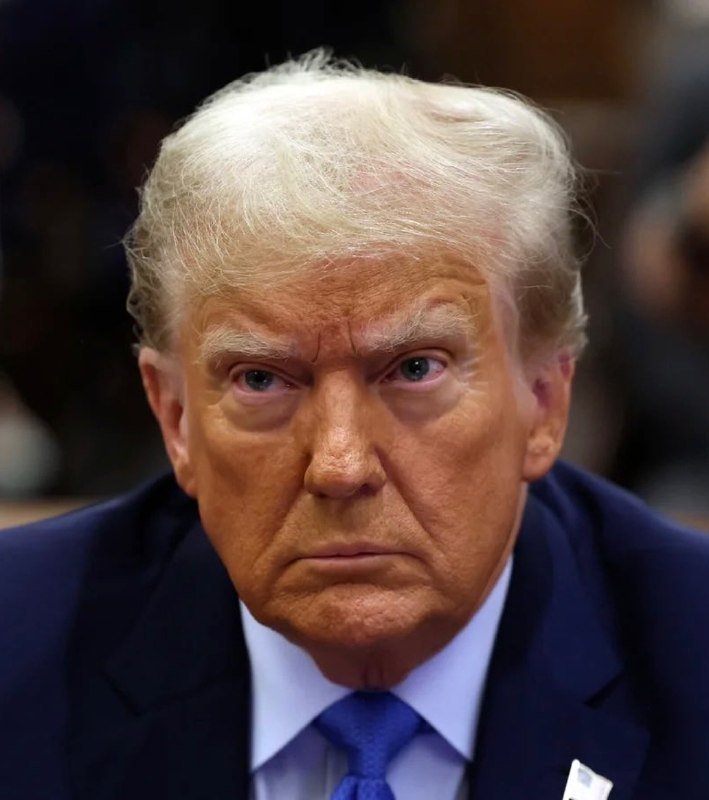
An Iranian negotiating delegation identified as "Minab 168" touched down in Switzerland on 20 June 2026, the final staging post before a Friday accord signing in Geneva, according to regional coverage of the talks. Al Jazeera's breaking-news desk logged the arrival at 23:39 UTC; Middle East Eye's live blog confirmed the same delegation at 21:36 UTC; Lebanon-based outlet The Cradle carried the news through its Telegram channel at 21:23 UTC. The convergence of three independent feeds inside a two-hour window is unusual for a negotiation Tehran has spent two years keeping off the front pages.
What is on the table is a re-anchored arrangement between Washington and Tehran — narrower than the 2015 nuclear deal it partly resembles, broader than the maximum-pressure posture of the last several years. The Friday signing, if it lands, would mark the first formal US-Iran accord in a decade and the first time the two governments have shared a stage since the talks collapsed in the late 2010s.
The road from Muscat to Geneva
The current round did not begin in Geneva. Track-two contacts in Muscat and Doha through the late spring built the procedural scaffolding, and the active working group that landed in Switzerland on Saturday is the third Iranian delegation to travel outside the country in 2026. According to the live coverage on Middle East Eye, the Iranian side is operating under a single named delegation — "Minab 168" — a label the Iranian foreign ministry has used for travel manifests on previous negotiations. That continuity of personnel suggests Tehran has, for the moment, a single chain of authority on the file rather than the factional split that defined the 2019–2023 window.
The choice of Geneva is not incidental. Swiss authorities have served as the protecting-power intermediary for US interests in Iran since 1980, and Swiss-brokered channels have carried discreet communications between Washington and Tehran across periods when direct contact was politically impossible. Holding the signing in Geneva rather than in a Gulf capital gives both delegations a layer of diplomatic distance from domestic hardliners and a venue with established precedent for US-Iran paperwork.
What the two sides say, and what they don't
Al Jazeera's reporting on the delegation's arrival was carried in the breaking-news slot, which in the network's editorial rhythm signals confirmed-to-the-editor but not yet synthesised coverage. Middle East Eye's live blog goes a step further: it states that "the US and Iran confirm a peace accord signing" set for Friday in Geneva. The Cradle, which is closer to the Iranian-aligned axis of the regional press, frames the arrival as the first public confirmation that an Iranian delegation is on Swiss soil — a deliberately neutral formulation that neither amplifies nor downplays the substance of the talks.
What none of the three feeds have published, as of the timestamps in the wire, is the text of the draft accord. Iranian state media have not yet released a communique. There is no US State Department read-out beyond the standard "talks are ongoing" formulation, and the White House press schedule for Friday has not been published. The signing is therefore a credible but unverified calendar event: a date both sides have agreed to make public, attached to a document whose contents are still in transit.
What the deal is, structurally
A US-Iran accord signed in 2026 would not be a return to the Joint Comprehensive Plan of Action. The 2015 framework was a multilateral arrangement, with Russia, China, the United Kingdom, France, Germany and the European Union as full parties and a UN Security Council resolution as enforcement backstop. The current track is bilateral. Tehran's incentive to re-engage is the cumulative effect of sanctions on its central bank, oil-export metering and access to the SWIFT financial-messaging layer — pressure that, in aggregate, has cost the Iranian treasury tens of billions of dollars in foregone revenue. Washington's incentive is to convert that pressure into a verifiable cap on Tehran's enrichment capacity, on a timeline that allows the US to redeploy diplomatic bandwidth elsewhere in the Middle East.
In a contest between a sanctions-constrained regional power and a creditor-state superpower with its own political calendar, the most likely shape of any deal is asymmetrical and time-limited. Tehran trades a partial, monitored, reversible cap on enrichment for a partial, monitored, reversible easing of financial and energy sanctions. Neither side gives up a sovereign capability outright; both sides buy time.
Counterpoint: why the dominant frame could be wrong
The dominant framing across Western wires treats the deal as a function of American leverage. An honest reading of the source material gives the Iranian side more agency than that framing allows. Tehran chose to send a delegation under a name it has used in previous talks, in a venue that protects the integrity of the talks from Iranian domestic politics. The fact that the Iranian foreign ministry is willing to attach a public label to the delegation — and the fact that hardline outlets in the regional press, including The Cradle, are carrying the news without opposition framing — suggests intra-elite consent on the Iranian side, not a coerced arrival at the table.
There is also a counter-frame worth taking seriously: that a narrow bilateral deal is the best available outcome for both sides, but a worse outcome for the Middle East than a multilateral one would have been. A bilateral accord does not require Iran to accept enhanced inspections at Arak, Fordow and Natanz beyond what is bilaterally negotiated; it does not place a cap on Iran's missile programme, which is not on the table; and it does not require Iran to scale back its network of regional partners, which is also not on the table. The deal that is being signed on Friday is, on the available evidence, narrower than the deal the multilateral track would have produced. Whether that is a feature or a bug depends on what one thinks the purpose of US-Iran diplomacy is for.
Stakes over the next ninety days
If the signing lands, the first round of relief will be technical and targeted: the release of frozen Iranian funds in escrow accounts in South Korea, Iraq and Japan, the issue of waivers allowing third-country banks to process oil payments for a defined list of Iranian customers, and the re-licensing of certain dual-use goods for civilian end-users in Iran. The second round — broader sanctions relief, unfreezing of central-bank assets, restoration of diplomatic missions — is conditional on verified Iranian compliance over the first ninety days.
The hard cases are not in the first ninety days. They are in the second ninety, when verification questions multiply: what counts as a compliant enrichment cap; what counts as a credible inspection regime; what counts as a sanctions-snapback trigger; and what the United States does if a future administration decides the deal is no longer in its interest. Those questions are not in the three feeds the wire has published, and they will not be settled by Friday's signing. They will be settled, or not, by what both sides do in the silence after the cameras leave Geneva.
How Monexus framed this: the wire treated the arrival of the Iranian delegation as a procedural fact; this publication treats it as the start of a public countdown to a narrow bilateral accord, with the multilateral architecture deliberately left off the table.
Wire provenance
This editorial synthesis draws on the following public wire/social posts:
- https://t.me/thecradlemedia/MINAB168
- https://x.com/middleeasteye/status/2068364919150411776
- https://t.me/TheCradleMedia/MINAB168
Follow the event.
These dated source records provide context. They do not retrospectively verify this archive article.
Separate what the nuclear watchdog reported from what it could not determine after the June 2025 strikes.