Iran announces Strait of Hormuz closure, citing Israeli strikes on Lebanon and alleged US breaches of ceasefire deal
Tehran says it will shut the world's most consequential oil chokepoint, framing the move as retaliation for Israeli airstrikes on Lebanon and alleged US failure to restrain its ally.
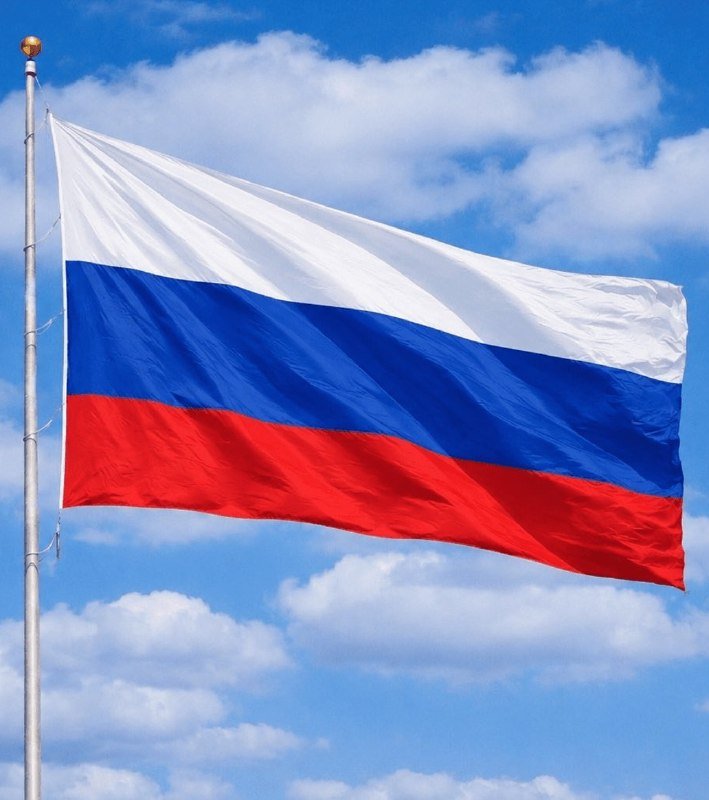
On 20 June 2026, Iran's armed forces command announced the closure of the Strait of Hormuz, the 21-mile-wide waterway between the Persian Gulf and the Gulf of Oman through which roughly a fifth of the world's seaborne oil ordinarily moves. The announcement, carried at 13:48 UTC by Telegram channel DDGeopolitics quoting the headquarters of the Islamic Republic's armed forces, framed the closure as retaliation for two distinct grievances: continued Israeli airstrikes on Lebanon, and alleged US violations of a war-ending memorandum of understanding said to govern the post-conflict settlement. Euronews, reporting on the same Iranian military statement at 13:13 UTC, used near-identical language, indicating the channel was carrying a single official readout rather than a Tehran press conference of its own.
The closure threat lands at a moment when the diplomatic architecture supposedly holding the Middle East together is visibly fraying. Tehran's foreign ministry, through spokesperson Esmail Baghaei, declared earlier on 20 June that the MOU with Washington was in "serious crisis" after the United States failed, in Iran's telling, to restrain Israel in Lebanon. The Cradle Media carried Baghaei's warning at 13:43 UTC, and a parallel channel run by the same outlet repeated the framing minutes later. The combined message is one Iran has been signalling for weeks: the implicit bargain that bought quiet on the Gulf front depends on Lebanon staying quiet too, and Israel, in Tehran's read, has broken that bargain.
What Iran actually said, and to whom
The operative language came from the headquarters of the Islamic Republic's armed forces and travelled through state-aligned channels rather than through a presidential address or foreign ministry press conference. DDGeopolitics, a Tehran-leaning geopolitical channel on Telegram, posted the announcement at 13:48 UTC. IRIran_Military, a channel that tracks Iranian armed forces communiqués, posted the same core line at 13:44 UTC, attributing the closure to "the continued Israeli regime's airstrikes on Lebanon." That phrasing — "regime" in scare quotes, airstrikes treated as the trigger — is consistent with the framing Iran has used since the Lebanon ceasefire took hold, and matters because it locates blame in Jerusalem and, by extension, in Washington as the actor Iran believes has leverage over Israel.
Euronews, a European broadcaster whose Telegram feed reaches audiences well beyond the Iran-aligned ecosystem, reproduced the military statement at 13:13 UTC, citing the headquarters of the command of the republic's armed forces directly. The fact that a non-Iranian outlet was carrying the text in full, with attribution, is itself a small but telling data point: Tehran wanted this announcement visible outside its own media environment, and quickly.
The foreign ministry's parallel intervention came through Baghaei, whose warning that the MOU was in "serious crisis" was relayed by The Cradle Media. Baghaei's framing — that US "failure to restrain Israel" had thrown the Lebanon ceasefire into jeopardy — is the diplomatic scaffolding around the military's blunt instrument. The two statements are designed to work together: the foreign ministry names the grievance, the military names the response.
The MOU that may or may not exist
A reader outside the policy world is entitled to ask what MOU is being invoked at all. Public reporting over the past year has described an unwritten understanding under which Iran moderated its regional posture, including its support for Hezbollah, in exchange for the United States restraining Israel from actions that would re-open the Lebanon front. Neither the Iranian foreign ministry nor the US State Department has published the text of such a document, and credible Western coverage has tended to describe the arrangement as a set of mutual assurances rather than a signed accord.
That ambiguity is doing political work. Iran benefits from invoking a written-sounding "memorandum" because it implies the United States is in breach; the United States benefits from leaving the arrangement characterisable as informal, because that loosens any obligation to enforce compliance on Israel. The Cradle's reporting leans on the first reading, presenting Baghaei's statement as evidence of a binding compact in peril. Wire coverage of the same day, to the extent it has caught up, has been more cautious. The structural point is that "MOU" functions in this dispute as a placeholder for an understanding whose precise terms, in public, remain unknown — and that lack of clarity is itself part of the crisis.
What closure would actually mean
Closing the Strait of Hormuz is not the same as blocking it. The waterway is bordered by Iranian and Omani territorial waters, and Iran has the maritime capacity to make transit commercially unattractive through a combination of fast-attack craft activity, mining, and the harassment of tankers. It does not have the capacity, nor arguably the interest, to physically seal a corridor used by ships from every flag state. Past Iranian rhetoric has alternated between full closure threats and warnings that transit will be "unsafe." The 20 June announcement does not specify which posture Tehran intends.
The economic consequences of even partial disruption are not in dispute. The strait carries the bulk of Gulf oil exports from Saudi Arabia, the United Arab Emirates, Iraq, Kuwait, Qatar and Iran itself. Liquefied natural gas from Qatar travels the same route. Insurance markets reprice transit risk within hours; tanker freight rates spike; refining margins in importing economies, particularly in Asia, widen. The supply shock is global, but the demand shock lands first and hardest in China, India, Japan and South Korea, which depend on Gulf hydrocarbons to a degree Europe and the United States no longer do.
Stakes, and what remains unverified
If the closure holds for more than a symbolic window, the political map redraws. The United States loses leverage with its Gulf partners, who are already diversifying pipelines and export routes precisely to insure against this scenario. Tehran gains a coercive instrument it can lift or tighten in response to Israeli and American behaviour on Lebanon, but at the cost of pushing Gulf states and Asian importers toward alternative energy arrangements and deeper security alignment with Washington and its allies. Israel, in this geometry, is the actor whose behaviour is the proximate cause but whose exposure is lowest; it imports almost no oil by sea and is not a direct customer of Gulf crude.
Three things remain genuinely uncertain. First, whether Iran intends a full operational closure or a coercive signalling posture — the announcements of 20 June do not say, and past practice suggests Tehran prefers the latter. Second, whether the MOU being invoked is a single document or a layered set of understandings that Tehran is now choosing to collapse into one grievance; Baghaei's language is consistent with either reading. Third, the reaction of the United States and of Gulf monarchies, none of whom had, by 14:00 UTC on 20 June, published a public response to the closure announcement. The sources the wire thread drew on do not record any US Central Command statement, any State Department briefing, or any response from Saudi Arabia, the UAE, Oman or Qatar. That silence is itself the story for the next few hours.
This piece sits in the gap between Iranian state communiqués and Western wire reaction. Most of the factual scaffolding comes from Telegram channels carrying Iranian military and foreign ministry language; the editorial caution is that those channels reproduce official text faithfully but do not, on their own, constitute independent verification. As Western wire desks report in, the framing will harden — or the closure will, quietly, become the new normal.
Wire provenance
This editorial synthesis draws on the following public wire/social posts:
- https://t.me/DDGeopolitics
- https://t.me/IRIran_Military
- https://t.me/TheCradleMedia
- https://t.me/euronews
- https://en.wikipedia.org/wiki/Strait_of_Hormuz
- https://en.wikipedia.org/wiki/2024%E2%80%932025_Iran%E2%80%93Israel_crisis
Follow the event.
These dated source records provide context. They do not retrospectively verify this archive article.
Separate what the nuclear watchdog reported from what it could not determine after the June 2025 strikes.