The ceasefire that won't stick: Israel, Hezbollah, and the problem with paper truces
A reported Israel-Hezbollah ceasefire was meant to clear the runway for a US-Iran accord in Geneva. Two days in, both sides are trading blame for fresh violations — and the wider deal looks more fragile than the headline suggests.
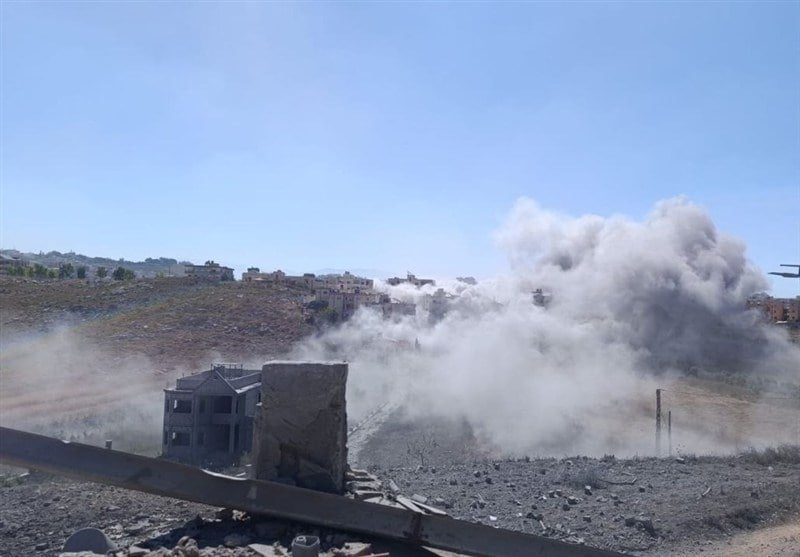
By 20 June 2026, the news cycle around Lebanon had performed its now-familiar lurch. Less than thirty-six hours after prediction-market traders and political reporters registered that Israel and Hezbollah had "reportedly agreed" to a ceasefire — a development framed as clearing the runway for US–Iran talks in Geneva — the same parties were publicly accusing each other of breaking it. Middle East Eye reported at 16:08 UTC on 20 June that Hezbollah holds Israel "fully responsible" for truce violations. The New York Times, in a piece indexed the same morning, observed simply that Israel and Hezbollah are "still fighting, several cease-fires later."
The pattern is the story. Each successive arrangement between the Israeli military and the Iran-aligned Shia armed movement has lasted just long enough to be announced, and just short enough to confirm the priors of those who never believed it would hold. The diplomatic choreography around it — a US-Iran accord scheduled to be signed in Geneva on Friday — is now hostage to a sequence none of the principals fully controls.
A deal built on top of an unraveling one
The 19 June ceasefire reports arrived in the same news cycle as forecasts on whether British Prime Minister Keir Starmer would leave office in 2025, a reminder of how prediction markets and political journalism now move on overlapping clocks. The substantive claim — that Israel and Hezbollah had agreed to halt fire to "derail" US-Iran talks, as one widely circulated post put it — was thin on mechanism. There was no named signatory, no published text, no third-party guarantor identified in the reporting available at the time of writing. What existed was a mutual interest in quiet: Israel wants the northern front dormant while it manages Gaza and the broader regional picture; Hezbollah's patron in Tehran wants the same front dormant while a nuclear-and-sanctions package is being negotiated in Geneva.
The problem is that mutual interest in quiet is not the same thing as a deal. It is the precondition for one, easily mistaken for the thing itself.
What the two sides are actually accusing each other of
The 20 June Hezbollah statement, carried by Middle East Eye, does not specify what "violations" Israel is alleged to have committed. That absence matters: without a defined complaint, the accusation functions as a posture rather than a finding. The Israeli side, by the same token, has accused Hezbollah of staging or permitting launches in the hours after the announced ceasefire took hold, though the specifics here also rely on reporting that has not been independently corroborated in the materials available to Monexus.
This is the structural problem with paper truces in southern Lebanon. There is no neutral arbiter with the reach to verify a launch from one side or a strike from the other within the hours that matter politically. UNIFIL's mandate does not extend to adjudicating violations between the parties; the Lebanese Armed Forces are not present in meaningful strength along the Blue Line. What exists instead is a press-release enforcement regime, in which each side issues statements calibrated for its domestic audience and for the foreign ministries that fund or arm it.
Why the US-Iran track makes this worse, not better
The conventional reading — that a Hezbollah-Israel ceasefire de-risks the Geneva signing — runs in the opposite direction from the evidence. A US-Iran deal that depends on a quiet northern front imposes a hard political constraint on Netanyahu's government (which cannot afford the optics of trading restraint for Iranian sanctions relief) and on the Iranian system (which cannot afford to be seen as having traded a Lebanese ally for a financial windfall). Each side therefore has an incentive to demonstrate, publicly, that the other is the violator. The accusations on 20 June are not a breakdown of the ceasefire so much as a performance of the politics the ceasefire was meant to suppress.
There is also a sequencing problem. The reported ceasefire was announced before the Geneva accord was signed, not after. That order is unusual for arrangements of this kind, where quiet along the Israel-Lebanon border is normally a deliverable inside a wider package rather than a precondition for one. The effect is to put the cart before the horse: Hezbollah's compliance is now a function of how the Geneva talks land, and the Geneva talks are being negotiated against the clock of an unraveling truce that nobody, on the record, appears to be enforcing.
What actually changes if this collapses
If the truce fails outright, the most likely trajectory is not a return to the all-out war of late 2024 but a grinding low-intensity exchange along the border, punctuated by escalations tied to the diplomatic calendar. The cost would fall, as it always has, on the civilian populations of southern Lebanon and northern Israel, and on the displaced on both sides whose return home is contingent on a quiet that the principals cannot guarantee. The diplomatic cost would fall on the Geneva process: a signed accord without a functioning northern front would be treated, fairly or not, as a partial achievement at best and a fig leaf at worst.
What remains genuinely uncertain is whether any of the parties — Israel, Hezbollah, the United States, Iran — actually wanted more than the announcement. The reporting available to Monexus does not establish that any of them did. It establishes only that a ceasefire was reported, that violations are now being claimed, and that the wider diplomatic track is proceeding against a backdrop that its own logic suggested should have been settled first.
This publication treats reported ceasefires between Israel and Hezbollah as announcements, not facts, until verified conduct on the ground matches the public language. The wire consensus tends to flatten that distinction; we do not.
Wire provenance
This editorial synthesis draws on the following public wire/social posts:
- https://www.middleeasteye.net/live/live-us-and-iran-confirm-peace-accord-signing-set-friday-geneva
- https://x.com/Polymarket/status/2067741941425668096
Follow the event.
These dated source records provide context. They do not retrospectively verify this archive article.
Separate what the nuclear watchdog reported from what it could not determine after the June 2025 strikes.