The Lebanon Ceasefire That Isn't: Reading Netanyahu's 'Stop' Order Against the Wire
Israeli outlets reported on 20 June 2026 that Netanyahu ordered a halt to operations in Lebanon — coordinated, the framing insists, with Washington. The fine print tells a different story.
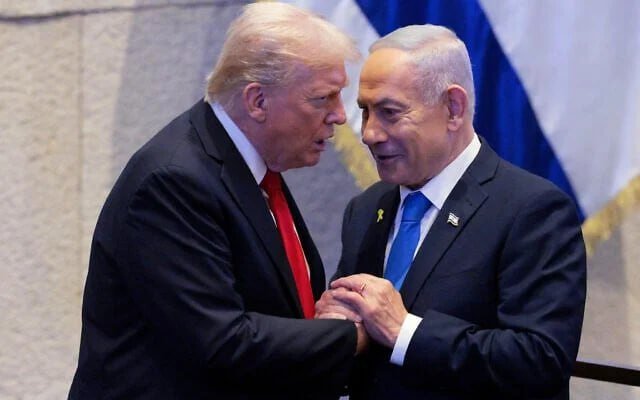
On the afternoon of 20 June 2026, three Iranian state-aligned wire channels — Tasnim, Fars, and the Tasnim-affiliated Jahan Tasnim mirror — began carrying essentially the same sentence in three different phrasings: that Prime Minister Benjamin Netanyahu, in his capacity as "Minister of War of the Zionist regime," had issued an order to stop military operations in Lebanon. The first English-language framing of the story, attributed by those channels to Israel's Channel 12, added a second clause that has done more work than any of the rest: that the cessation was carried out "in full coordination with the United States."
Read straight, the wires describe a ceasefire with a co-signatory. Read more carefully, they describe something narrower and more conditional — and the gap between those two readings is where the next forty-eight hours of diplomacy will be fought.
What the wires actually say
Strip the cross-channel duplication and three discrete factual claims emerge from the thread. First, that Netanyahu personally issued a halt order, framed in the Iranian-channel reporting as a directive from a prime minister who simultaneously holds the defence portfolio. Second, that Israeli media — specifically Channel 12 — is the proximate source of the story, which means the original framing is Israeli and the Iranian channels are translating it. Third, and most consequentially, that the order is conditional: the same Tasnim and Jahan Tasnim bulletins that lead with "Netanyahu ordered a stop" close with the caveat that operations will resume if certain conditions are not met. The Fars wire carries the same conditional structure in shorter form.
That conditional clause is doing enormous diplomatic work. A unilateral, unconditional halt reads as a political concession; a conditional halt reads as a tactical pause. The Iranian-channel translation chooses the first framing in the headline and the second in the body — a structural choice that itself is a story.
The American co-signature question
The Channel 12 framing cited by Tasnim — that the decision was taken "in full coordination with the United States" — is the single most consequential line in the cluster. It implies, without quoting any American official, that Washington is not merely a bystander to a pause but a co-author of it. That is a significant claim. It positions the White House as invested in the timing and the terms, not merely informed of them.
What the sources do not contain is any direct American confirmation, any named US official, or any reference to a specific framework agreement. The coordination claim travels through an Israeli television report as cited by Iranian state media, which is several translation steps removed from a US readout. The reporting does not specify whether the coordination took the form of a formal diplomatic channel, a back-channel through a third party, a conversation between principals, or simply a shared assessment that a pause served overlapping interests.
The structural read is straightforward: when a sitting prime minister issues a halt order on a northern front, and an ally with the capacity to resupply and diplomatically shield that ally is described as having been coordinated with, the default assumption is that the ally's fingerprints are on the timing. But the absence of a US confirmation in the available record is itself meaningful — Washington tends to put out a readout when it wants credit, and silence on a "coordinated" move is its own kind of message.
Why the framing matters
Coverage of any Israel–Lebanon pause splits predictably along a fault line that has nothing to do with the underlying military facts. Israeli and Western-wire framing tends to emphasise the order as a calibrated, conditional de-escalation — a demonstration of Israeli control over the tempo of the conflict. Iranian-channel framing tends to emphasise the halt itself, the implied American involvement, and the implicit political cost borne by the order's issuer. Both are reading the same sentence.
The Iranian framing, in particular, is doing something more interesting than the headline suggests. By attributing the story to Channel 12 rather than to an Israeli government statement, the wire elevates Israeli domestic media over Israeli official communication — a choice that positions the story as something that has emerged from within Israeli public debate, not as a managed announcement. The structural effect is to make the halt read less like a strategic decision and more like a politically driven move under domestic pressure.
The two readings are not mutually exclusive, and that is precisely why the framing war will outlast the news cycle.
Stakes over the next forty-eight hours
Three things are now in play. First, whether the Israeli government confirms, refines, or walks back the Channel 12 framing — a government readout would settle whether the halt is being marketed as a strategic pause, a political concession, or a response to American pressure. Second, whether Washington puts out any confirmation at all, and at what level — a presidential comment, a State Department line, or silence. Third, whether Hezbollah and the Lebanese state treat the conditional halt as an opening for a wider arrangement, or as a tactical interval that requires its own counter-posture.
The Iranian-channel framing — the only framing available in the present record — is structurally biased toward reading the halt as politically costly to its issuer. Israeli framing, once it lands, will be biased the other way. The truth, as is often the case in coverage of conditional halts, will sit in the conditional clause that neither side wants to lead with.
The story is not the ceasefire. The story is the condition.
Monexus frames this as a test of conditional-ceasefire reporting: the headline reads one way, the fine print another, and the source record currently contains only the framing that the least neutral actors chose to carry first.
Wire provenance
This editorial synthesis draws on the following public wire/social posts:
- https://t.me/tasnimplus
- https://t.me/JahanTasnim
- https://t.me/farsna
Follow the event.
These dated source records provide context. They do not retrospectively verify this archive article.
Separate what the nuclear watchdog reported from what it could not determine after the June 2025 strikes.