The Ceasefire That Wasn't: How Israel's First Hours Under the US-Iran Deal Reshaped the Bargain
Within hours of a US-Iran truce taking effect, Israel struck a residential building in southern Lebanon, killing a family of four. The episode exposes how thin the diplomatic architecture actually is — and who is now dictating the terms.
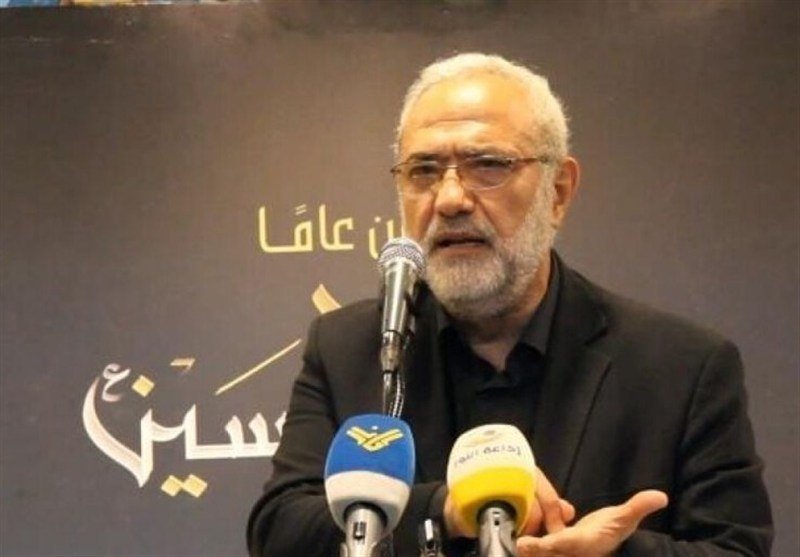
On 20 June 2026, hours after a US-brokered ceasefire with Iran formally took effect, Israeli warplanes struck a residential building in southern Lebanon, killing a family of four. Reuters reported the strike at 14:50 UTC; within an hour, Hezbollah's media channels were tallying what it described as the first wave of post-truce violations. By the channel's own count, more than 180 attacks had been recorded across southern Lebanon by the early afternoon, with a further figure of 111 martyrs and 176 wounded cited in later statements — figures that, given the source, must be read as Hezbollah's framing rather than independently verified casualties.
The episode is more than a tragic first-day-of-ceasefire story. It is a stress test of the diplomatic architecture Washington just announced, and it is failing in real time. The deal sold to the public was a de-escalation: Iran steps back, the axis holds fire, and Israel accepts quiet on its northern border in exchange for a wider strategic pause. What the first hours of 20 June reveal is that not all parties to the bargain read the same document — and that the gap between Washington, Tehran, and Jerusalem is now wide enough to drive a convoy through.
What actually happened on the ground
The Reuters dispatch is unambiguous on the central fact: an Israeli airstrike hit a residential building in Lebanon, killing a family of four, hours after the US-Iran truce took effect. That is the verifiable core. Around it, Hezbollah-aligned outlets — Al-Alam Arabic's Telegram channel — published a cascade of statements claiming more than 300 documented violations "since dawn on Friday," 180 attacks, and 111 dead. The Cradle Media, citing a Hezbollah official speaking to Al Jazeera, framed the escalation as aimed at "establishing freedom of action outside the framework of the US-Iran agreement" and at occupying the Ali al-Taher hill on the Lebanese border. The Middle East Spectator's Telegram feed, citing unnamed sources, reported that Iran is now demanding not merely a ceasefire but a full Israeli withdrawal from southern Lebanon before any final negotiation can proceed.
Each of these claims deserves careful labelling. The Reuters strike is independently sourced. The Hezbollah casualty and violation figures are partisan self-reporting from the warring party — useful as a description of how Hezbollah is constructing the narrative, not as a body count. The Iranian demand for full withdrawal is sourced to unnamed intermediaries and should be treated as a negotiating position rather than a confirmed diplomatic line.
The Israeli counter-narrative
The framing is not one-sided. An English-language operator's note circulated via the RNIntel Telegram feed on 20 June argued the opposite reading: that Hezbollah broke the ceasefire first, that Iran is using its Lebanese proxy to extract concessions, and that Israeli strikes are a legitimate response to violations. Israeli security concerns along the northern border are real and longstanding; tens of thousands of Israeli civilians have been displaced from communities facing Lebanon since hostilities escalated in late 2023. The state's argument — that quiet is conditional on Hezbollah ceasing armed presence north of the Litani — has institutional weight and is shared across much of the Israeli political mainstream, from the government to opposition figures who nonetheless insist on the right of self-defence.
The problem is sequencing. Even if Hezbollah fired first on the morning of 20 June, the public-facing optics of a US-Iran truce followed within hours by a strike on a residential building that killed four civilians is a single image, and that image now defines the deal. Diplomacy runs on perceptions of who blinked first; the visual record of the day is not favourable to the architecture.
What the bargaining structure actually looks like
The deeper story is about who holds leverage inside a deal that was sold as multilateral but is, in practice, a triangular arrangement with very different power weights. Washington delivered the political framework. Tehran accepted in order to relieve sanctions pressure and to consolidate a strategic pause it can use to recover. But Israel is not a signatory in any formal sense — it was a beneficiary of the deal, not a contracting party. That distinction matters.
When a third-party state accepts the political cover of a great-power deal without signing it, the deal's first crisis becomes the third party's opportunity to define the boundaries of the new normal. That is what is happening on the southern Lebanese frontier today. Israel is signalling that the ceasefire does not extend to operations it judges defensive; Hezbollah is signalling that any operation is a violation; Iran is signalling, via the reported demand for full withdrawal, that the price of continued quiet has gone up. Each is reading the same document differently because none of them wrote it.
This is the structural fault line. The US-Iran truce was negotiated between two sovereigns with direct interests. The northern front is run by a non-signatory state with its own threat model, and by a non-state armed actor answerable to a third sovereign whose relationship to the deal is mediated rather than direct. A two-party agreement cannot reliably govern a four-party front.
The stakes from here
If the 20 June pattern holds — strike, claim, counter-claim, escalation through the diplomatic week — the truce will not formally collapse. It will erode. Iran will harden its precondition language; Hezbollah will use the casualty count to rebuild political cover for reconstitution; Israel will insist on operational latitude; and Washington will be left holding a piece of paper that the principal parties are not enforcing in the same way. The danger for the region is not a single dramatic breach but a slow-motion drift that produces another full-scale war in late 2026 or 2027, by which time the political energy to stop it will be lower than it is today.
The danger for the diplomatic architecture is more specific. If the United States is seen as unable to enforce terms it has publicly announced, the deterrent value of its future guarantees — to Gulf partners, to Ukraine's backers, to Taiwan — degrades quietly. Ceasefires do not fail loudly. They fail by becoming irrelevant.
What remains genuinely uncertain
The sources do not yet confirm several things that will shape the next seventy-two hours. They do not specify whether Hezbollah fired first on the morning of 20 June, only that Israel claims it did; independent verification of the alleged pre-truce rocket or drone launches was not in the immediate reporting window. They do not specify whether the reported Iranian demand for full Israeli withdrawal from southern Lebanon is Tehran's official position or a factional hardening by a particular negotiating channel. They do not specify whether the family-of-four strike, which is the only independently confirmed fatal incident in this thread, is the worst civilian outcome of the day or one of several — Hezbollah's figures are not adjudicable from the available material. A reader who wants to act on this story rather than merely react to it should watch for three signals: an official US readout acknowledging Israeli violations, an Iranian diplomatic note rather than a Telegram statement, and an Israeli cabinet decision about whether to widen or narrow operations in the next forty-eight hours.
This piece foregrounds Hezbollah's framing because the Western wire record on 20 June was, in the hours covered by these sources, a single Reuters dispatch; a fuller picture requires treating the opposing side's claims on the record and then labelling them as such.
Wire provenance
This editorial synthesis draws on the following public wire/social posts:
- https://t.me/alalamarabic
- https://t.me/Middle_East_Spectator
- https://t.me/thecradlemedia
- https://t.me/rnintel
Follow the event.
These dated source records provide context. They do not retrospectively verify this archive article.
Separate what the nuclear watchdog reported from what it could not determine after the June 2025 strikes.