Netanyahu's Lebanon campaign and the diplomatic ceiling on escalation
Western officials are privately urging Israel to cool its Lebanon campaign so Iran cannot walk away from nuclear talks. The pattern is familiar: tactical pressure, strategic limits, and a diplomatic ceiling that nobody is willing to name publicly.
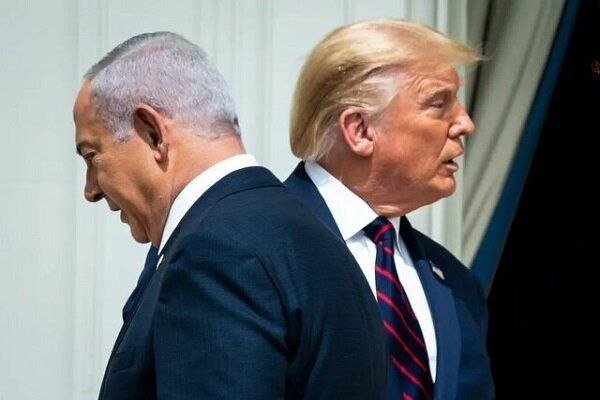
On the morning of 20 June 2026, Israeli drone and warplane strikes on southern Lebanon continued without pause, according to field reporting from the WarMonitors wire channel at 09:08 UTC. Hours later, the same wire carried a New York Times report, citing sources familiar with the conversations, that Western officials had privately urged Prime Minister Benjamin Netanyahu to halt attacks on Lebanon so Iran would not have a pretext to withdraw from negotiations.
The sequencing is the story. Kinetic operations are continuing in real time while diplomatic pressure is applied in private. The pattern is consistent with how the United States and its European partners have managed the Israel-Iran file for the better part of two years: tolerate Israeli escalation as a tactical instrument, then draw a quiet line when that escalation threatens to collapse a diplomatic track.
What the field is reporting
WarMonitors documented multiple Israeli airstrikes on a building complex in southern Lebanon on the morning of 20 June 2026, with the channel citing "multiple casualties" in initial accounts. The strikes followed three days of Israeli drone and fixed-wing activity across southern Lebanon that, the same channel noted at 09:08 UTC, "have not stopped." The New York Times, relayed by WarMonitors at 10:08 UTC, framed the diplomatic pressure in plain terms: Western officials are concerned that sustained Israeli action in Lebanon gives Tehran the political cover to walk away from a negotiating track that has otherwise produced cautious movement on enrichment and sanctions sequencing.
The Israeli position, as articulated by Israeli officials in recent weeks and as conveyed through Western wire reporting, holds that Hezbollah infrastructure in southern Lebanon remains a legitimate target and that degrading that infrastructure is operationally separable from the nuclear file. The Western position, as conveyed to the New York Times on background, is that nothing in Lebanon is operationally separable from the nuclear file. Both positions cannot be fully right at the same time, and the disagreement is now being adjudicated in real time over Lebanese villages.
The counter-narrative: escalation as leverage
Israeli strategists, both inside the government and in the reserve commentary around it, have long argued that pressure campaigns work precisely because they create diplomatic urgency. Under that reading, the strikes in southern Lebanon are not a distraction from negotiations; they are the condition that makes negotiations possible. From this side of the table, Western calls for restraint look less like statecraft and more like a request that Israel absorb strategic risk on behalf of a negotiating process whose benefits accrue primarily to Washington and Tehran.
There is a structurally equivalent Iranian argument in the mirror. Tehran's negotiating posture has, for the duration of the talks, been conditioned on what it calls "resistance axis" credibility. If Iran is seen as having purchased a deal by standing down its allies while Israeli strikes continue against Lebanese territory, the domestic price inside the Islamic Republic rises sharply. From Tehran's vantage, Western appeals for Israeli restraint are not even-handed; they are an asymmetric ask that the Iranian side absorb the cost of Israeli escalation while Israeli actions remain unconstrained.
Neither side is wrong on its own terms. Both sides are, however, asking the other to carry costs the other considers illegitimate. The diplomatic machinery in between is trying to thread that needle without acknowledging, on the public record, what it is doing.
The structural frame: a private ceiling on a public war
What the New York Times is describing, on the diplomatic side, is the recurring feature of US-Israel coordination on Iran: a private ceiling on Israeli escalation that is never made public because making it public would weaken both governments. The United States does not formally constrain an ally's operations; the ally does not formally acknowledge being constrained. The constraint exists anyway, in leaked briefings, in telephone calls, in the movement of senior officials. The reporting on 20 June 2026 fits that template almost perfectly.
This is also why the framing matters. When Western officials urge restraint in private while continuing to supply munitions, diplomatic cover at the UN, and overflight access, they are not contradicting themselves. They are operating inside a system in which escalation and restraint are managed simultaneously through different channels. The system works, when it works, because both sides have an interest in not naming it.
The risk is that the system stops working when one side concludes the other is free-riding. An Israeli government that concludes its operations are being sacrificed for a deal it does not want will eventually stop accepting the private ceiling. An Iranian government that concludes it is being asked to absorb Israeli strikes in exchange for a deal that does not bind Israel will eventually walk. Both failure modes are visible in the reporting on 20 June 2026.
Stakes
The stakes for Lebanon are concrete and immediate. The strikes reported on 20 June are producing civilian casualties inside Lebanese territory, and the southern Lebanese population is bearing the cost of a diplomatic argument being conducted about it in Washington, Jerusalem, and Tehran. The stakes for the broader region are equally concrete: a collapse of the negotiating track would not end Iranian nuclear development, it would end the framework inside which that development is currently being managed. The pattern that has held since the early months of the talks — pressure plus a ceiling plus quiet coordination — is fragile, and the reporting on 20 June suggests the ceiling is being tested from multiple directions at once.
What remains genuinely uncertain is whether the New York Times report reflects a settled Western position or an opening bid in a renewed round of pressure on Jerusalem. The sources the Times cites are described as Western officials, not as principals; the conversation is described as ongoing, not concluded. The strikes in southern Lebanon are, as of the most recent WarMonitors dispatch, also ongoing. Until one of those two tracks breaks publicly, the diplomatic ceiling remains a private artefact — real enough to shape events, fragile enough that nobody is willing to put it on paper.
Monexus framed this story as the diplomatic ceiling rather than the strike itself; the kinetic event is the visible part, the constraint is the structural part.
Wire provenance
This editorial synthesis draws on the following public wire/social posts:
- https://t.me/WarMonitors
- https://t.me/WarMonitors
- https://t.me/WarMonitors
Follow the event.
These dated source records provide context. They do not retrospectively verify this archive article.
Separate what the nuclear watchdog reported from what it could not determine after the June 2025 strikes.