Pakistan's interior minister flies to Tehran as Islamabad positions itself in Iran–US channel
Mohsin Naqvi's 20 June 2026 trip to Tehran is the first publicly confirmed senior Pakistani visit in weeks aimed at the Iran–US track, signalling Islamabad's effort to re-insert itself as a back-channel.
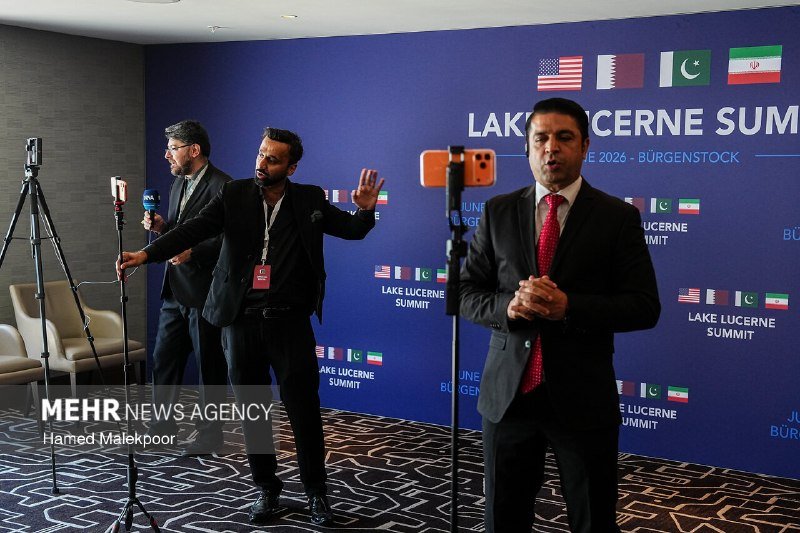
Pakistan's Interior Minister, Senator Syed Mohsin Raza Naqvi, left for Tehran in the early hours of 20 June 2026 to meet senior Iranian officials, the first publicly confirmed senior Pakistani visit in weeks framed around the Iran–United States negotiating track. The departure was reported simultaneously between 06:50 and 07:14 UTC by Iran's Tasnim, PressTV, the Arabic-language Al Alam, its Persian sister channel Al Alam, Fars News and Tasnim's English wire — six Iranian state and state-adjacent outlets whose timing and wording were nearly identical, a pattern that points to a coordinated Tehran release rather than a Pakistani announcement.
The trip matters less for who is flying than for what the flight signals: Pakistan, long a quiet intermediary between Washington and Tehran, is once again putting its name on the channel at a moment when direct contact between the two sides has narrowed.
A familiar intermediary, briefly back in frame
The interior minister is an unusual envoy for a foreign-policy shuttle. Naqvi is a sitting senator who has run Pakistan's domestic security portfolio since the coalition government of Prime Minister Shehbaz Sharif took office; he is not the foreign minister, not the prime minister's national-security adviser, and not the army chief, the official who has historically carried the most sensitive Iran–US traffic. The Iranian outlets covering the departure described the visit in diplomatic terms, framing Naqvi as a senior emissary carrying "negotiations between Iran and the United States" into the room, and pointedly noted this is the first such publicly confirmed visit "in recent weeks."
That last formulation is the news. Pakistan has been conspicuously absent from the visible mediation queue that has, in recent months, included Omani, Qatari and Chinese back-channels. By dispatching a cabinet minister with an interior portfolio — rather than the foreign minister Jalil Abbas Jilani or a military-led delegation — Islamabad is signalling that the channel is active but narrow: it wants a seat at the table, but it does not want the conversation to be read as a Pakistani foreign-policy breakthrough. An interior minister can travel, meet counterparts and report back to the prime minister's office without committing Islamabad to positions its military, or its Gulf partners, would have to underwrite.
What the Iranian wire is, and is not, telling readers
The reporting that surfaces the trip is, in its entirety, Iranian. Tasnim, PressTV, Fars, Al Alam Arabic and Al Alam Persian are all state-run or state-aligned; their near-simultaneous 06:50–07:14 UTC posts, drawing on overlapping copy, suggest an Iranian government information push rather than independent confirmation from Islamabad. Pakistan's own state media, the Prime Minister's Office and the Ministry of Interior had not, as of the window covered by these items, posted a confirming statement that this publication could verify.
That asymmetry is itself a tell. Tehran is choosing to publicise a bilateral encounter with a country that is simultaneously a US partner, a Saudi neighbour, an Iranian neighbour, and the only nuclear-armed state in the Muslim world. The framing — "to advance negotiations between Iran and the United States" — does two things at once. It positions Iran as the principal in any exchange, with Pakistan as a courier, and it reminds regional and global audiences that Iran retains diplomatic traffic even when the headlines suggest isolation.
The structural read: corridor politics, narrow channels
Looked at from above, the trip is a small data point inside a much larger pattern of middle-power mediation. When the United States and Iran are not talking directly, the work moves to capitals that sit on both sides of the Gulf logic: Muscat, Doha, Beijing, and intermittently Islamabad. Pakistan's value to that queue is geographic and political — a 900-kilometre border with Iran, a long relationship with Saudi Arabia, a working relationship with Washington's South Asia desk, and a military that has historically kept its own line open to the Iranian Revolutionary Guard Corps. It is the only major Muslim-majority country that can credibly carry messages to all three corners.
The current narrowness of that channel — a single interior minister, no foreign minister, no army chief on the plane — suggests the conversation is at a delicate stage. Big envoys get sent when deals are close or when messages need presidential weight. Modest envoys get sent when the principals want to test a position without owning it. Naqvi's profile fits the second category. The Iranian outlets' decision to amplify the visit, rather than treat it as routine, suggests Tehran wants the world to register that the channel exists.
Stakes and what remains uncertain
If the trip is the opening of a sustained Pakistani role, the upside is concrete: Islamabad gains diplomatic relevance on a file that has historically been dominated by Omani and Qatari mediation, and it offers Washington a known interlocutor that does not carry the Gulf-state baggage. The downside is reputational — Pakistan cannot afford to be seen as Washington's messenger to Tehran, nor as Tehran's messenger to Washington, and an interior minister is not the figure who can absorb the political cost if the channel collapses.
Several points remain genuinely unresolved. The Pakistani side has not, in the items available to this publication, confirmed the trip or named the Iranian officials Naqvi is due to meet; the agenda, the duration, and whether the minister carries a written message from Prime Minister Sharif or from the army chief are all unspecified. The Iranian wire speaks of "negotiations between Iran and the United States" but does not name a US counterpart — suggesting, at minimum, that no American negotiator is in the room. Until Islamabad confirms the trip on the record and the Iranian side names its interlocutors, the visit is best read as a calibrated signal rather than a substantive step.
This publication treats the story as Iran-sourced until Pakistan's foreign ministry, the Prime Minister's Office, or a recognised Pakistani wire confirms the itinerary.
Wire provenance
This editorial synthesis draws on the following public wire/social posts:
- https://t.me/Tasnimnews_En/
- https://t.me/JahanTasnim/
- https://t.me/alalamarabic/
- https://t.me/presstv/
- https://t.me/alalamfa/
- https://t.me/FarsNewsInt/