The cease-fire that wasn't: Israel, the U.S.–Iran deal, and the Lebanon question
A U.S.–Iran cease-fire was supposed to quiet the region. U.S. intelligence says Israel is unlikely to stop in Lebanon anyway — and a Kremlin hardliner is reading the moment aloud.
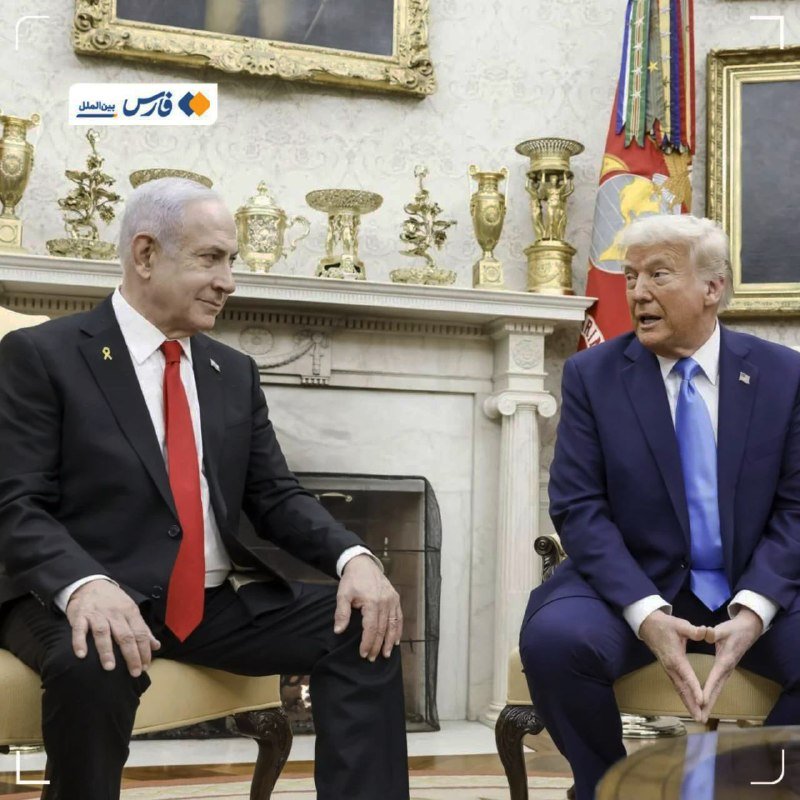
The cease-fire was supposed to be the headline. On 20 June 2026, two notes are competing for it instead. U.S. intelligence officials believe Israel is unlikely to halt military operations in Lebanon despite the recent U.S.–Iran cease-fire agreement, which calls for an end to fighting there, according to a wire circulated at 10:47 UTC by the Telegram channel Clash Report, summarising U.S. assessments. Within the same news hour, former Russian president and current deputy security council chair Dmitry Medvedev used his Telegram account — relayed by DDGeopolitics at 10:14 UTC — to argue that the agreement proved Tehran did not lose the war and that a "resentful Israel" would seek revenge. The two reads are not the same story. Together, they describe the same region.
The structural point is straightforward. A deal negotiated between Washington and Tehran that includes a clause on Lebanon does not, on its own, change the operational behaviour of a third government in a third country. The text of a cease-fire binds the signatories. It does not bind a party that has not signed. The interesting question is what U.S. intelligence now believes Israel will do with that latitude, and why Moscow thinks it can read the moment better than the diplomats who brokered the paper.
The U.S. read: Israel stays the course in Lebanon
Per the 10:47 UTC Clash Report item, U.S. intelligence officials assess that Israel is unlikely to halt its Lebanon operations, even as the U.S.–Iran framework explicitly calls for an end to fighting there. The phrasing of the underlying U.S. assessment — Israel is "unlikely" to halt — leaves room for tactical pauses, calibrated de-escalation, or a rhetorical softening. It does not indicate a strategic reversal. Israeli security concerns along the northern border, where communities have been repeatedly displaced by cross-border fire, are treated in mainstream Israeli and Western reporting as legitimate drivers of continued operations. The U.S. read, in other words, is that the Israeli campaign continues because the Israeli government reads the threat environment as unchanged.
The counter-narrative in Western wire coverage has emphasised the U.S. effort to cap the conflict. That is the diplomatic story. The intelligence reading inverts it: the diplomatic cap is real on paper, but the military tempo on the ground is set by Jerusalem, and Jerusalem is not signalling a stop. For governments that took political risk endorsing the U.S.–Iran framework, that is a problem of credit and credibility. A cease-fire that holds only on the section of the front where the signatories are actually fighting is, in the older diplomatic vocabulary, a partial peace — and partial peace is the most fragile kind.
The Medvedev read: a resentful Israel, a Kremlin with standing
The second thread, timestamped 10:14 UTC, is harder to dismiss. Medvedev, in remarks carried by DDGeopolitics, argued that the U.S.–Iran deal proved Tehran "did not lose the war" and that Israel would seek revenge in response. Taken on its own, this is a familiar Russian pattern: read every Middle Eastern move as confirmation that Washington has been outflanked and Moscow's interlocutors have gained. Taken in context, it does something more pointed. It positions Russia as the sober analyst of a deal the United States cannot enforce, and it reminds readers that Moscow is still speaking in this theatre with the confidence of a returning power.
There is a second Medvedev item in the same wire window — 10:13 UTC — addressing Ukraine, in which he states that the only thing remaining beyond acceptable limits for Russia is the "deliberate killing of civilians" and that "there can no longer be any rules constraining" Moscow. That claim, juxtaposed against a Russia-Iran-China diplomatic alignment that has visibly tightened since 2022, is the structural frame the rest of the analysis hangs on. It is not that the U.S.–Iran deal failed on its merits. It is that the diplomatic architecture around it is being read, in Moscow, as evidence that rules-based order is rhetorical rather than binding — and that a state with the will to disregard those rules faces no enforced consequence.
What the cease-fire actually settled
It is worth saying what the framework plausibly did settle. It lowered the temperature of the U.S.–Iran direct exchange. It provided political cover for regional governments that wanted an off-ramp. It gave Tehran a written acknowledgement from Washington that the war, in the framing of the agreement, ended short of regime change or capitulation. None of that is small. None of it touches the operational question of what Israeli aircraft do over southern Lebanon next week.
This is the gap that allows both the U.S. intelligence reading and Medvedev's read to coexist. The deal is a real document with real text. The implementation is being negotiated in real time, in a cockpit of overlapping national interests, with Israel holding a veto it did not formally surrender. U.S. intelligence saying Israel is unlikely to halt is the polite phrasing for: the signature on the page and the behaviour in the air are not synchronised.
Stakes and what remains contested
If the U.S. assessment holds, three things follow in the near term. The U.S. faces a quiet loss of diplomatic authority, because the framework it championed will be read as the ceiling of what Washington can extract, not the floor. Tehran keeps the political benefit of the deal while watching its regional partner absorb the military cost. And Moscow gains a free commentary channel: every U.S. failure to enforce its own framework becomes, in Medvedev's voice, evidence that the unipolar moment is over.
What remains genuinely uncertain is whether Israel reads the U.S. assessment as cover to continue, as a quiet warning to recalibrate, or as noise to be managed. The available wire material reports the assessment; it does not record an Israeli government response. Mainstream Israeli outlets have framed the northern campaign in terms of returning displaced residents — a domestic political framing that does not, by itself, time-limit operations. Until that timing becomes public, the U.S. intelligence read is the working assumption: the Lebanon file stays open, the cease-fire holds only as far as its signatories choose, and the loudest analyst of the moment is not in Washington.
Monexus treats the Medvedev wire as counter-claim material with explicit sourcing — a Russian-aligned channel paraphrasing a Russian official — rather than as a stand-alone factual basis. The U.S. intelligence read in the lead is sourced to a Telegram relay of wire reporting; readers seeking the primary U.S. document should treat it as indicative, not as a declassified assessment.
Wire provenance
This editorial synthesis draws on the following public wire/social posts:
- https://t.me/ClashReport
- https://t.me/DDGeopolitics
- https://t.me/DDGeopolitics
Follow the event.
These dated source records provide context. They do not retrospectively verify this archive article.
Separate what the nuclear watchdog reported from what it could not determine after the June 2025 strikes.
A dated voting record is evidence of one decision. Use the original UN record before turning it into an alignment label.
Visual explainer · historical vote of 2022-03-02 →