Two diplomats, two mansions, one negotiating table: what Witkoff and Kushner in Switzerland actually tells us
Steve Witkoff is reportedly joining Jared Kushner in Switzerland for talks with Iran, framed by the same US team that managed the Lebanon ceasefire. The optics say as much as the substance.
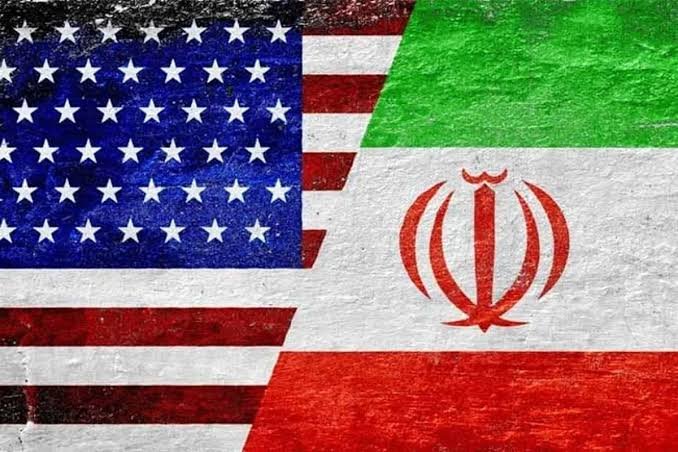
At 10:27 UTC on 20 June 2026, the OSINTdefender channel reported that US special envoy Steve Witkoff was travelling to Switzerland to join Jared Kushner for negotiations with Iran, framed explicitly as a continuation of the track that produced the Lebanon ceasefire. Polymarket's account pushed the same line at 02:47 UTC the same day. The two data points, read together, describe a US negotiating posture that has consolidated around a single improvised team, and a Middle East agenda that is being sequenced through personalities rather than institutions.
The Lebanon ceasefire that the Witkoff–Kushner channel brokered is the explicit precedent. Whatever its durability, it was struck outside the State Department machinery the United States has traditionally relied on for Middle East negotiations, and it was struck by men whose primary credential is proximity to the President. The Switzerland meeting, on the evidence available so far, extends that template.
What we actually know, and what we don't
Two items of reporting exist. The first, from the OSINTdefender channel on Telegram at 10:27 UTC on 20 June 2026, says Witkoff is heading to Switzerland to join Kushner for negotiations with Iran, framed as the continuation of the Lebanon ceasefire track. The second, from the Polymarket account on X at 02:47 UTC the same day, says Witkoff and Kushner are "reportedly" in Switzerland for talks with Iran. Nothing in either item specifies the agenda, the Iranian interlocutor, the venue, or the expected duration. No Western wire has, as of the timestamps above, put a bylined correspondent on the story. That is itself part of the story: the first public witnesses to a US–Iran meeting on European soil are an open-source account on Telegram and a prediction-market feed.
This publication would normally treat such sourcing as too thin to anchor an editorial line. We are publishing it anyway, with the thinness flagged, because the structural point survives the gap in detail: when the most consequential US diplomatic channel with Iran is moving, the first verifiable witnesses are not at the State Department podium.
The counter-narrative worth taking seriously
A plausible, charitable read is that the State Department simply prefers quiet for active negotiations, and that Telegram and X are leaking what an embargoed wire would otherwise hold. On that reading, the Witkoff–Kushner channel is a tactical expedient, not an institutional redesign, and the Switzerland meeting is just the next stop on a track that has produced at least one verifiable result — the Lebanon ceasefire.
A less charitable read is harder to dismiss. The same two individuals now negotiating with Iran are the same two individuals credited with brokering the ceasefire that ended, however temporarily, a war between Israel and a US-designated Iranian proxy. That is an unusual concentration of influence for men who do not hold Senate-confirmed portfolios, and the US national-security bureaucracy has historically treated such concentration as a risk to be managed rather than a feature to be celebrated. The Iran track inherits both the upside and the exposure of the Lebanon track, and the same two brokers.
What the framing reveals
Diplomacy conducted through personal envoys rather than standing institutions tends to produce two structural effects. First, it compresses the time horizon: deals get struck faster, because there are fewer veto points, and they also unwind faster, because there are fewer constituencies defending them. Second, it shifts the locus of authority from offices that can be audited, staffed, and rotated to individuals whose leverage is reputational and whose exit is harder to plan for.
The Lebanon ceasefire is the live test case. If it holds into the autumn, the Witkoff–Kushner channel will have produced a result that the State Department's traditional Middle East architecture struggled to deliver in years. If it does not hold, the same channel will be blamed for the absence of an institutional floor under the deal. The Switzerland meeting with Iran is, in effect, a second wager on the same bet, with a higher-stakes counterparty.
Stakes and what to watch
Three things will tell us whether this is a real negotiation or a managed signal. First, whether an Iranian foreign-ministry official is named in any wire confirmation within 48 hours of the Switzerland meeting; anonymous backchannels rarely survive contact with a foreign ministry's press office. Second, whether the agenda, once disclosed, includes the nuclear file in operational detail or only in atmospheric reference; the difference between those two framings is the difference between a negotiation and a posture. Third, whether the Lebanon ceasefire holds in the interim; a collapse there would discredit the channel before the Iran track has a chance to produce anything.
The sources do not specify the agenda, the Iranian counterpart, or the venue. They agree on the participants, the country, and the institutional precedent. That is enough to write about the shape of the negotiation; it is not enough to write about its substance.
This publication is flagging the sourcing thinness rather than concealing it: the first public witnesses to a US–Iran meeting on Swiss soil are an open-source Telegram channel and a prediction-market feed. The structural argument stands on those two inputs; the editorial confidence is calibrated accordingly.
Wire provenance
This editorial synthesis draws on the following public wire/social posts:
- https://t.me/s/osintdefender
- https://t.me/s/osintdefender